
What Weight Capacity Camping Chair? Choose the Right Limit for Safety & Comfort
Understand weight ratings, frame materials, real-world testing, and how to match chair capacity to your body plus gear. Avoid breakdowns and maximize durability.
❓ Why weight capacity matters more than you think: Every camping chair has a manufacturer-rated weight limit — typically between 225 lbs and 800 lbs. Exceeding this limit doesn't just void warranties; it drastically increases the risk of frame bending, fabric tearing, or sudden collapse. Industry data shows that chair failures are the #1 cause of camping-related minor injuries, and the vast majority involve overloaded chairs. This guide helps you decode ratings, understand construction factors, and pick a chair that stays safe for years.
Camping Chair Weight Ratings: How Are They Determined?
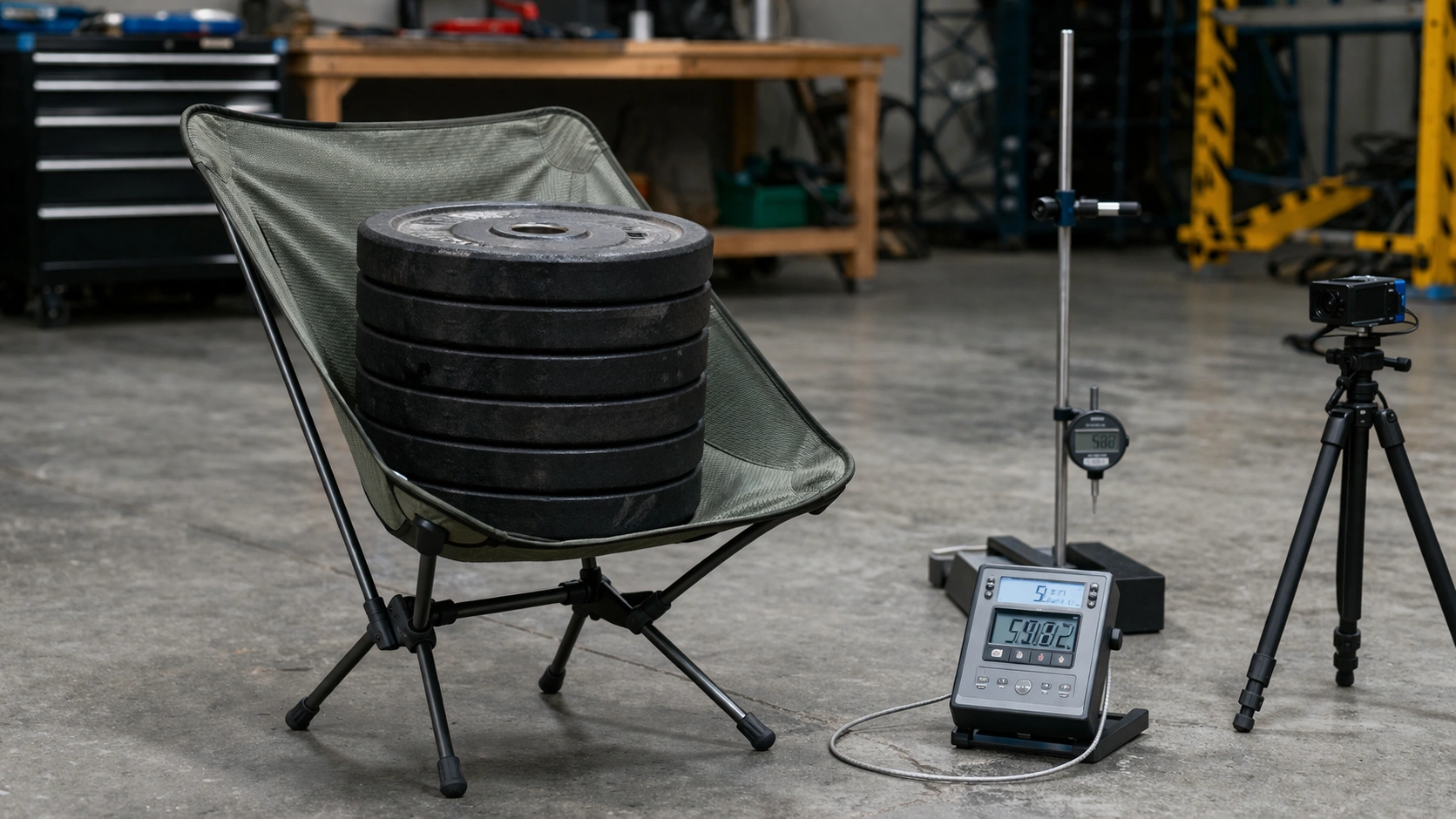
Static vs Dynamic Testing
Manufacturers determine weight ratings through two primary test methods. Static load testing places calibrated weight plates on the seat until the chair shows structural deformation — the rated capacity is typically 75–80% of this failure point. Dynamic testing simulates real sitting behavior: a weighted mechanism repeatedly sits down, shifts, and leans on the chair for thousands of cycles.
The number you see on the label (e.g., "300 lbs") represents the maximum safe static load under ideal laboratory conditions — flat surface, centered weight, no movement. However, real-world use involves shifting weight, uneven terrain, leaning back, and gear stored on the seat. This is why experts consistently recommend choosing a chair rated 20–30% above your actual body weight.
For deeper technical insight into testing protocols and what ratings actually guarantee, read our detailed article on how weight capacity is tested and certified. If you're a heavier user, focus specifically on heavy-duty camping chairs with reinforced steel frames that undergo more rigorous testing standards.
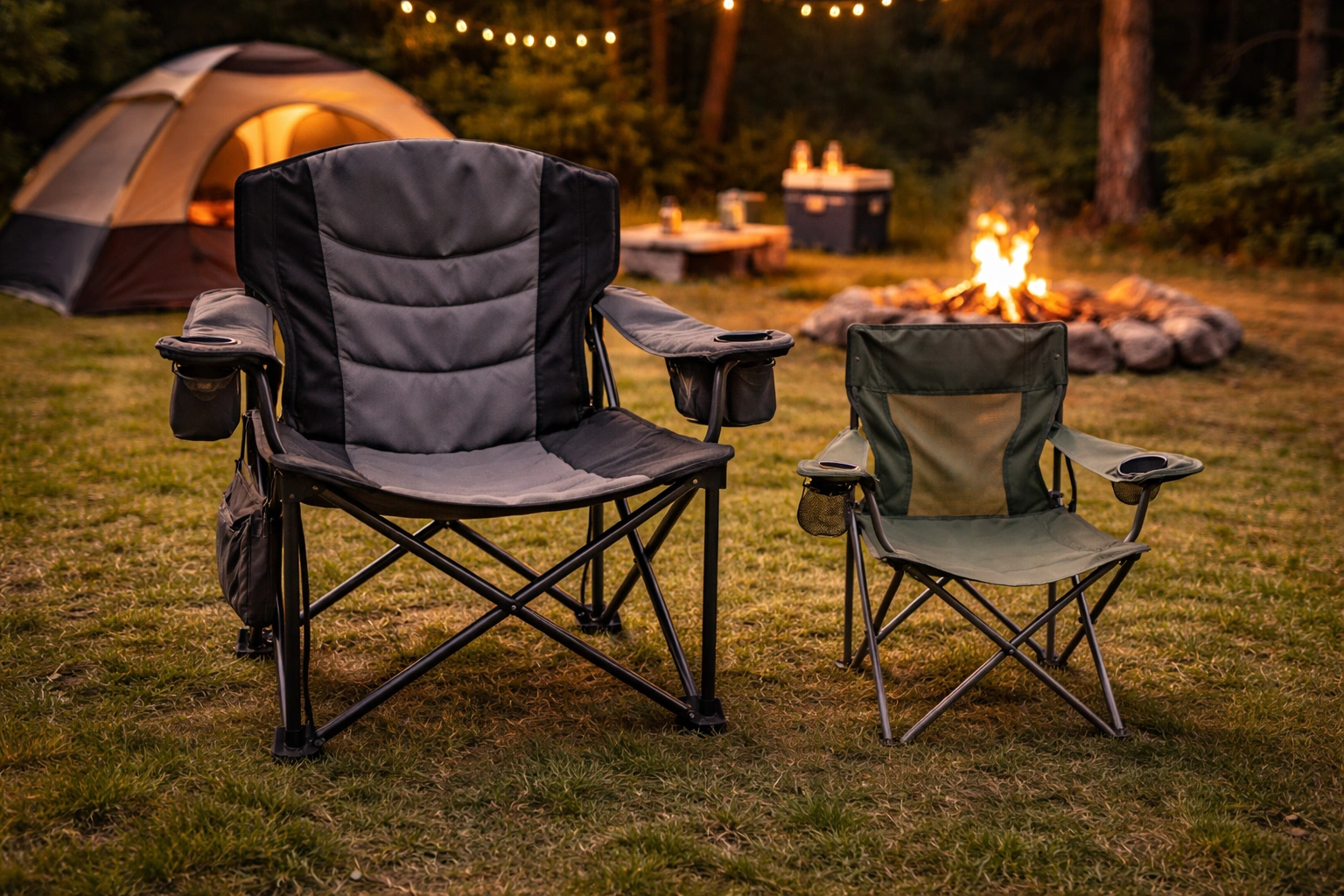
| Capacity Tier | Best For | Frame Material | Chair Weight | Ideal User |
|---|---|---|---|---|
| Up to 250 lbs | Ultralight, backpacking | Thin aluminum alloy | 1.5 – 4 lbs | Backpackers, small/medium adults under 200 lbs |
| 275 – 325 lbs | Standard car camping | Powder-coated steel, hybrid | 5 – 9 lbs | Average adults, occasional campers |
| 350 – 500 lbs | Heavy-duty, big & tall | Thick-wall steel, reinforced joints | 10 – 15 lbs | Tall/plus-size users, families with gear |
| 600 – 800+ lbs | XL commercial duty | Oversized steel, double braces | 15+ lbs | Maximum stability, shared seating, event use |
Frame Materials: Steel vs Aluminum — Impact on Weight Capacity
The frame is the single most important factor determining a chair's weight capacity. Material choice affects strength, weight, rust resistance, and price. Below is a detailed comparison to help you decide which frame type matches your needs.
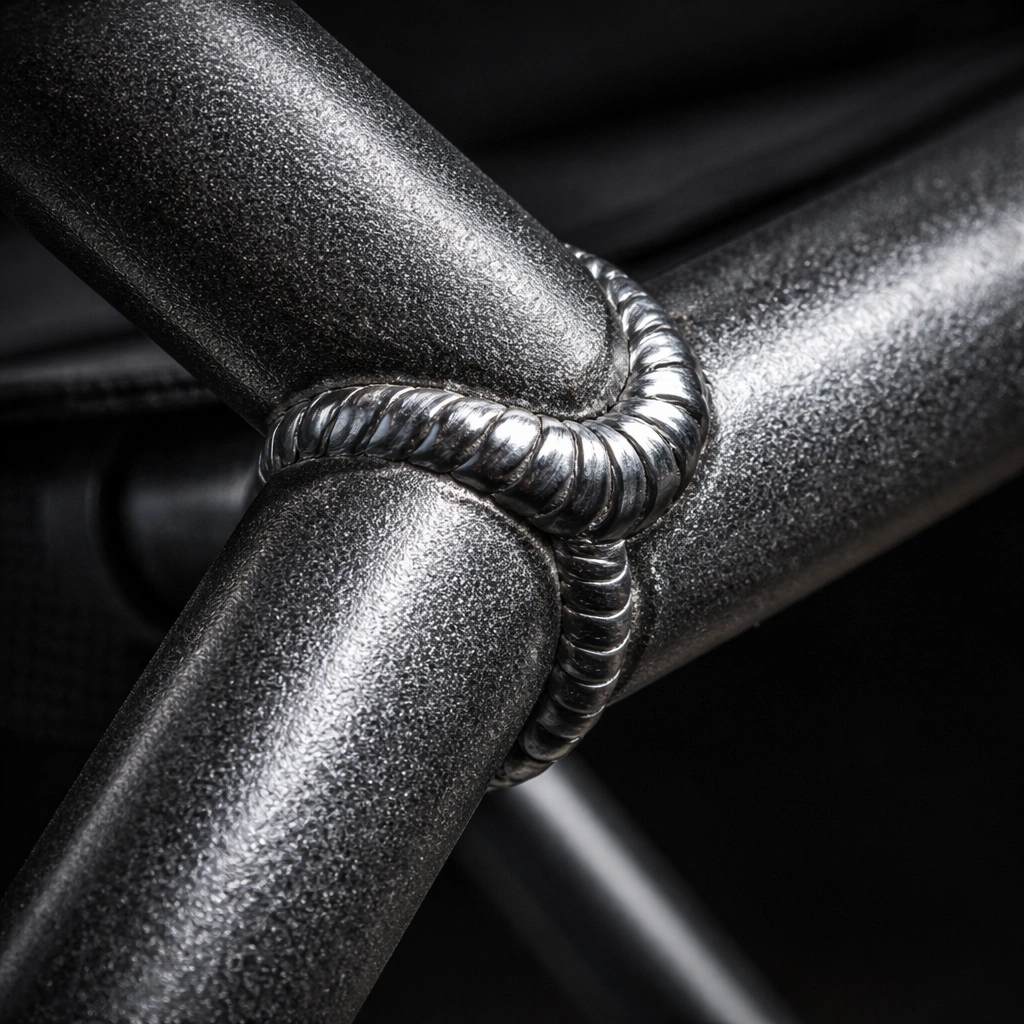
🛡️ Steel Frame Chairs
- Higher weight capacity — 400lb+ models widely available
- More affordable for heavy-duty builds
- Thicker tubing resists bending under dynamic loads
- Heavier to carry (10–20 lbs typical)
- Prone to rust if powder coating scratches
Best for: XXL/big & tall users, car camping, 400lb+ capacity needs
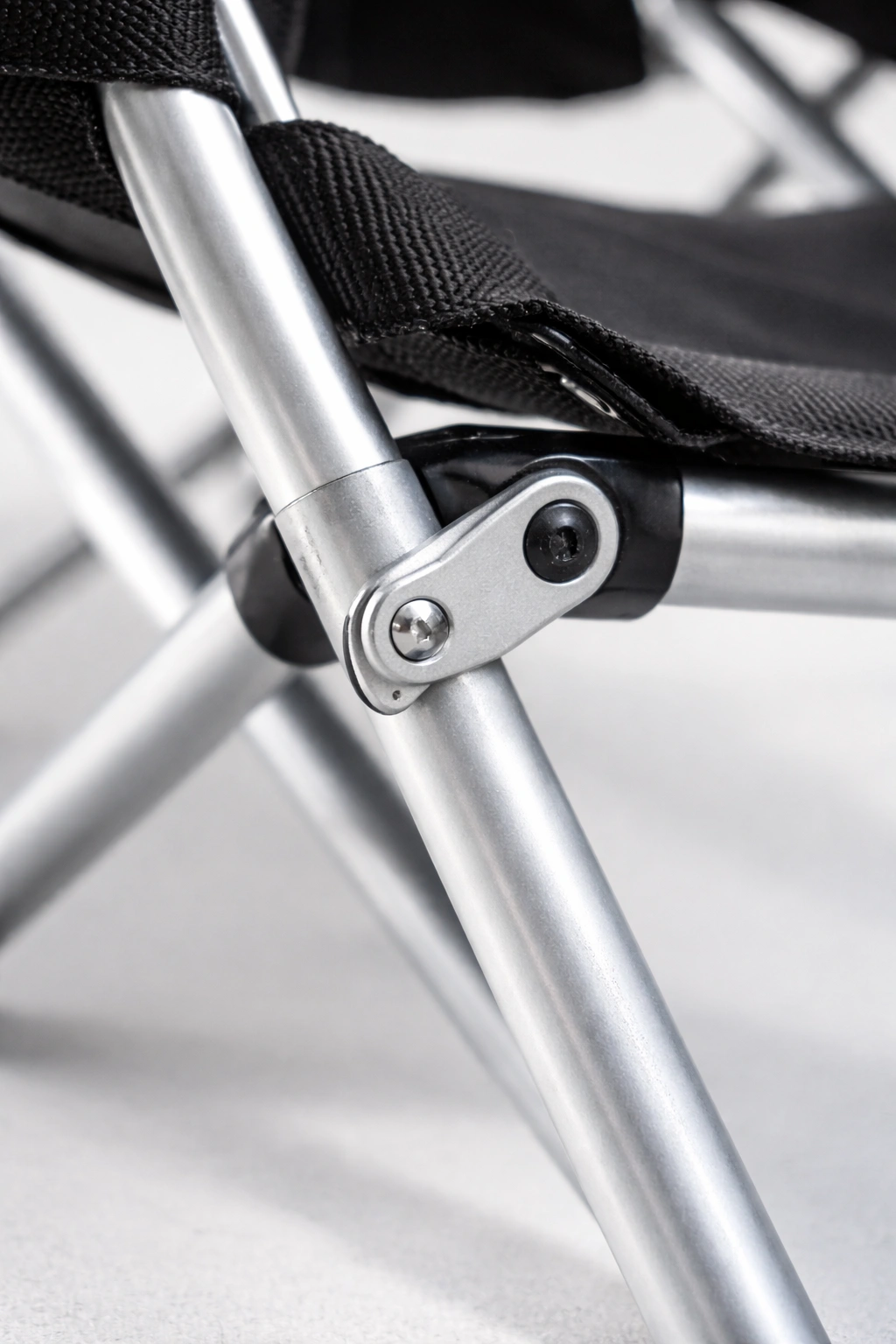
✈️ Aluminum Frame Chairs
- Lightweight — ideal for backpacking & hiking
- Naturally corrosion-resistant near water/salt air
- Modern alloys offer improving strength-to-weight ratios
- Lower max capacity (usually ≤300 lbs)
- Premium alloy chairs (e.g., Helinox) can be expensive
Best for: backpacking chairs, beach use, saltwater environments
For an exhaustive breakdown of durability, cost, and use cases, explore our full comparison: steel vs aluminum camping chairs and the technical analysis in frame durability comparison. The short answer: choose steel if weight capacity is your top priority, aluminum if portability matters more.
Fabric & Joints: Hidden Factors That Affect Real Capacity
Even the strongest steel frame will fail if the fabric tears or a joint snaps under load. These "hidden" factors are frequently overlooked but critically important for real-world durability.
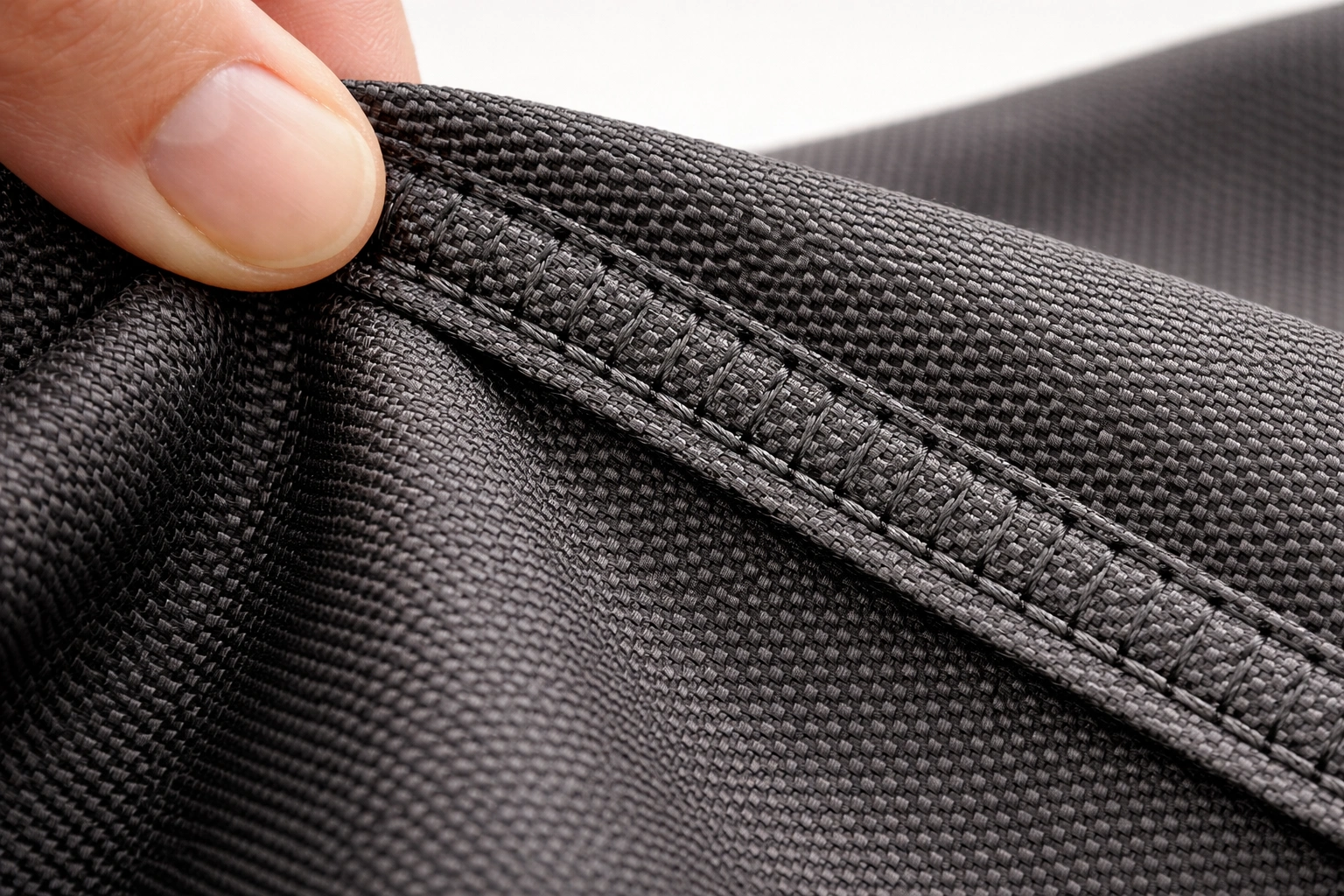
Fabric denier measures the thickness of individual threads — higher denier means stronger, more tear-resistant fabric. A chair rated for 500 lbs should use at least 600D polyester; anything below 300D is risky at higher weights regardless of frame strength. Denier explained: why thicker fabric equals longer life.
Stitching quality is equally critical. Single-stitched seams fail under dynamic loads — look for double-stitched or reinforced box stitching at stress points (seat corners, armrest attachments, backrest connection). Many budget chairs save cost here, which is why a $25 "500 lb rated" chair may fail at 300 lbs in practice.
Joint construction completes the picture. Chairs with steel rivets and cross-brace reinforcements handle shifting weight far better than those with plastic bushings or single-pin hinges. For tall individuals, seat height and back support matter equally with weight capacity — see best camping chairs for tall people for guidance.
Match Weight Capacity to Your Camping Style
There's no one-size-fits-all answer. The right capacity depends entirely on how and where you camp. A backpacker's needs differ dramatically from a tailgater's. Below are three common profiles with specific capacity recommendations:

🥾 Backpacker / Thru-Hiker
Recommended: 225–300 lbs
Weight is the enemy. Choose thin aluminum frames that pack down small. Even if you weigh 180 lbs, a 250 lb rated ultralight chair provides sufficient margin. Prioritize packed size over excess capacity — every ounce matters on long trails.
🚗 Car Camper / Family
Recommended: 350–500 lbs
Since weight isn't a concern, opt for thick steel frames with reinforced joints. These handle dynamic loads from kids climbing on, gear stored on the seat, and prolonged sitting. Extra capacity also means longer lifespan — the chair won't fatigue as quickly under normal use.

👵 Senior / Mobility-Conscious
Recommended: 300+ lbs minimum
Stability matters more than ever. Look for higher seat heights (18"+) for easy entry/exit, wide bases to prevent tipping, and armrests for support when standing. Extra capacity ensures the frame remains rigid even with assisted sitting. Our guide for seniors covers this in depth.
For event-specific needs like festivals and tailgating, choose mid-to-high capacity (300–400 lbs) with sturdy armrests and cup holders. If using a chair with canopy, remember that the canopy frame adds 3–5 lbs of overhead weight that affects stability — factor this into your capacity calculation.
Frequently Asked Questions About Weight Capacity
❓ Does weight capacity include the weight of the chair itself?
No. The rated capacity refers only to the load placed on the seat — your body weight plus any gear, food, or children sitting with you. The chair's own weight is separate and irrelevant to the capacity rating.
❓ Can I exceed the capacity if I sit very carefully and don't move?
Absolutely not. Even perfectly static overload permanently deforms frame tubing and stresses weld points. The damage is cumulative and invisible — the chair may hold once but fail catastrophically the next time. Always stay under the rated limit.
❓ Are higher capacity chairs always heavier and less portable?
Generally yes, but the gap is narrowing. Modern aluminum alloys (like 7001-T6 used in premium backpacking chairs) offer impressive strength-to-weight ratios — some 300 lb rated chairs weigh under 2 lbs. However, for capacities above 400 lbs, steel remains the practical choice. Check lightweight high-strength chairs for the best of both worlds.
❓ What's the best weight capacity for senior campers?
Look for a minimum 300 lb rated chair with a seat height of 18 inches or higher, wide base (22"+ seat width), and armrests for leverage when standing. The extra capacity provides stability confidence, and the higher seat reduces knee strain. Our complete senior camping chair guide covers seat height, armrest design, and stability features in detail.
🎯 Ready to choose your perfect chair? Browse our hand-picked selection below — each model is vetted for genuine weight capacity, build quality, and real-world durability. Don't gamble with safety — choose a chair with a proven rating and the right safety margin for your needs.


