Low Back vs High Back Camping Chairs: The Ultimate Guide
Choosing between a low-back and high-back camping chair dramatically affects your outdoor experience. From lumbar support to packability, we break down every difference so you can make the right choice for your body type and camping style.
When shopping for camping chairs, one of the first decisions you'll face is back height. It seems like a minor detail — until you spend three hours in a chair that doesn't support your neck, or spend a backpacking trip cursing a chair that's too bulky to fit in your pack. Low-back chairs prioritize portability and a close-to-ground feel, while high-back chairs deliver full head, neck, and upper-back support for extended relaxation. This guide explores every nuance of both styles so you can invest in the right chair for your specific needs.
The Core Difference: Where the Backrest Ends
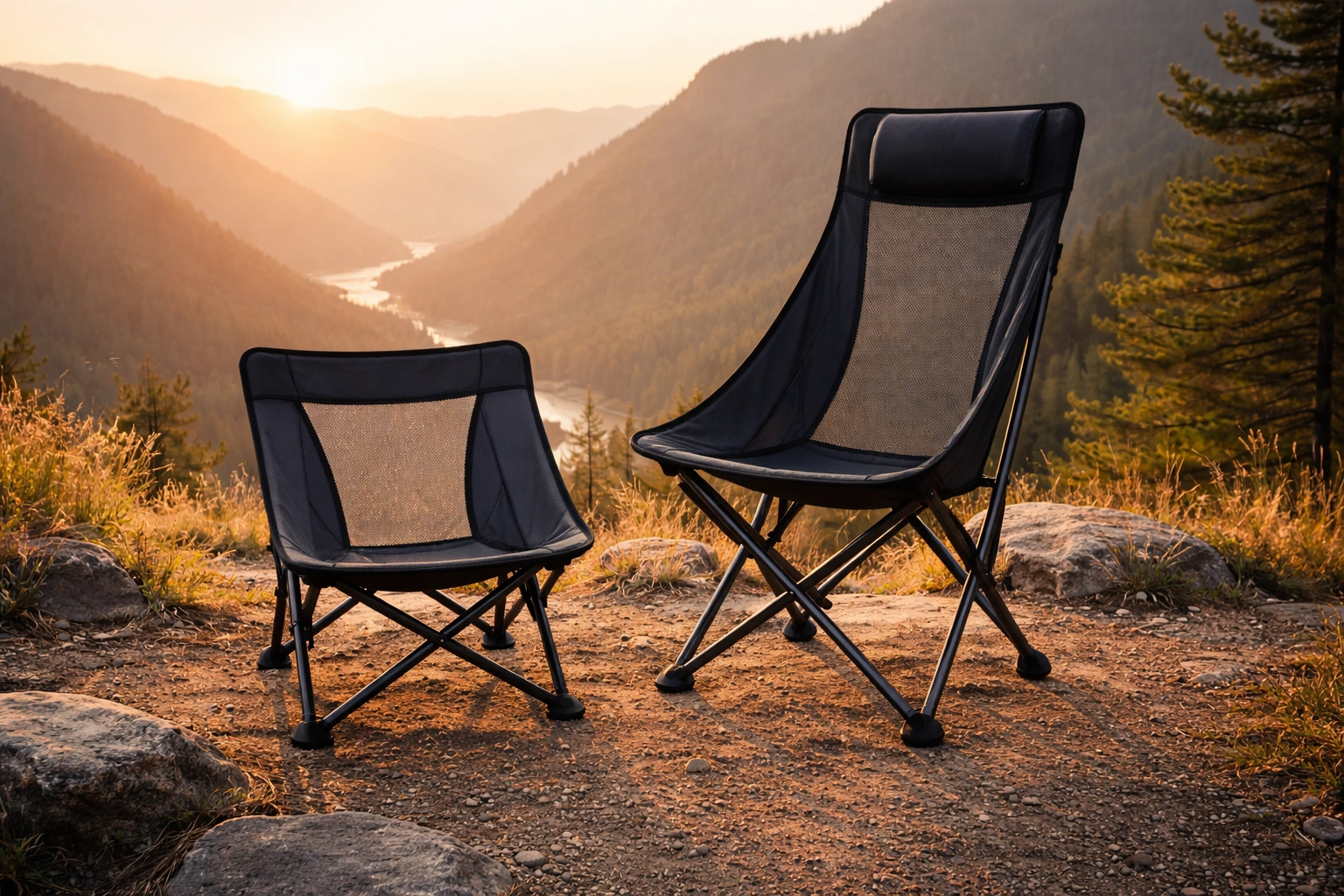
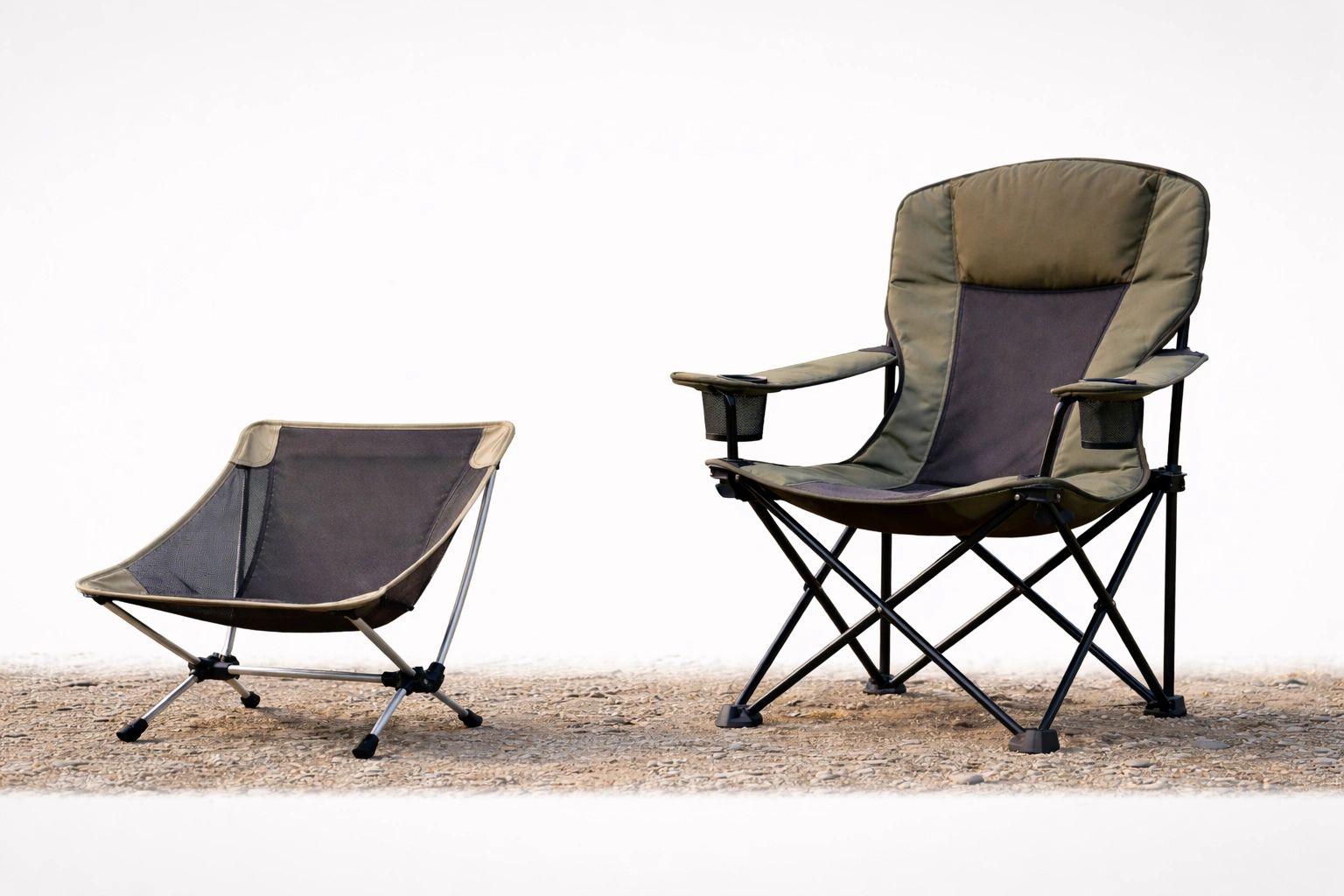
The defining distinction is simple: a low-back chair has a backrest that reaches roughly your mid-back (18–24 inches tall), while a high-back chair extends above your shoulders to support your head and neck (25–32+ inches). This measurement, which you can explore in our seat height guide, determines nearly everything else about the chair's character.
A low-back chair stops at your shoulder blades. Your neck and head are unsupported, which is fine for active sitting — eating, chatting, watching the kids — but becomes fatiguing if you want to lean back and relax for an extended period. Think of it like a dining chair versus a recliner: both are seats, but they serve entirely different purposes.
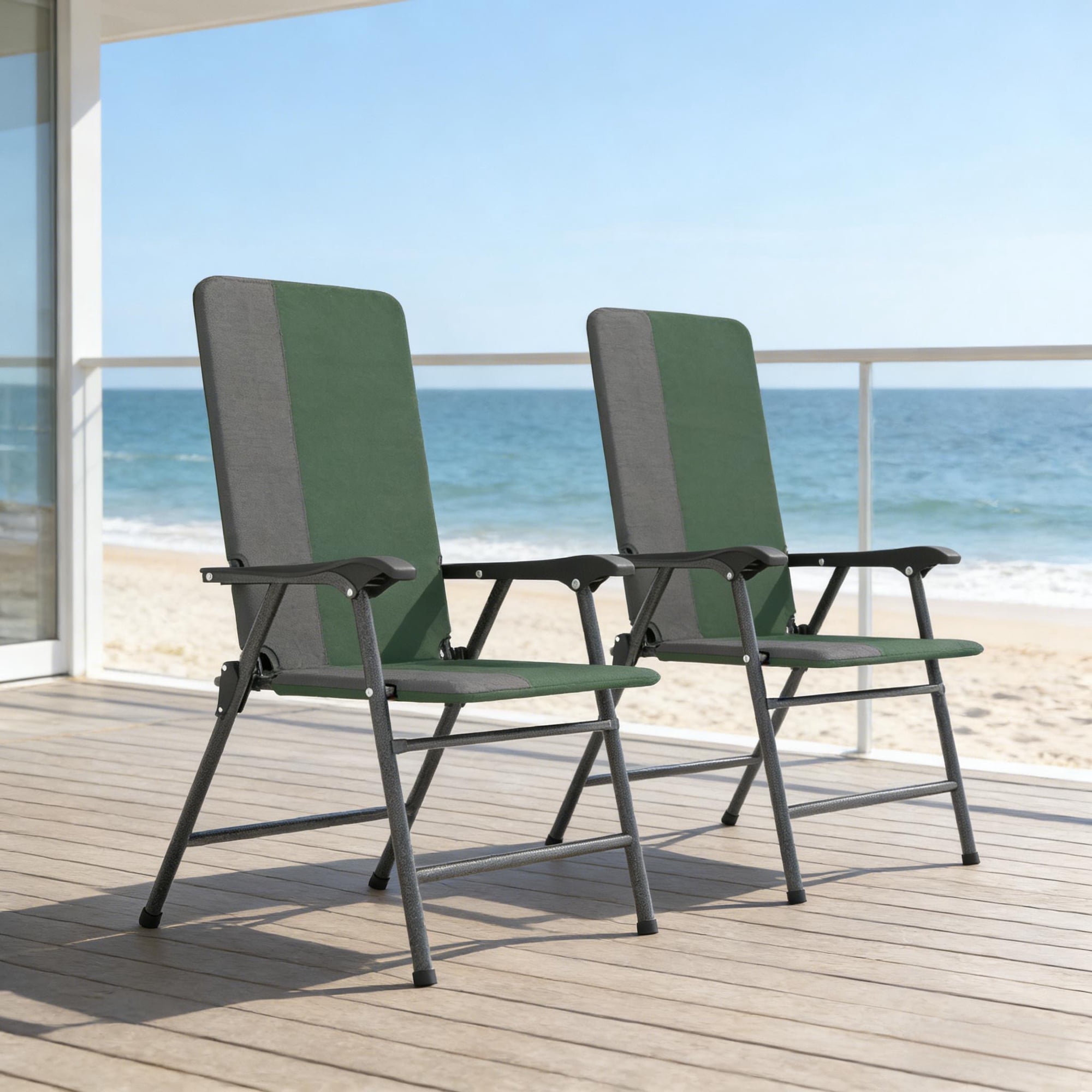
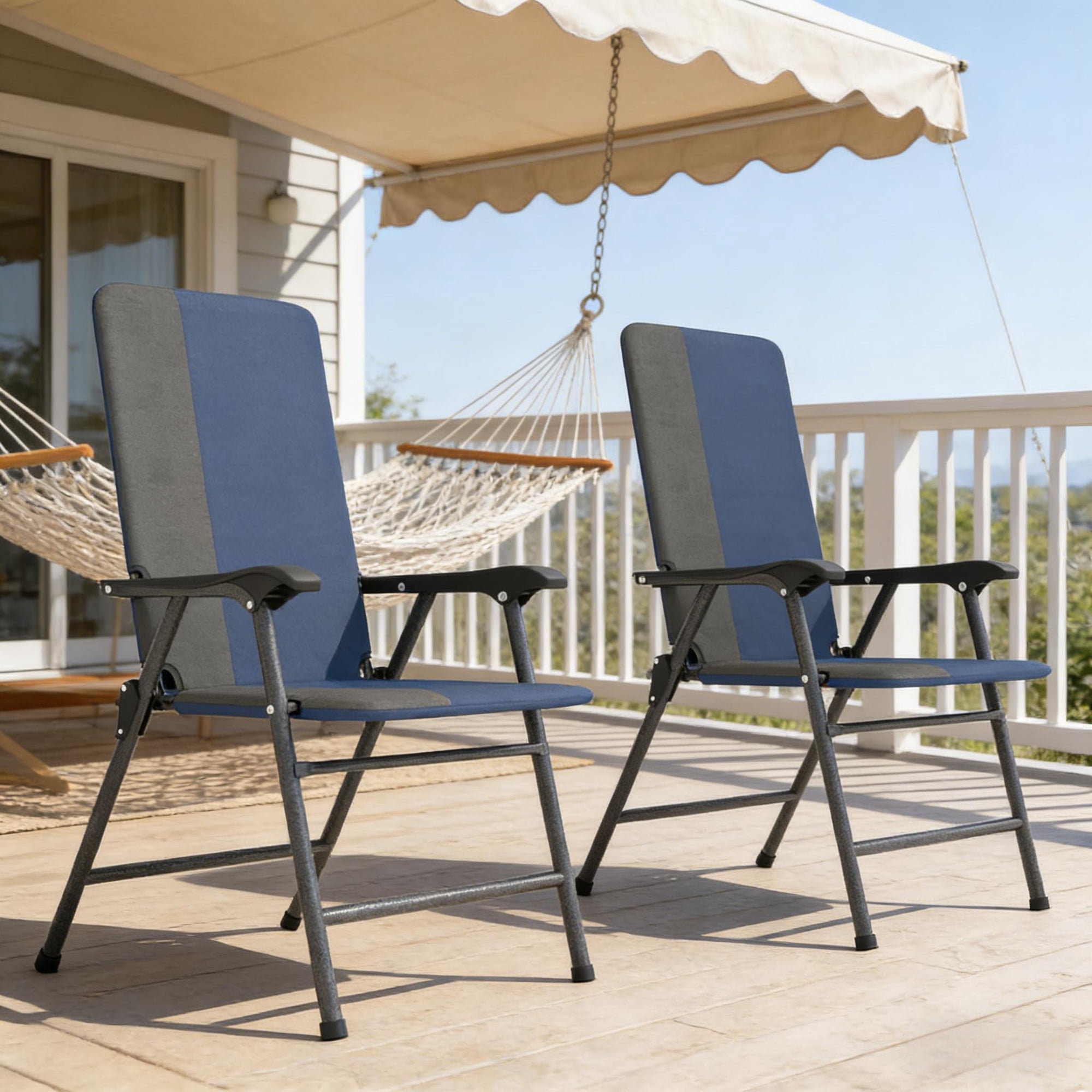
A high-back chair wraps around your upper body like a cocoon. The backrest supports your cervical spine, and many models add a padded headrest that cradles your head. This transforms the chair from a "place to sit" into a "place to lounge" — the difference between enduring a campfire and actually enjoying one.
Quick Specs at a Glance
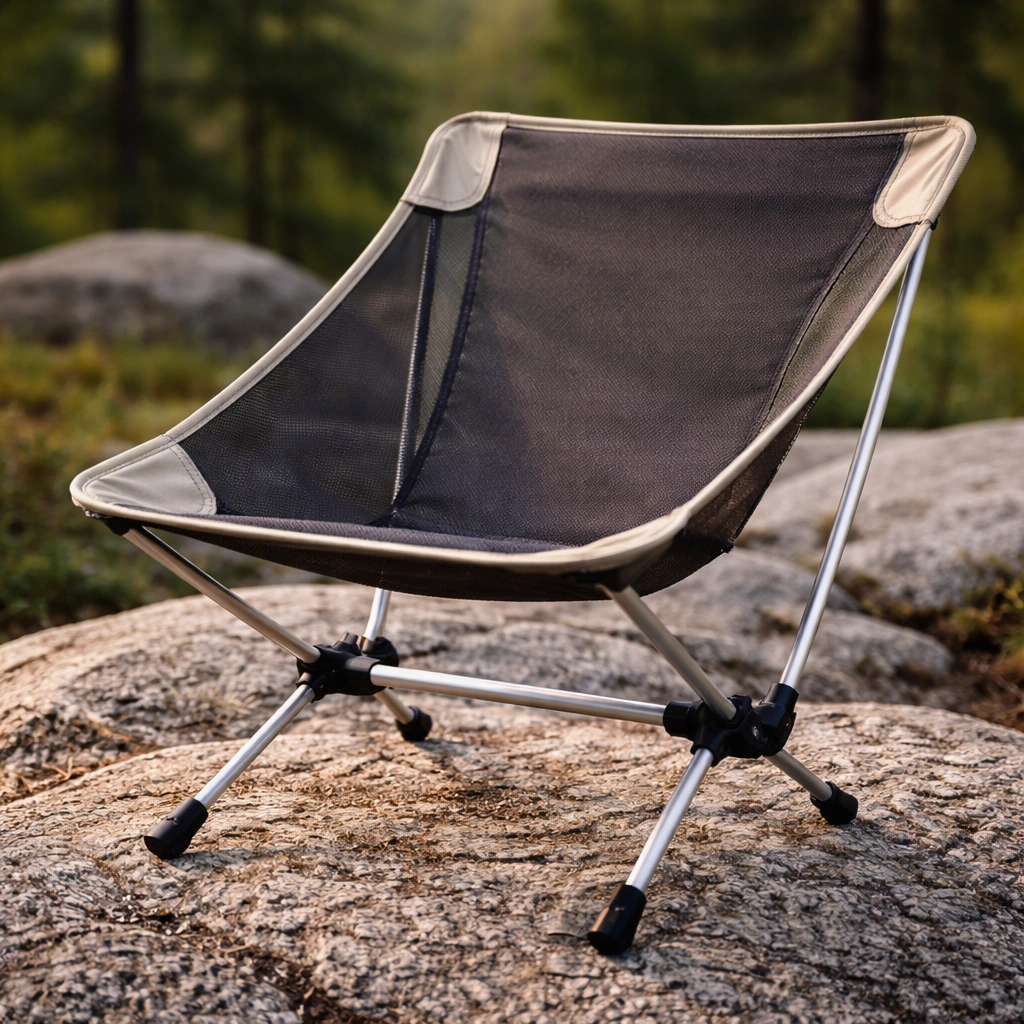
Low Back Chairs
Portable, lightweight, active sitting
✅ Pros
- Ultralight — some under 2 lbs
- Packs incredibly small
- Great for active sitting posture
- Lower price point on average
- Fast setup with fewer parts
❌ Cons
- No head or neck support
- Low seat can be hard to exit
- Less wind insulation on back
- Limited accessory compatibility
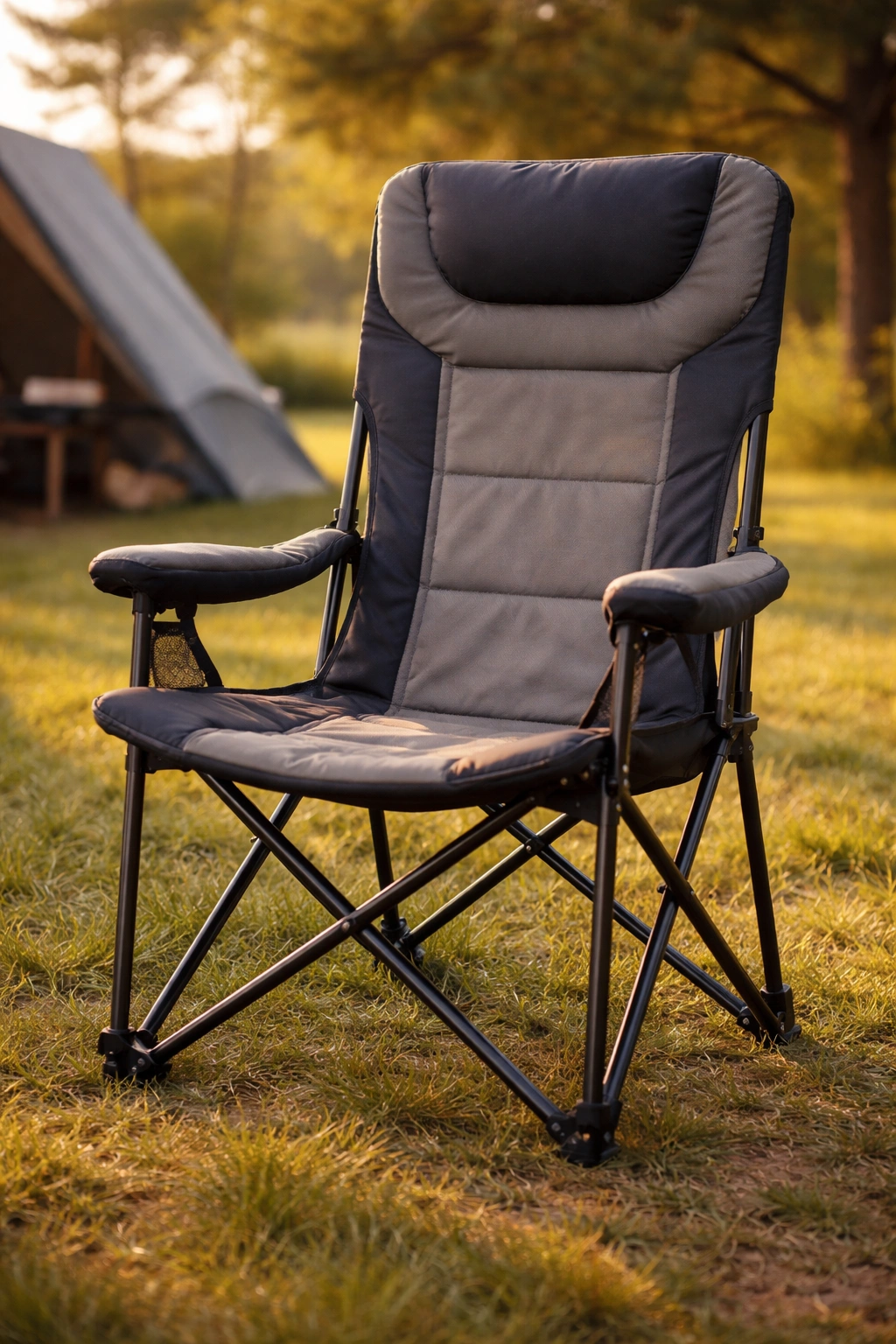
High Back Chairs
Full support, lounging comfort
✅ Pros
- Full head, neck, and upper-back support
- Often includes padded headrest
- Higher seat — easier entry and exit
- Better wind and cold insulation
- More cup holders and accessories
❌ Cons
- Heavy — not backpackable
- Bulky packed size
- Higher price for quality models
- Hard to carry over long distances
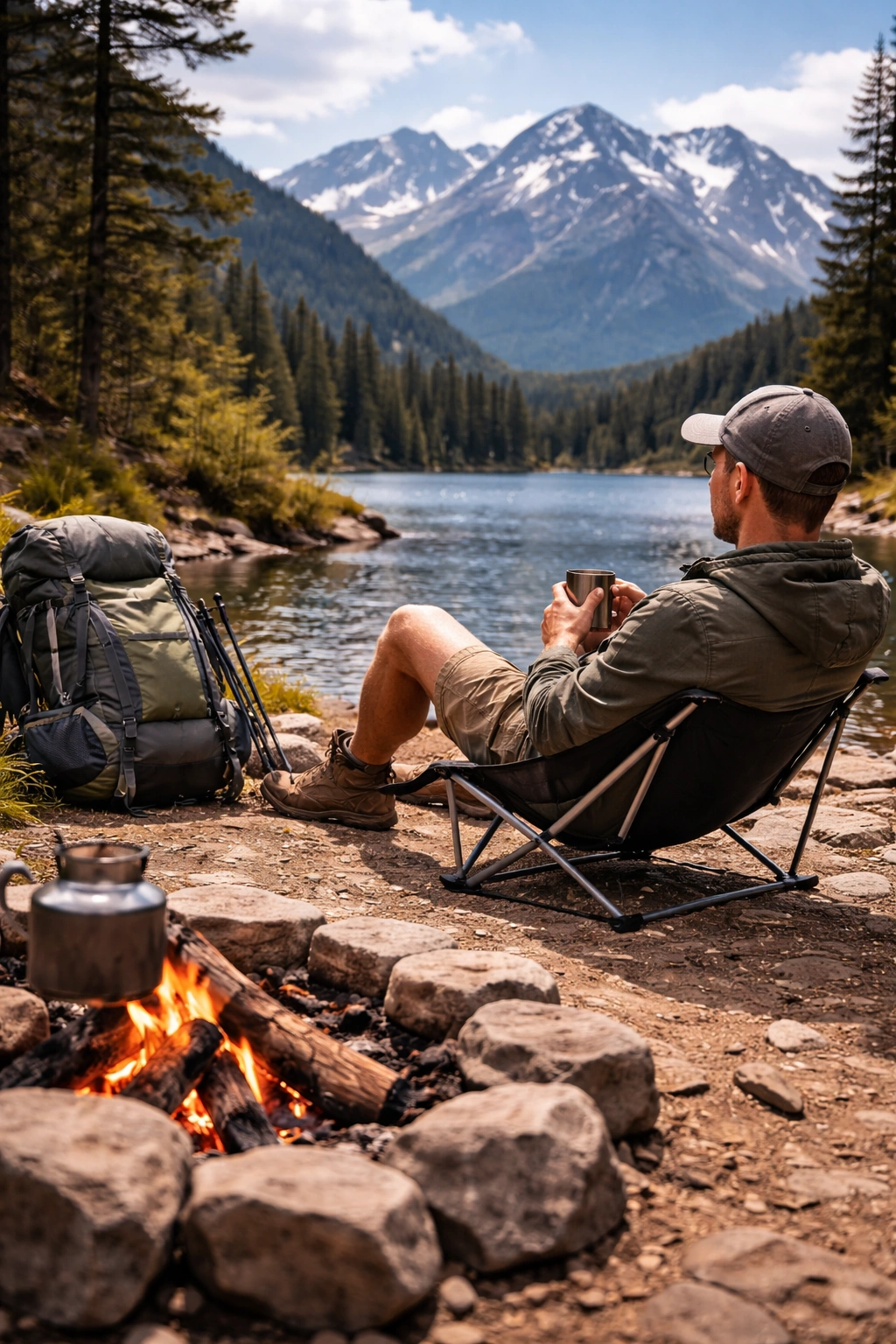
Low Back Chairs: The Backpacker's Best Friend
The low-back chair's greatest strength is its absence — absence of weight, absence of bulk, absence of complexity. When you've carried a 35-pound pack for 12 miles, the last thing you want is a chair that adds another 10 pounds to your load. Ultralight low-back models from brands like Helinox and Nemo weigh under 2 pounds and compress to the size of a water bottle, making them the gold standard for ultralight backpacking chairs.
The low seat height (typically 10–14 inches) that some users find inconvenient is actually an advantage in certain contexts. On uneven terrain, a lower center of gravity means better stability. On windy ridges, a low profile catches less wind. At the beach, a low seat puts you closer to the sand and waves. For beach chairs and festival seating where you're constantly getting up and moving around, the low-back design encourages active use rather than sedentary lounging.
The trade-off becomes apparent after about 90 minutes of continuous sitting. Without upper-back support, your shoulder muscles start compensating, and your neck begins to stiffen. This isn't a design flaw — it's a design choice. Low-back chairs are built for active campers who sit to eat, rest briefly, and then move on. They're not built for the "sit in one spot for four hours" car camping experience.
Detailed Feature Comparison
| Feature | Low Back Chairs | High Back Chairs |
|---|---|---|
| Back Height | 18–24 inches (mid-back support only) | 25–32+ inches (full head & neck support) |
| Typical Weight | 1–6 lbs; ultralight models under 2 lbs | 5–12 lbs; premium lightweight models 4–6 lbs |
| Seat Height | 10–14 inches (grounded feel) | 16–19 inches (standard chair height) |
| Weight Capacity | 250–300 lbs standard; select models to 350 lbs | 300–400+ lbs; ideal for heavy duty use |
| Packed Size | Water-bottle size to small stuff sack | Large carry bag, significant trunk space |
| Comfort Duration | Comfortable for 1–2 hours of active sitting | Comfortable for 3–5+ hours of relaxed sitting |
| Head/Neck Support | None — neck unsupported | Built-in headrest on most models |
| Wind Protection | Minimal — back exposed above shoulder line | Good — high backrest blocks wind effectively |
| Accessories | Basic cup holder, minimal pockets | Cup holders, side tables, coolers, pockets |
| Price Range | $15–$200 (ultralight premium at top end) | $30–$250 (padded recliners at top end) |
| Best Use Cases | Backpacking, beach, festivals, day hikes | Car camping, RV, tailgating, backyard |
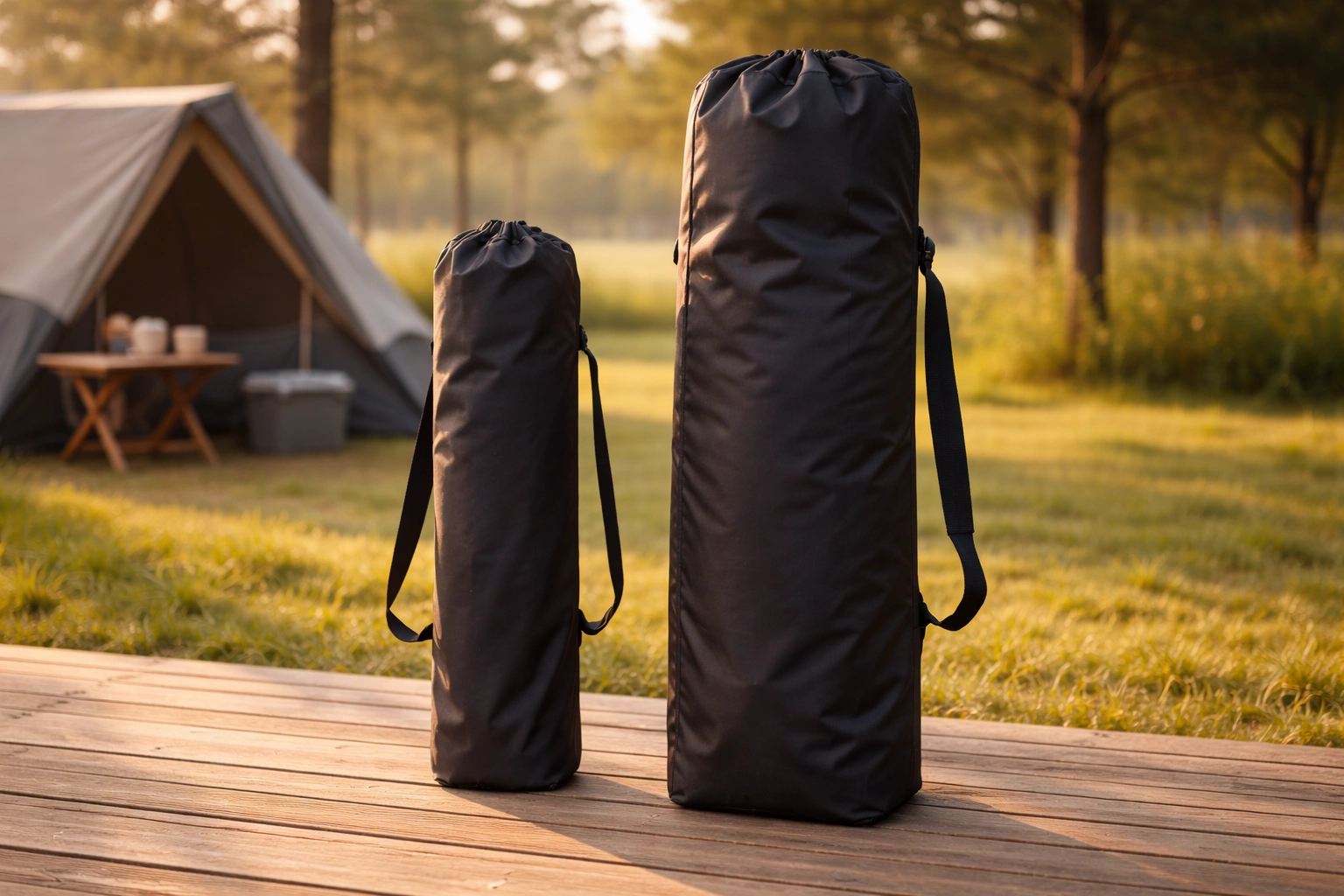
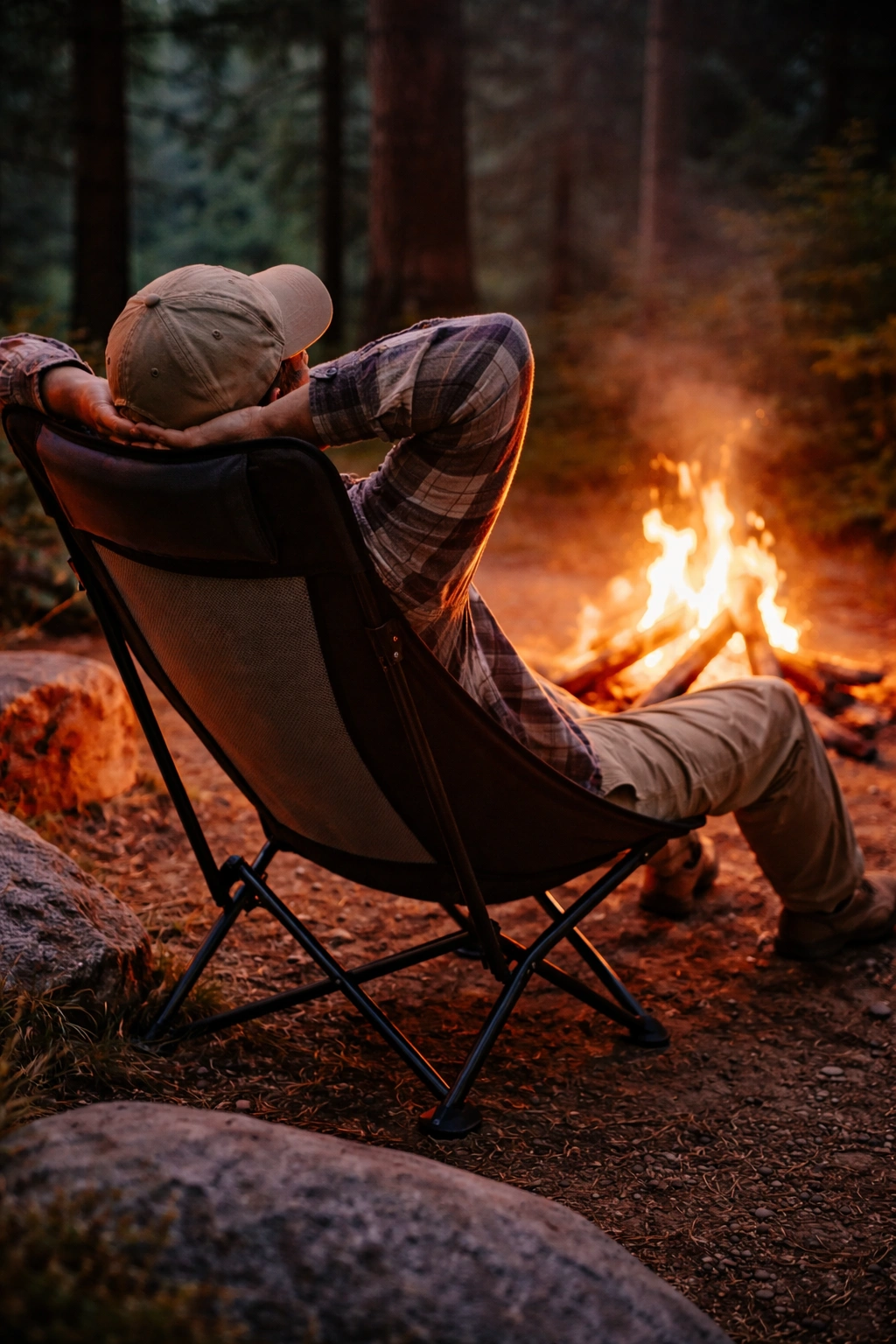
High Back Chairs: The Campsite Lounge Experience
If the low-back chair is a hiking boot — functional, light, purpose-built — then the high-back chair is a living room recliner that happens to fold up. The moment you sit in a quality high-back chair and feel the headrest support your neck, the padded armrests cradle your elbows, and the higher seat position let you actually stand up without groaning, you understand why car campers refuse to compromise on this style.
The ergonomic advantage is substantial. A high backrest supports the natural curve of your thoracic spine, preventing the slouching that occurs in low-back chairs after extended sitting. The headrest eliminates the "forward head posture" that causes neck strain — the same problem physical therapists associate with hours of phone use. For senior campers or anyone with existing back issues, this isn't a luxury — it's a medical necessity for comfortable outdoor sitting.
Many high-back models also offer reclining capabilities, letting you adjust the back angle from upright (for eating) to fully reclined (for stargazing). Combined with reclining camping chair features like adjustable tension and lock positions, a high-back chair can replace both a dining chair and a lounge chair in a single product. Some premium models even include built-in footrests or accept attachable ottomans for full-body relaxation.
Portability & Packed Size: The Dealbreaker Factor
For many campers, the decision between low-back and high-back comes down to a single question: how far do you have to carry it? If the answer is "from the trunk to the campsite," high-back wins without penalty. If the answer is "five miles up a mountain," low-back is your only realistic option.
The packed size difference is staggering. A typical ultralight low-back chair compresses to roughly 14 × 4 inches — smaller than a rolled-up fleece jacket. It slides into a backpack's side pocket or even an internal hydration sleeve. A standard high-back chair in its carry bag measures about 40 × 10 × 10 inches — too large for any backpack and requiring dedicated trunk space. This isn't a marginal difference; it's a categorical one. For a detailed breakdown, see our packed size comparison across all chair types.
Weight follows the same pattern. Low-back chairs range from 1 pound (premium ultralight) to 6 pounds (basic steel frame). High-back chairs start around 5 pounds for budget models and climb to 12+ pounds for padded recliners with heavy-duty frames. That 8-11 pound difference matters enormously on foot but is irrelevant from a car door to a campfire ring.
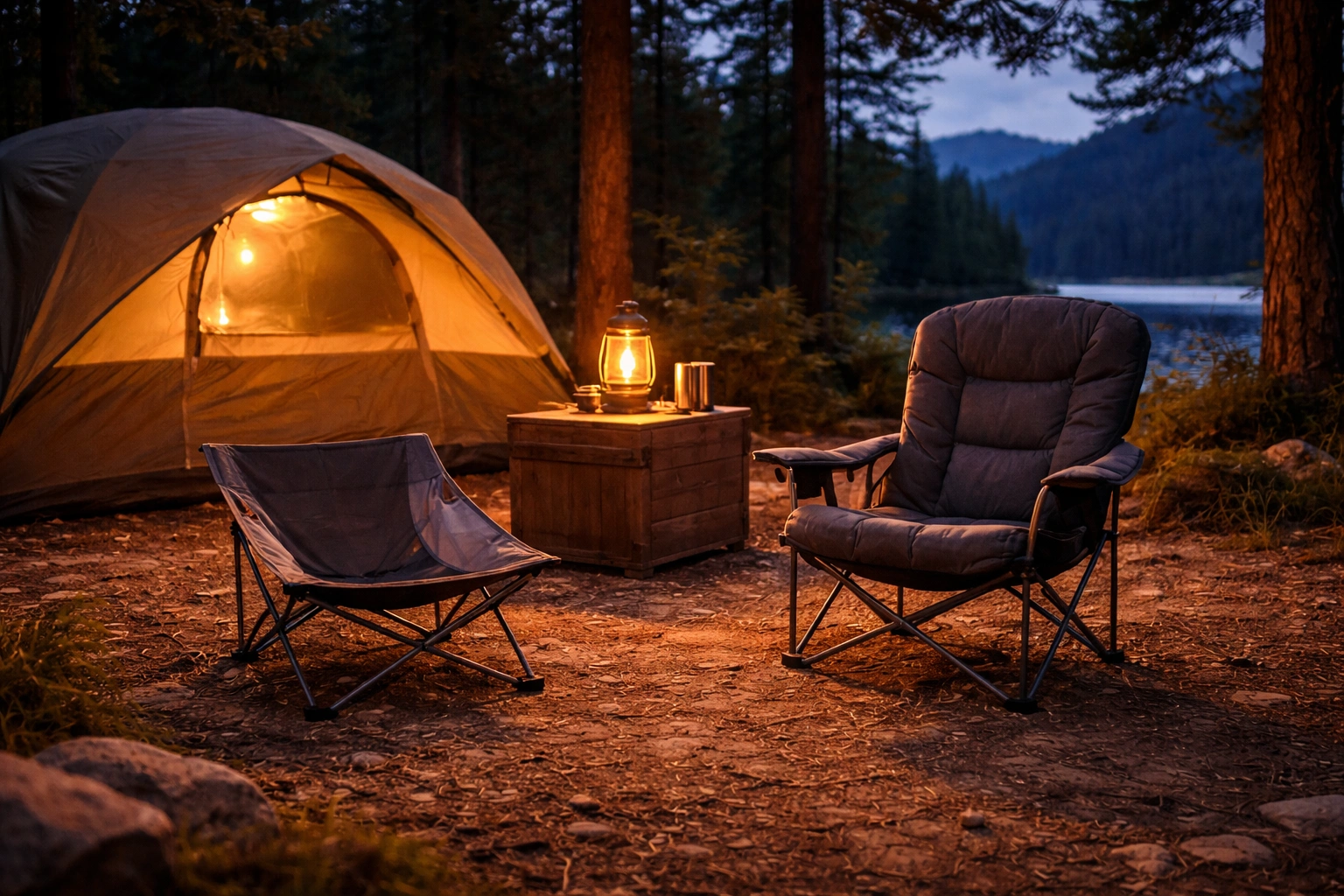
Which Chair Matches Your Adventure Style?
Backpacking & Thru-Hiking
Winner: Low Back. Weight and packability are non-negotiable. Every ounce counts on a 20-mile day. See our ultralight backpacking chairs guide.
Car Camping & RV Life
Winner: High Back. Comfort reigns supreme when weight doesn't matter. Padded headrests and cup holders transform your campsite. Explore car camping chairs.
Beach & Sand
Winner: Low Back. Low seat height puts you closer to the sand, shorter frame is more stable on uneven surfaces. See beach camping chairs.
Festivals & Concerts
Winner: Low Back. You'll carry the chair long distances, and low profile doesn't block views behind you. Check festival chair tips.
Backyard & Tailgating
Winner: High Back. No distance to carry, maximum comfort for hours of use. Many models include side tables for drinks and food.
Big & Tall / Heavy Users
Winner: High Back. Higher weight capacities (300–400+ lbs), wider seats, and taller frames. See XXL camping chairs.
Seniors & Mobility Issues
Winner: High Back. Higher seat (16–19") makes standing easier. Full back support reduces strain. See chairs for seniors.
Bikepacking & Canoe Trips
Winner: Low Back. Minimal packed volume is essential when space is at a premium. Every cubic inch of bag space matters.
Ergonomics & Health: What Your Spine Needs
The choice between low-back and high-back isn't just about comfort preference — it has real implications for spinal health, especially during prolonged outdoor sitting. Understanding the biomechanics helps you make a choice that protects your body, not just your wallet.
Low-back chairs promote what ergonomists call "active sitting." Without upper-back support, your core muscles must engage to maintain upright posture. For short periods (30–60 minutes), this is actually beneficial — it's similar to using an exercise ball at a desk. But beyond an hour, fatigue sets in, and most people begin slouching forward, which compresses the lumbar discs and strains the shoulder muscles. If you have existing lower-back issues, active sitting can exacerbate pain rather than prevent it.
High-back chairs provide "passive support" — the backrest itself maintains your spinal alignment, allowing your muscles to relax. The headrest is particularly important because it prevents forward-head posture, a condition where your chin juts forward and your cervical spine loses its natural curve. Physical therapists identify forward-head posture as a leading cause of tension headaches and neck pain, both of which a good high-back chair can prevent during long campfire sessions.
Materials & Frame: What Changes with Back Height
Back height influences material choices in ways that affect weight, durability, and cost. Low-back chairs, especially ultralight models, almost exclusively use aluminum frames because the shorter backrest creates less leverage and stress on the frame. This allows thinner, lighter tubing without sacrificing strength. The fabric is typically ripstop nylon or thin polyester mesh — lightweight materials that would tear under the higher stresses of a tall backrest.
High-back chairs face greater engineering challenges. The tall backrest acts as a sail in wind and creates significant leverage when you lean back. This demands stronger frames — typically powder-coated steel for budget models or thick-walled aluminum for premium options. The fabric must also be heavier-duty: high-denier polyester (600D or higher) or even canvas blends that resist stretching and tearing under the increased tension of a tall backrest.
This material escalation is why high-back chairs are inherently heavier and more expensive than low-back chairs of equivalent quality. It's not that manufacturers are cutting corners on low-back designs — it's that the physics of a short backrest simply requires less material to achieve the same structural integrity.
Top Brands for Each Style
Several brands have staked their reputation on excelling at one style or the other. For low-back ultralight chairs, Helinox is the undisputed leader — their Chair One and Chair Zero define the category with DAC aluminum poles and sub-2-pound weights. Nemo offers innovative alternatives like the Moonlite with ergonomic seating at similar weights.
For high-back comfort, GCI Outdoor specializes in reclining high-back designs with their patented Spring-Action rocking technology. Coleman provides affordable high-back options with solid warranties. For budget-conscious buyers, Ozark Trail offers surprisingly capable high-back models under $40. If you're comparing premium brands directly, our Helinox vs Nemo and Coleman vs Ozark Trail comparisons provide deep dives.
🏆 Final Verdict: Low Back or High Back?
Choose LOW BACK if: You're a backpacker, thru-hiker, beachgoer, festival attendee, or anyone who carries their chair more than 100 yards from the vehicle. The weight savings (2–10 lbs lighter) and compact packed size (often 70% smaller) are advantages no high-back chair can match. Accept that you'll lack head support and plan accordingly — use a jacket rolled up behind your neck for occasional comfort breaks.
Choose HIGH BACK if: You're a car camper, RVer, tailgater, or backyard lounger who values comfort above all else. The headrest, higher seat, padded armrests, and accessory options (cup holders, side tables, coolers) create an experience that low-back chairs simply cannot replicate. The weight and bulk are irrelevant when your chair travels from trunk to campsite in 30 seconds.
Choose BOTH if: You camp in multiple styles. A $25 low-back chair for backpacking plus a $60 high-back chair for car camping covers every scenario for under $100 — often less than a single premium chair of either style. Many experienced outdoor enthusiasts use this two-chair strategy and consider it the smartest approach.
Frequently Asked Questions
Q: Are high-back camping chairs worth the extra weight?
Absolutely — if comfort is your priority and you're not carrying the chair far. The head support, ergonomic backrest, and higher seat justify every extra pound for car camping, RV trips, and tailgating. For backpacking, the weight is almost never justified.
Q: Can I get a high-back chair that's also lightweight?
Some premium brands offer high-back models under 4-5 lbs, but they're expensive ($150-250) and still pack larger than low-back equivalents. They're a niche product for "lightweight car camping" rather than true backpacking. See our premium camping chairs roundup for options.
Q: Which style is better for tall people?
High-back chairs are almost always better for anyone over 6 feet. Low-back chairs stop at mid-back height on tall users, offering even less support than average. A high-back chair with an extra-tall backrest (30+ inches) provides the full spinal support that tall frames need. Check our guide for tall campers.
Q: Do low-back chairs work for people with back pain?
It depends on the type of pain. Low-back chairs can help with lumbar issues if they have good seat pan contouring, because active sitting engages core stabilizers. But for upper-back or neck pain, low-back chairs will likely worsen symptoms over time. When in doubt, choose high-back with lumbar support.
Q: Which style has better cup holders and accessories?
High-back chairs win decisively. Their larger frames accommodate robust cup holders, side tables, insulated cooler pockets, and phone pockets. Low-back chairs typically have at most a small mesh cup holder and maybe one side pocket — anything more would add unacceptable weight for the target user.
Q: Can I add a headrest to a low-back chair?
Aftermarket headrests exist but rarely work well. The problem isn't the cushion — it's that low-back frames aren't designed to support the downward weight of your head leaning back. Adding a headrest can stress frame joints beyond their design limits. You're better off buying a high-back chair if head support matters to you.
For more detailed comparisons, explore our Helinox vs Nemo analysis, learn how to choose a camping chair with our comprehensive checklist, or discover reclining camping chairs that combine high-back support with adjustable angles. Proper maintenance extends any chair's life — our how to clean camping chairs guide covers both low-back and high-back fabric care.