Best Chairs for Overlanding: Rugged, Compact & Adventure-Ready
Overlanding demands gear that survives rugged trails, packs into tight spaces, and delivers true relaxation after a long day of exploration.
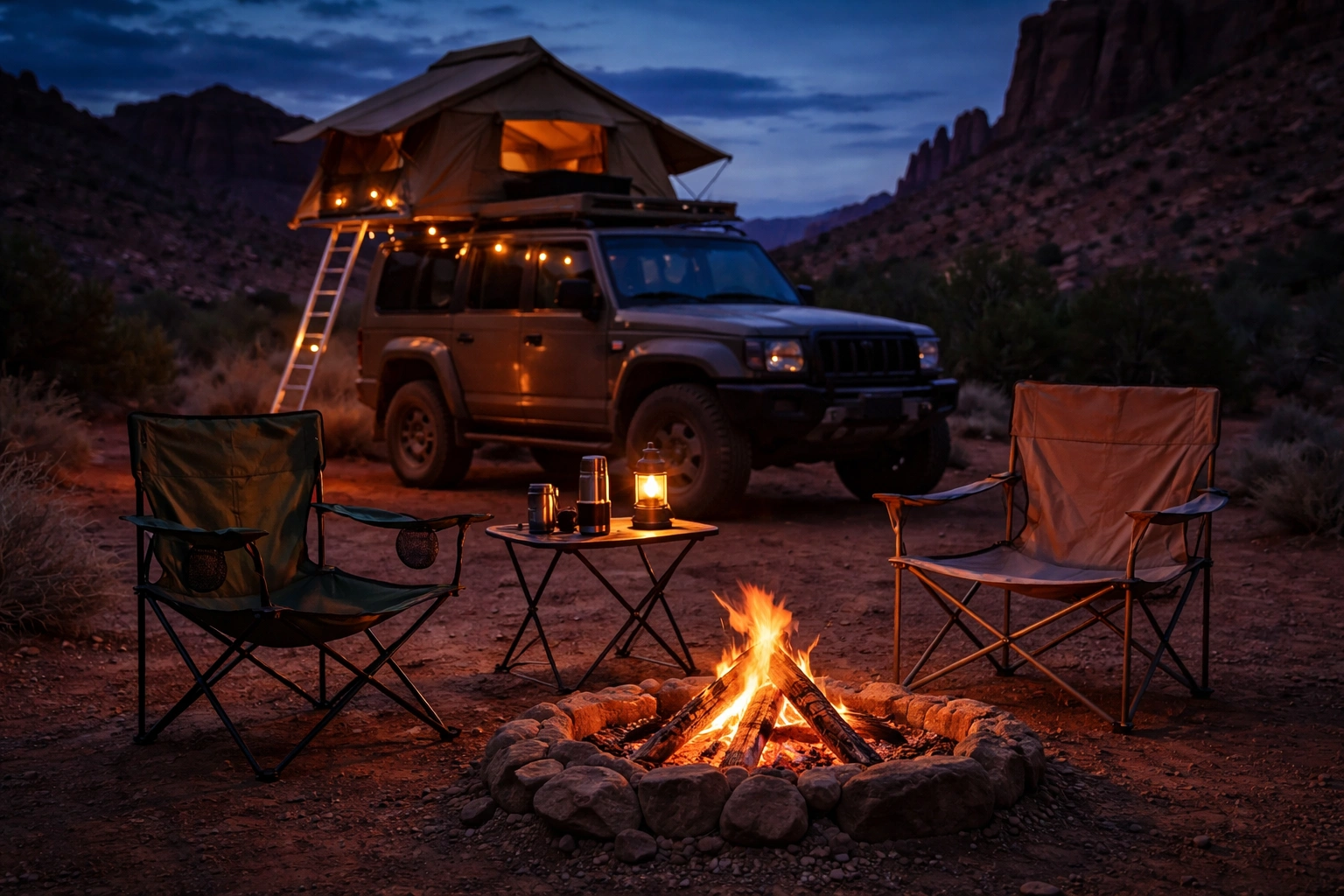
Jump to Top Picks ↓🌲 Overlanding is not just car camping — it's vehicle-dependent travel where space, durability, and quick setup matter most. Unlike standard camping trips, overlanding often involves remote routes, changing weather, and the need for gear that withstands constant packing and unpacking. The right chair becomes your mobile throne: lightweight enough to store behind seats, robust enough for uneven ground, and comfortable after dusty miles.
What Makes a Great Overlanding Chair?
Overlanders optimize every cubic inch of vehicle space. Here's what separates overlanding-ready chairs from ordinary camp chairs:
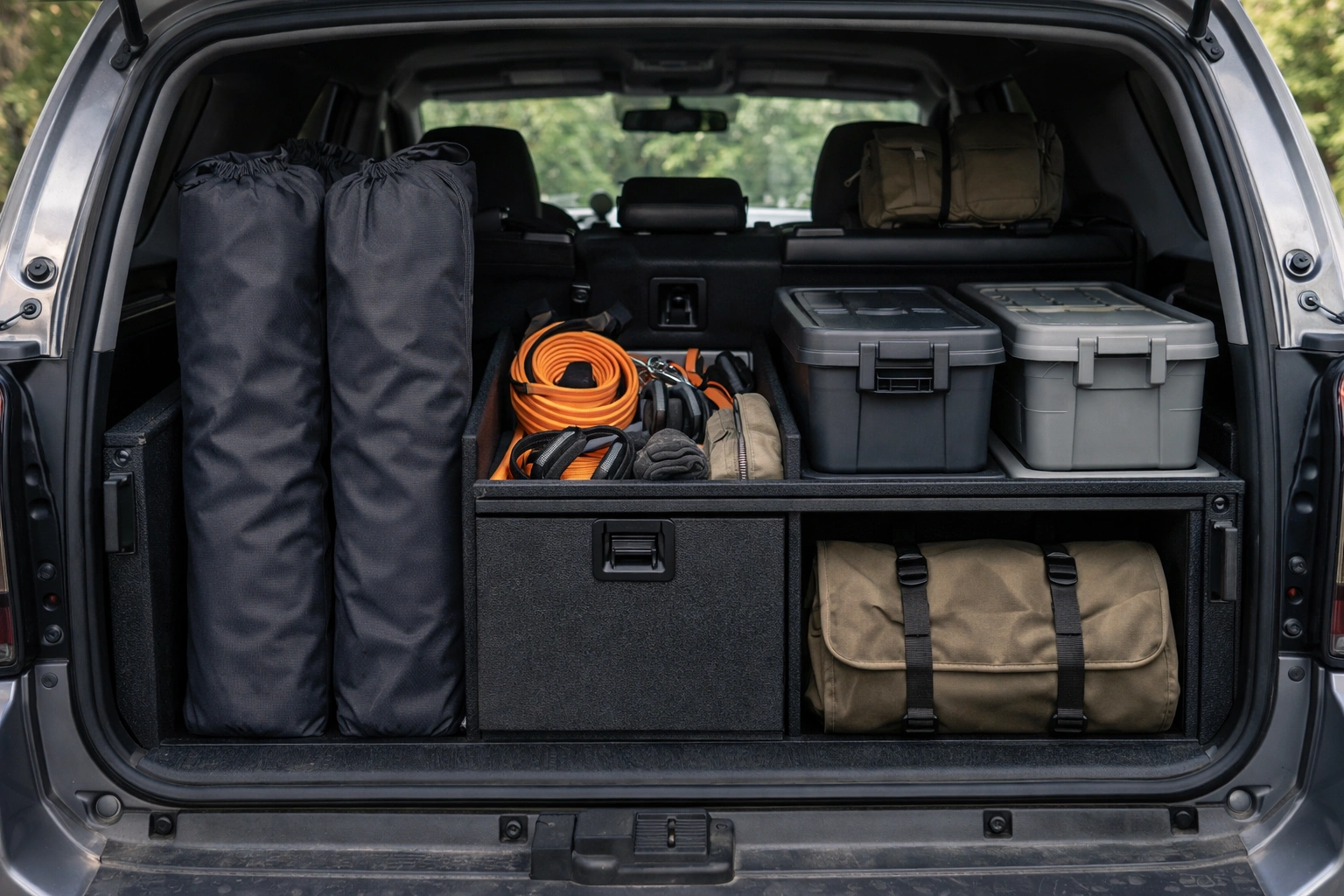
🔧 Packed Size & Portability
Look for folded dimensions under 20 inches with a compact carry bag. Ultralight chairs → save space but ensure sturdy frames.
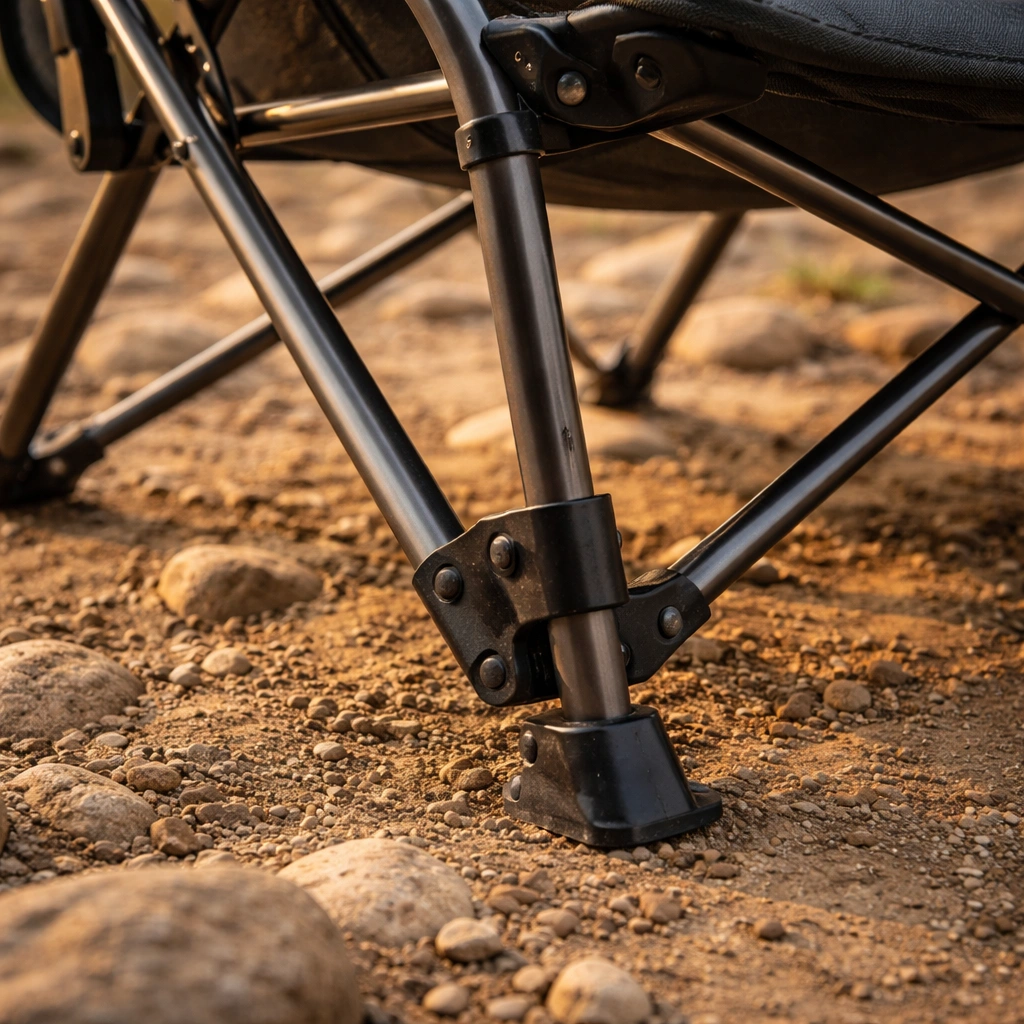
🛡️ Durability & Frame
Steel for absolute strength, aluminum for rust resistance. Heavy-duty chairs → with reinforced joints handle the trail.
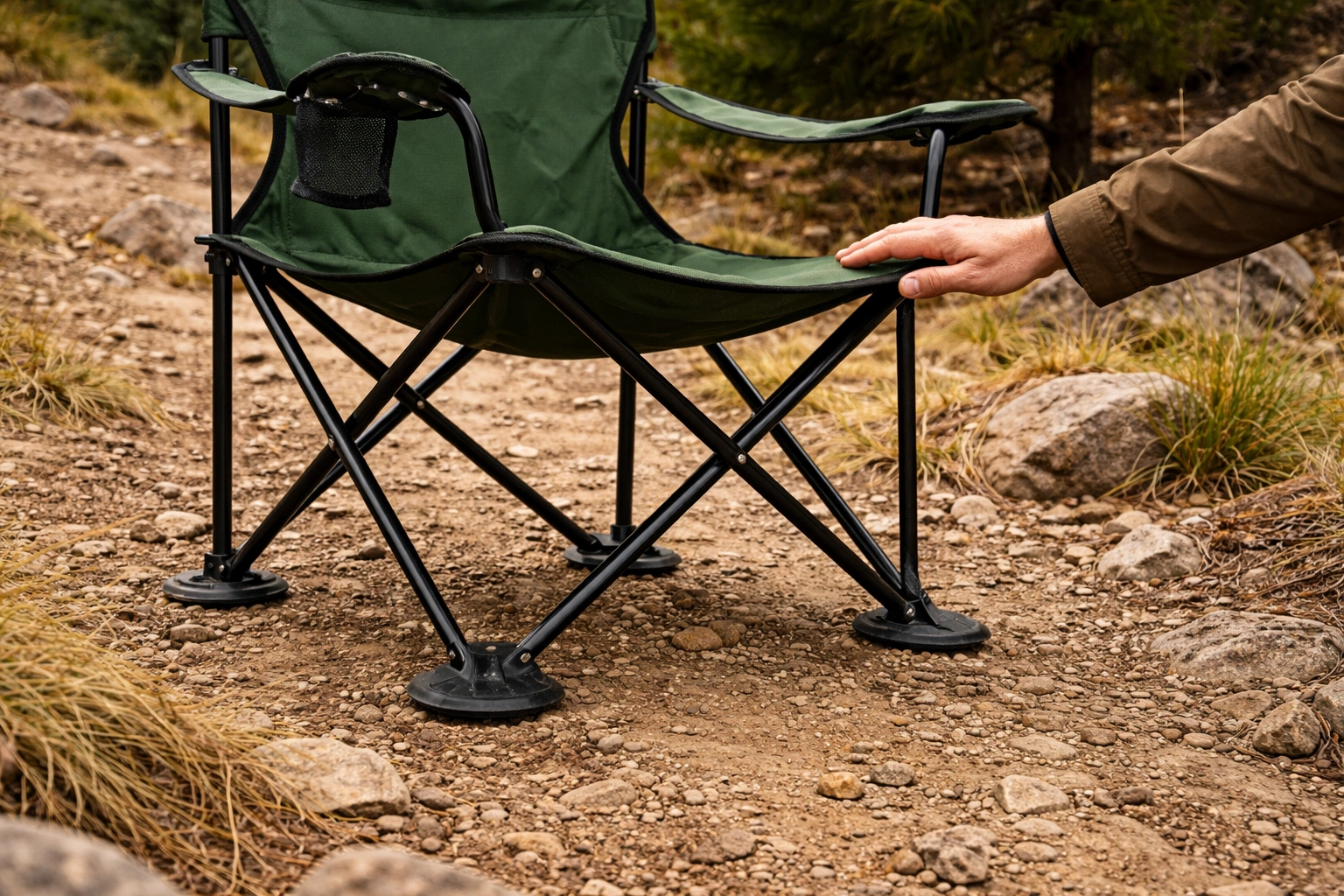
⚖️ Stability on Uneven Ground
Wide feet and high seat height (17–19 inches) prevent sinking. Weight capacity guide →
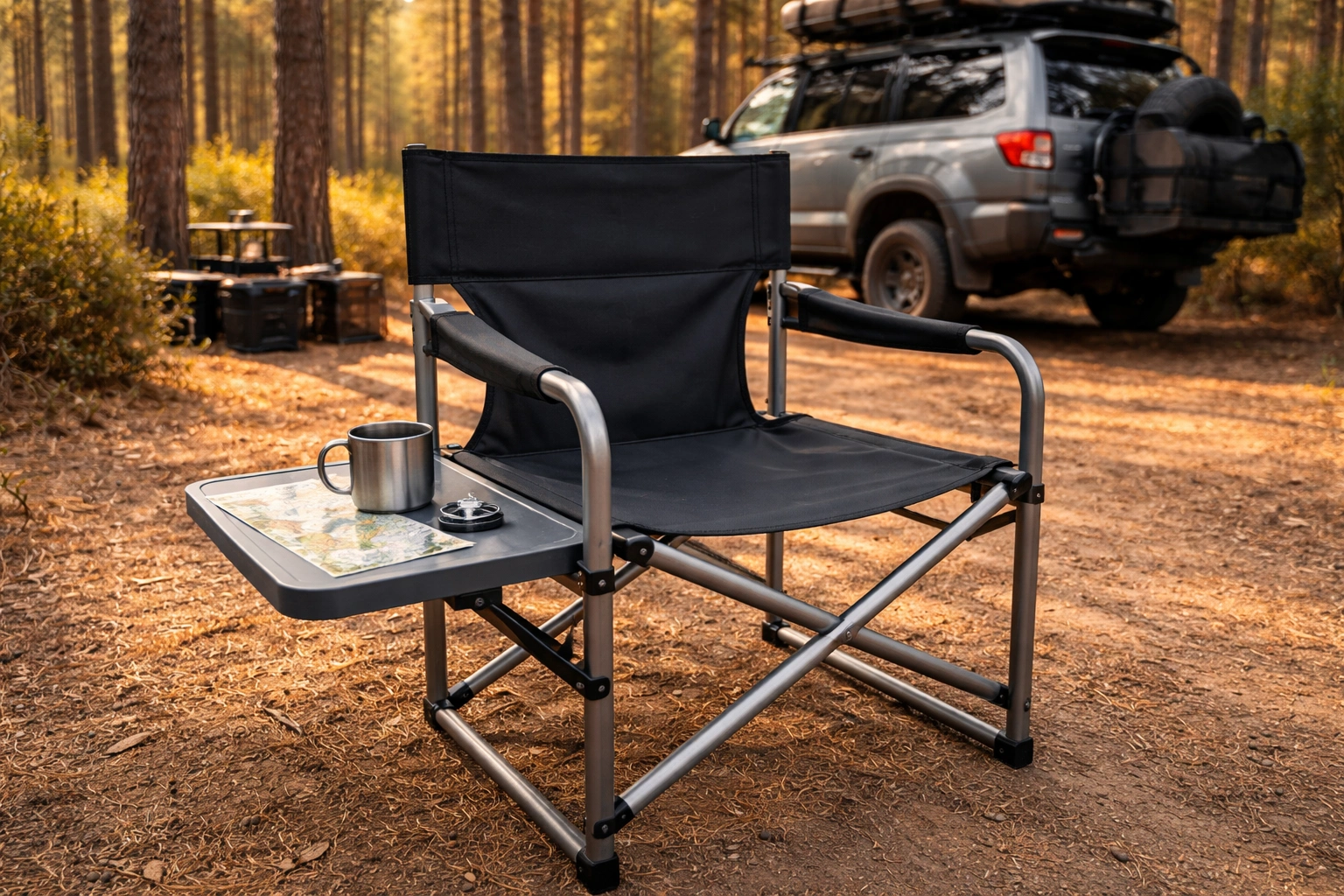
🧼 Weather Resistance
High-denier polyester resists mud, dust, and dew. Wash fabric guide → for trail maintenance.
Overlanding Chair Types: Which Suits Your Rig?
Not all camping chairs are built for overlanding. Different styles serve different needs — from compact minimalist setups to comfortable basecamp rigs.
Director Chairs
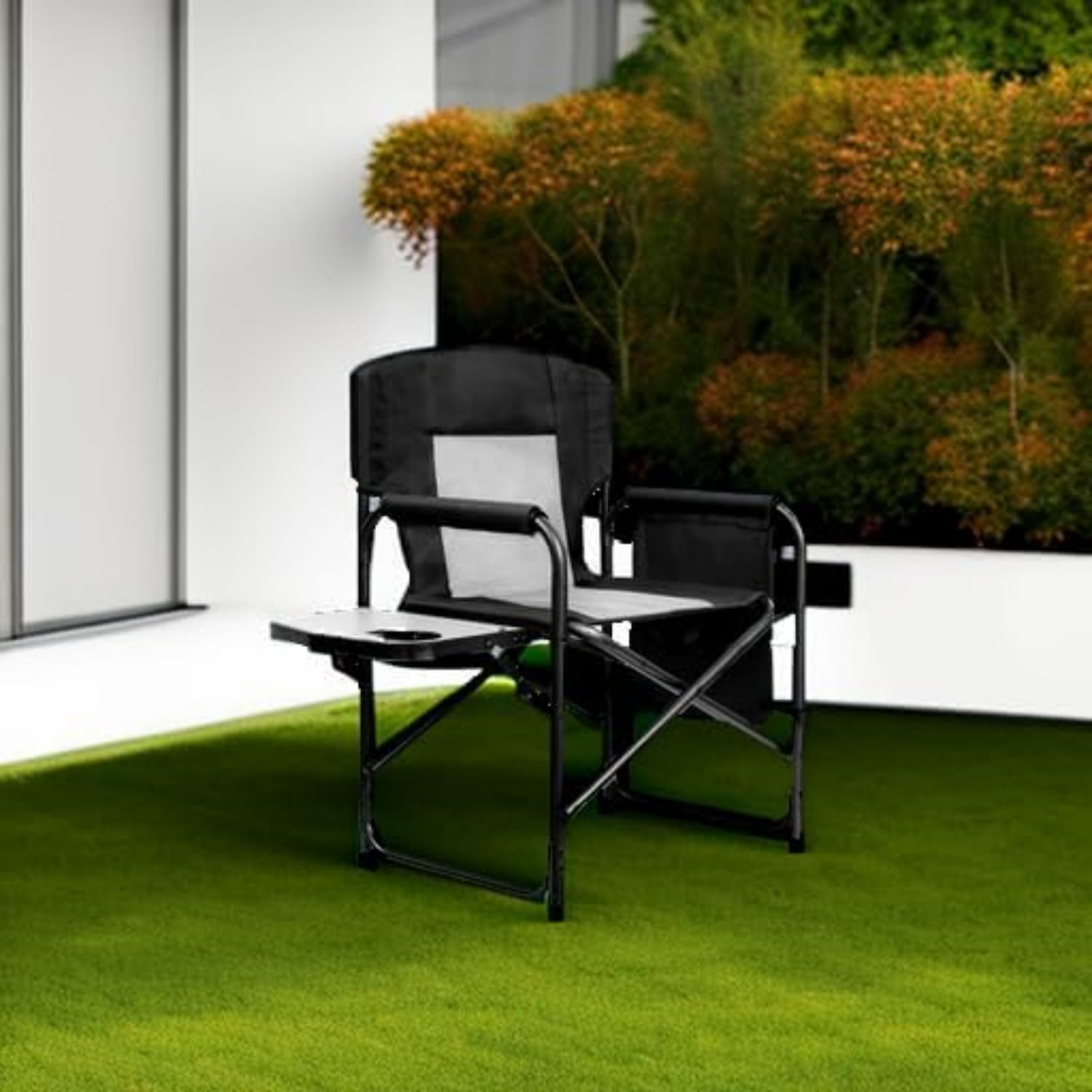
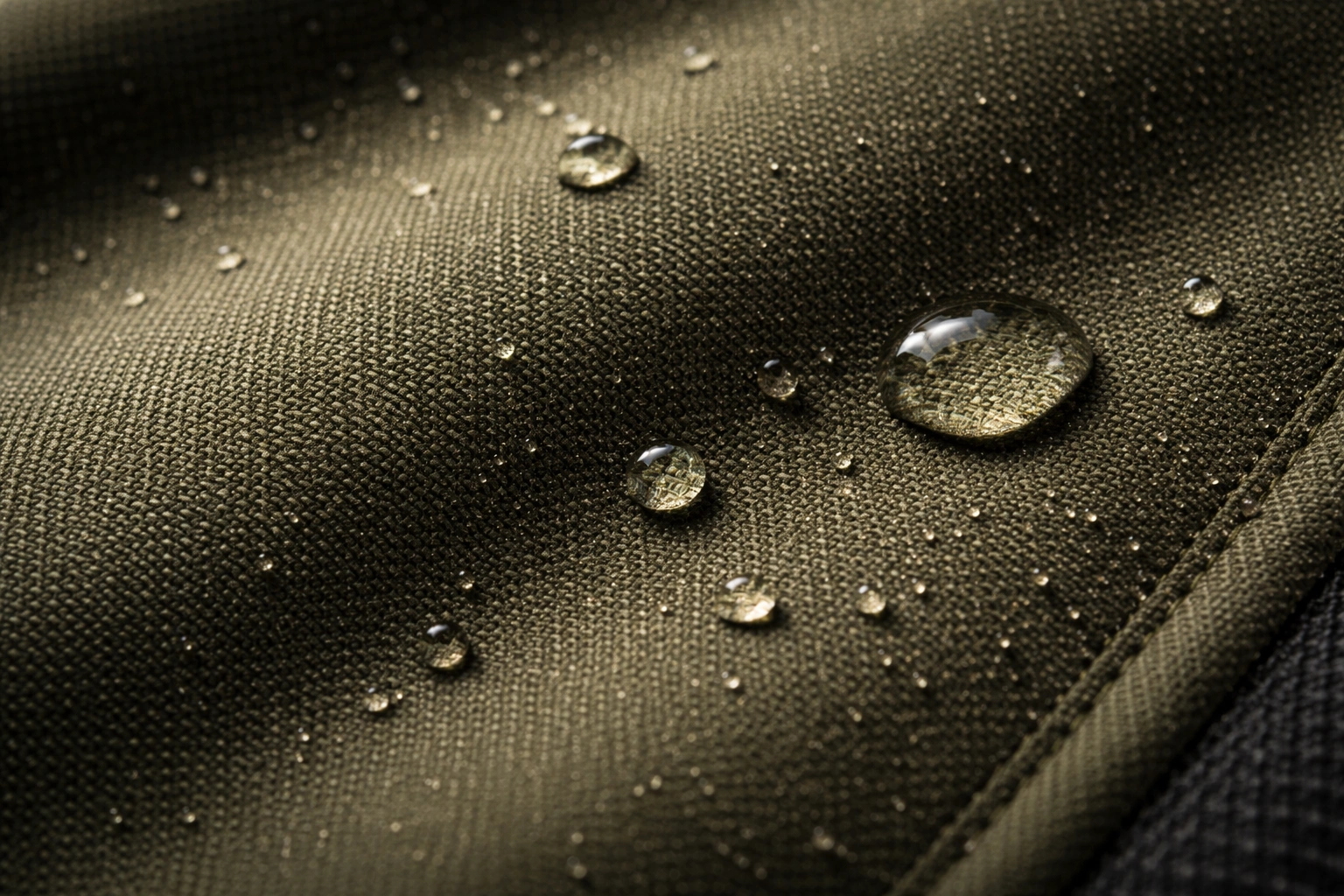
Built-in side table for maps and gadgets, high back, sturdy frame. Bulkier when folded but unmatched utility. Explore director chairs →
Ultralight / Backpacking
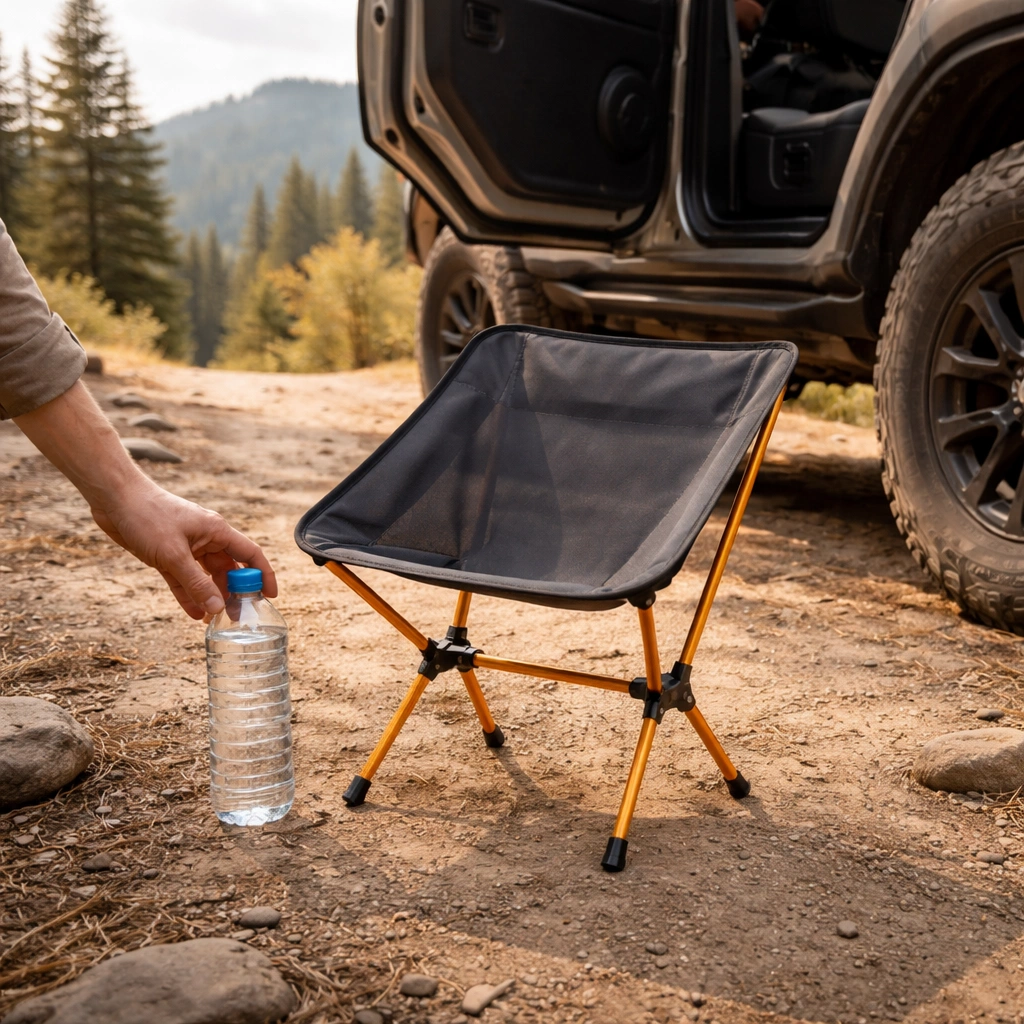
Super compact — fits in door pockets or under seats. Very light but lower seat height. Explore ultralight chairs →
Reclining & High-Back
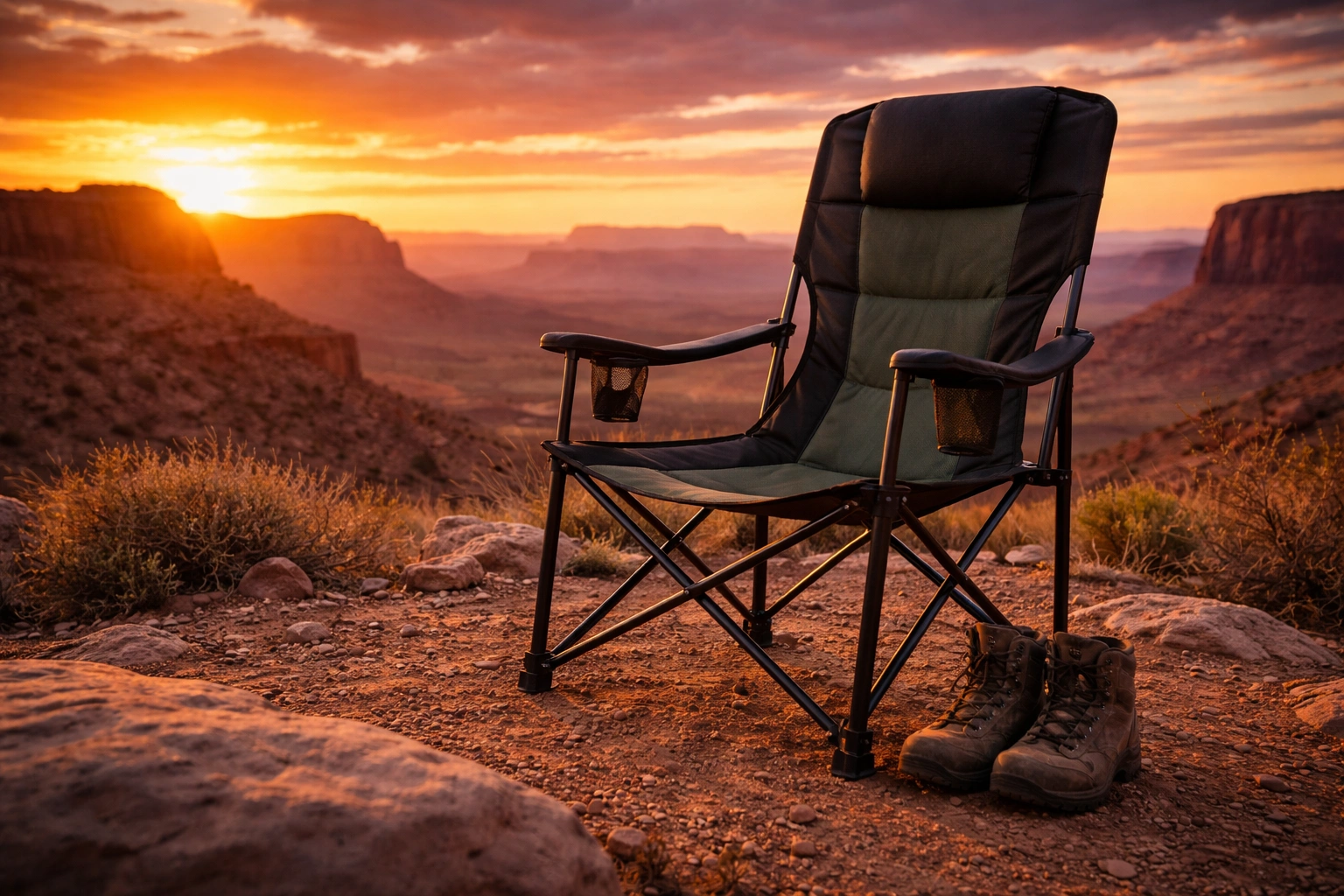
Adjustable positions and padded headrests for true relaxation. More moving parts but worth it for multi-day trips. Explore reclining chairs →
Heavy-Duty & Cooler Chairs
Reinforced frames for 300–400 lb capacity. Built-in coolers keep drinks cold. Explore cooler chairs →
Quick Comparison Table
| Chair Type | Best For | Pros | Cons |
|---|---|---|---|
| Director | Basecamp, longer stays | Side table, high back, sturdy | Bulky folded, heavier |
| Ultralight | Minimalist, tight storage | Super compact, very light | Lower seat, less plush |
| Rocking | Relaxed evenings | Superb comfort, soothing motion | Larger footprint, rocky ground issue |
| Cooler Chairs | Hot climate overlanding | Drinks cold, all-in-one | Added weight, narrower seat |
| Reclining | Siestas, versatility | Adjustable positions, full relaxation | More moving parts, needs space |
Materials Matter: Frames & Fabrics for the Trail
Steel vs Aluminum Frames
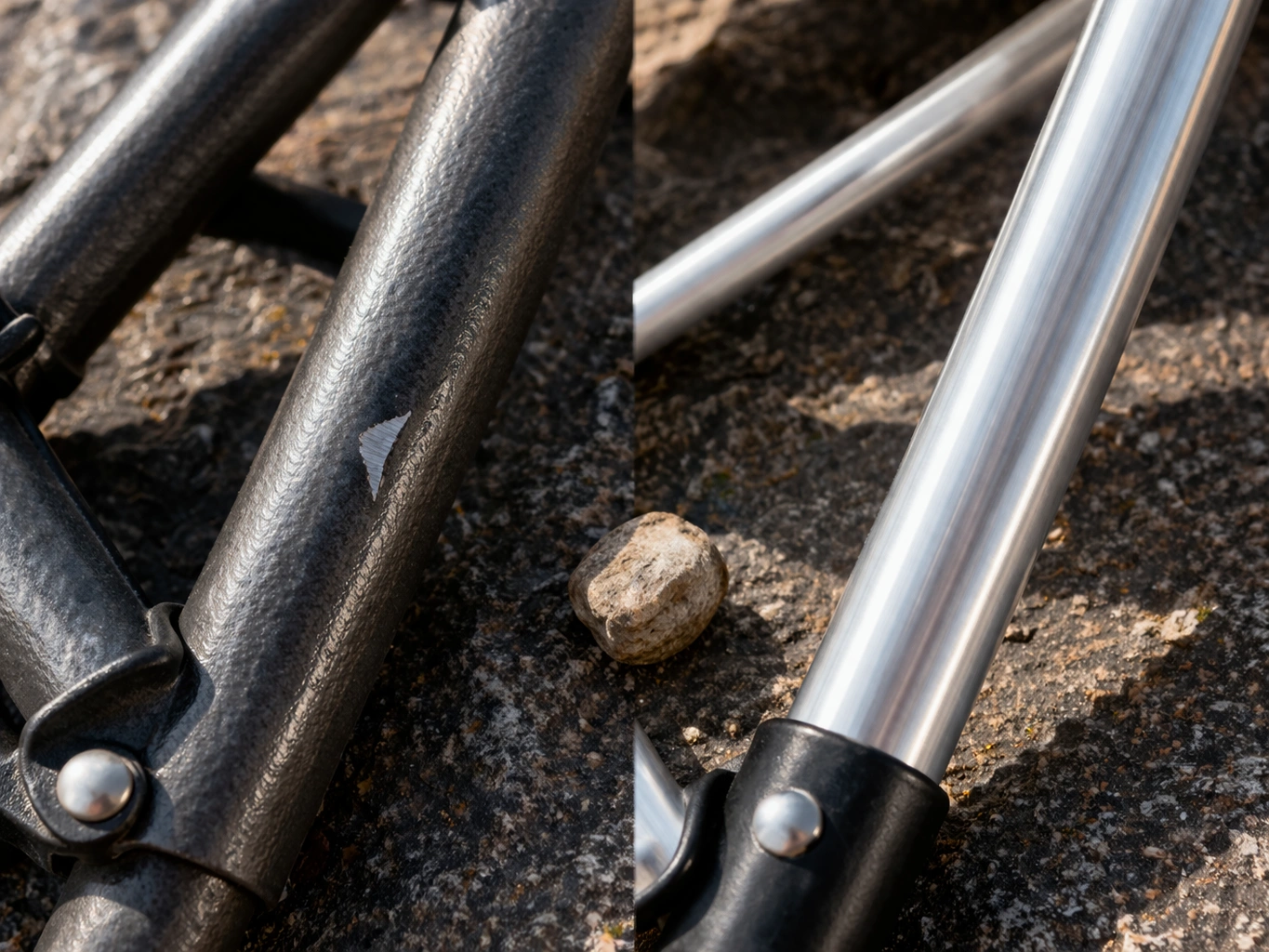
One of the biggest decisions for overlanding chairs. Steel frames offer superior strength and are often more affordable, but they add weight and can rust if the powder coating chips on rocky trails.
Aluminum frames are lighter, rust-proof, and ideal for frequent setups in varied climates — though high-grade aluminum usually costs more. For a comprehensive breakdown: steel vs aluminum camping chairs →
Overlanders covering long distances often prefer aluminum for its corrosion resistance and lower packed weight — crucial when managing overall payload.
Fabric Selection for Trail Conditions
Overlanding exposes chairs to vibration, dust, moisture, and temperature swings. 600D to 1200D polyester offers excellent abrasion resistance and dries fast. Mesh panels breathe well in hot climates but offer less insulation.
For a deeper understanding of material choices: camping chair materials explained →. Many overlanders also prefer chairs with side tables → to keep gadgets and maps accessible during camp setup.
✅ Overlanding Chair Checklist: Before You Buy
- Packed dimensions: Measure your vehicle storage (trunk, roof box, rear seat gaps). Aim for folded length ≤ 22 inches.
- Setup speed: Prefer one-piece folding or shock-corded frames that deploy in seconds.
- Ground clearance: High seat height (17–19 inches) works better on uneven terrain; low chairs sink into soft soil.
- Carry bag quality: Reinforced straps and padding protect the chair during bumpy transit.
- Accessory compatibility: Cup holders, side pockets, and bottle openers add convenience after a long drive.
For more gear organization: camping gear packing checklist →
Space-Saving Innovations: Folding & Storage
Maximizing Every Cubic Inch
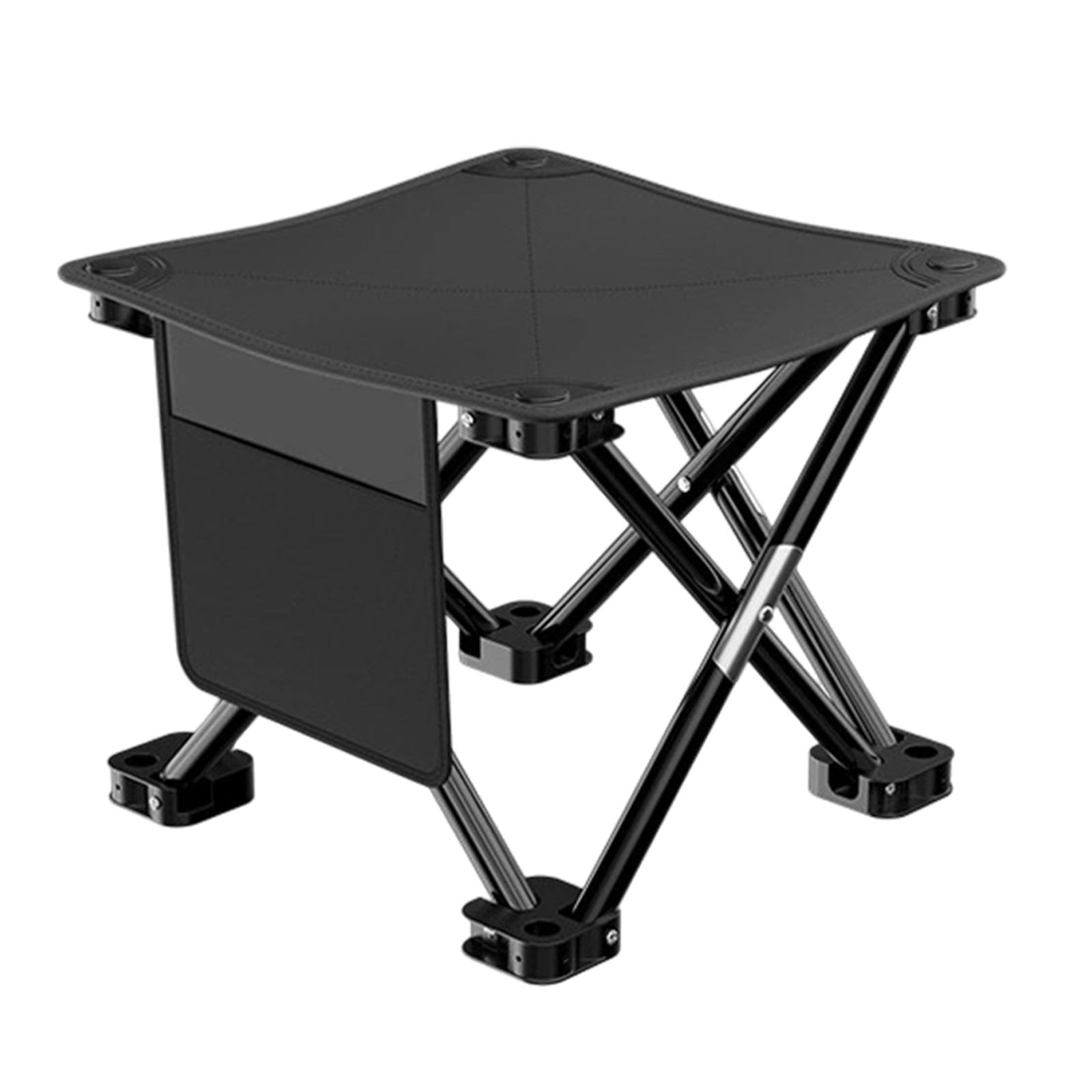
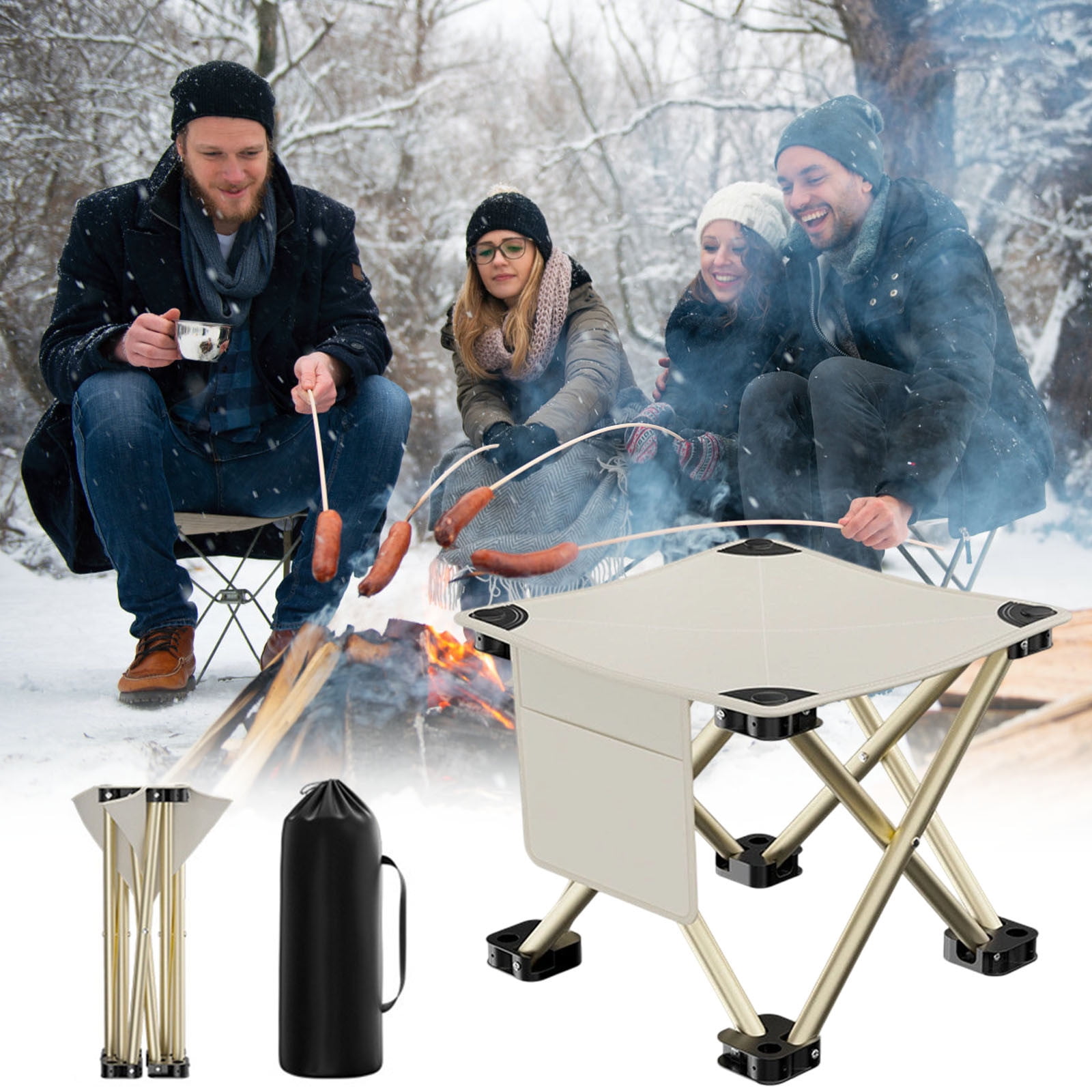
Overlanding rigs have limited space, so clever folding designs are game-changers. Modern overland chairs use collapsible "truss" frames that fold flat or into narrow bundles. Some overlanders incorporate camping stools → as secondary seating for quick trailside stops.
If you frequently switch between camp and driving, look for chairs that pack into a bag with shoulder straps. Check our packed size comparison → to see which models best fit your specific rig layout — whether it's a drawer system, roof box, or rear seat gap.
Comfort vs. Packability: Striking the Balance
The Overlander's Dilemma
Long days behind the wheel demand a chair that supports your back and encourages true rest. High-back chairs with padded headrests relieve neck tension, while breathable mesh prevents sweat buildup in hot climates.
Yet bulky high-back models may take up too much space in a drawer system. Comfort vs portability → is a classic dilemma — the right overlanding chair hits the sweet spot: supportive yet compact enough for a roof box or behind-seat storage. Look for chairs that offer adjustable recline without excessive bulk.
Maintaining Your Chair During Long Expeditions
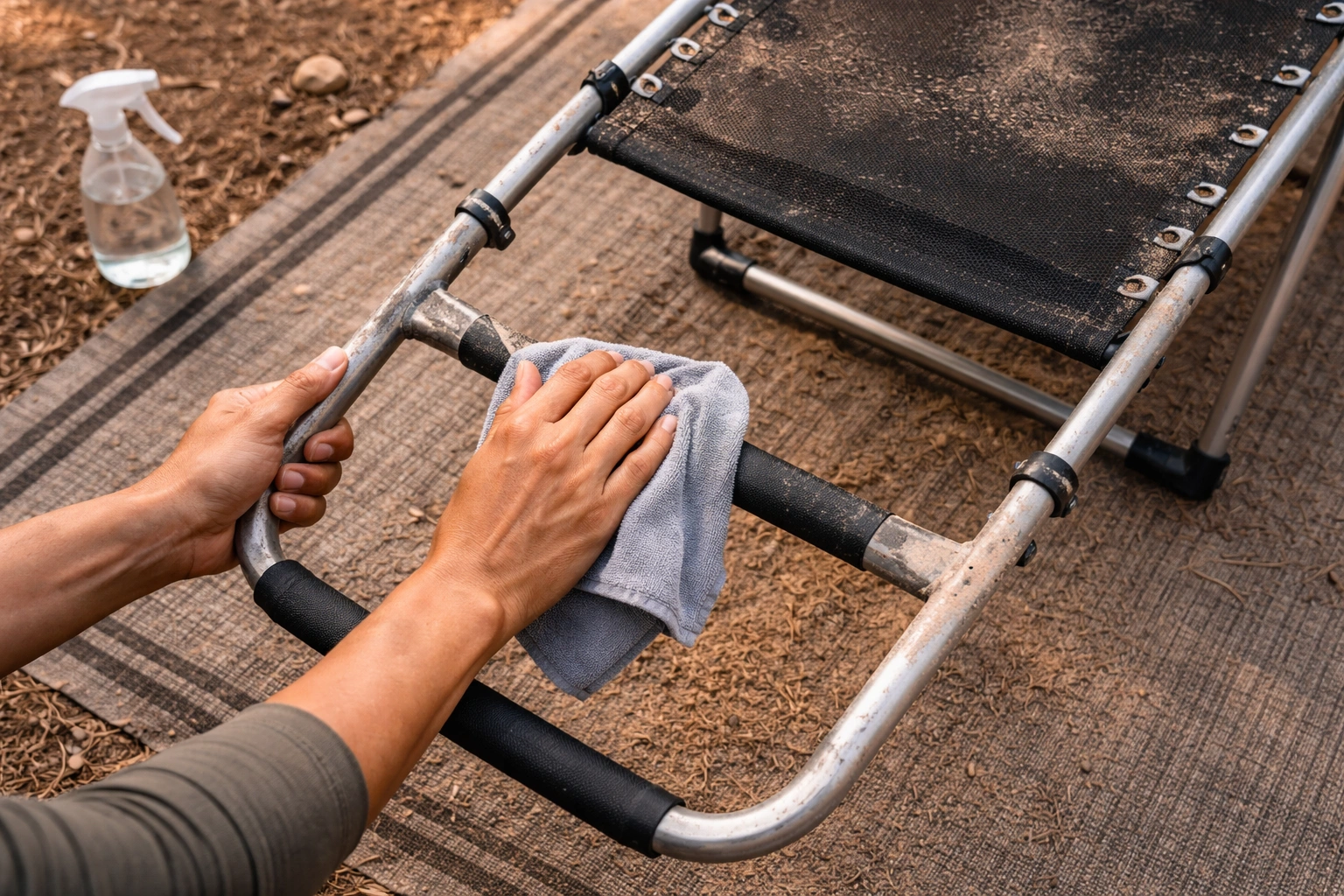
Trail-Side Care Basics
Dust and grime accumulate quickly on overlanding trails. A quick shake and occasional wipe-down keep fabrics fresh between camps. For deeper cleaning after muddy excursions: how to wash camping chair fabric →
Inspect joints and hinges regularly — a drop of silicone lubricant prevents squeaking and premature wear on corrugated roads. If a part breaks in remote areas, knowing how to fix a wobbly leg → or source replacement parts → can save your trip. Also learn frame rust care → to protect against corrosion from rain and river crossings.
🎯 Ready to upgrade your overland seating? After analyzing hundreds of overlander reviews and field tests, we've selected chairs that best combine durability, portability, and real-world comfort. Browse our top picks below.
Browse Top Overlanding Chairs ↓