Camping Chair Materials Explained
From denier fabric to aircraft-grade aluminum — understand what your camping chair is made of, why it matters, and how to choose the perfect materials for durability, comfort, and weight savings.
Why Understanding Materials Matters
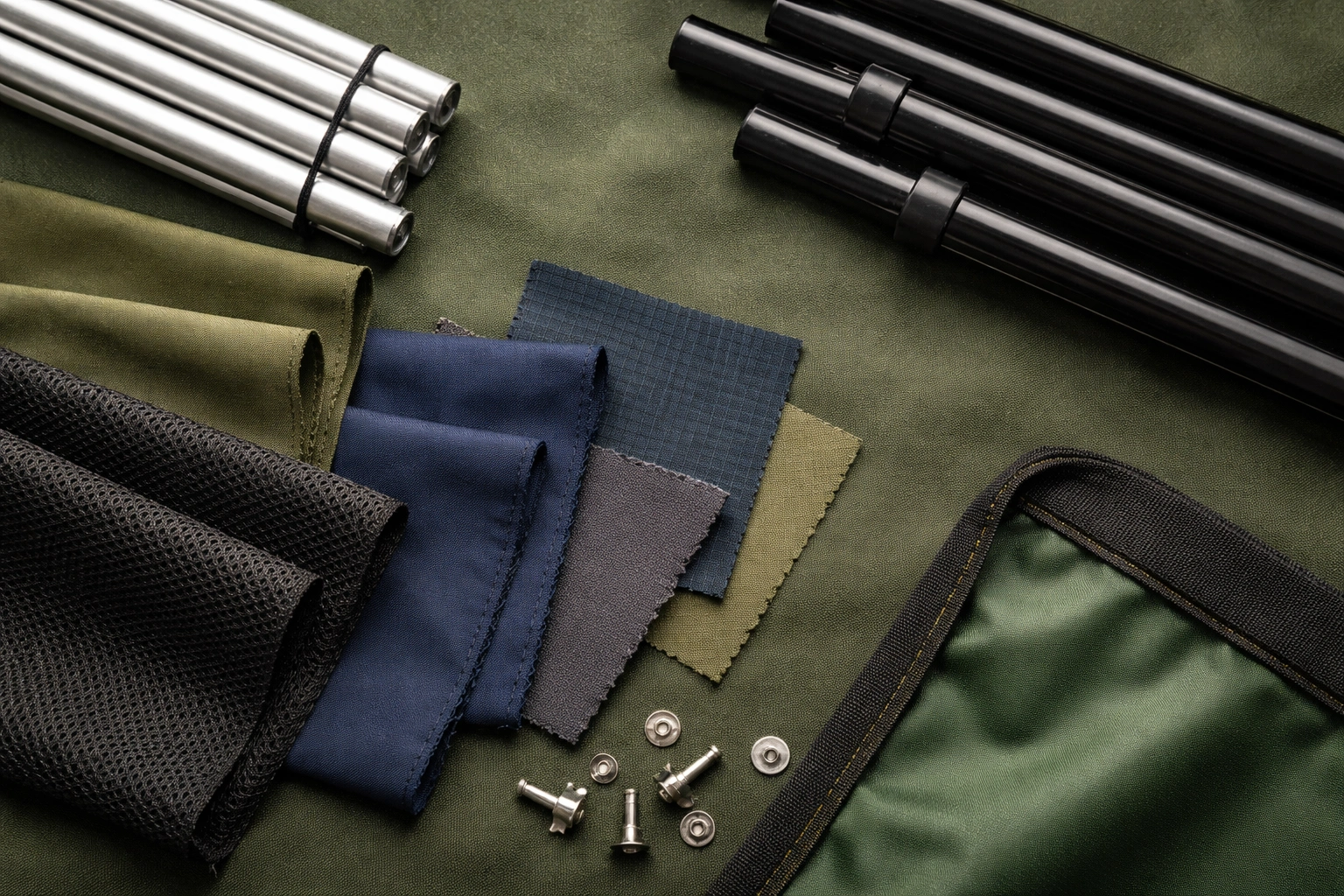
Whether you're a weekend car camper or a thru-hiker counting every ounce, the materials in your camping chair directly affect its weight capacity, portability, lifespan, and comfort. A chair that feels sturdy in the store might rust, sag, or tear after a single season if the underlying materials aren't suited to your environment.
Choosing the right combination of frame and fabric ensures you don't end up with a rusty, sagging chair after one season—or worse, a chair that fails when you need it most. In this guide, we break down every component: frame alloys, fabric types, coatings, and hardware, so you can shop with confidence and invest in gear that lasts.
Frame Materials: The Backbone of Durability
The frame determines a camping chair's strength, stability, and carry weight. Two dominant materials dominate the market: steel and aluminum. Each has distinct advantages depending on your camping style. Let's examine both in detail.
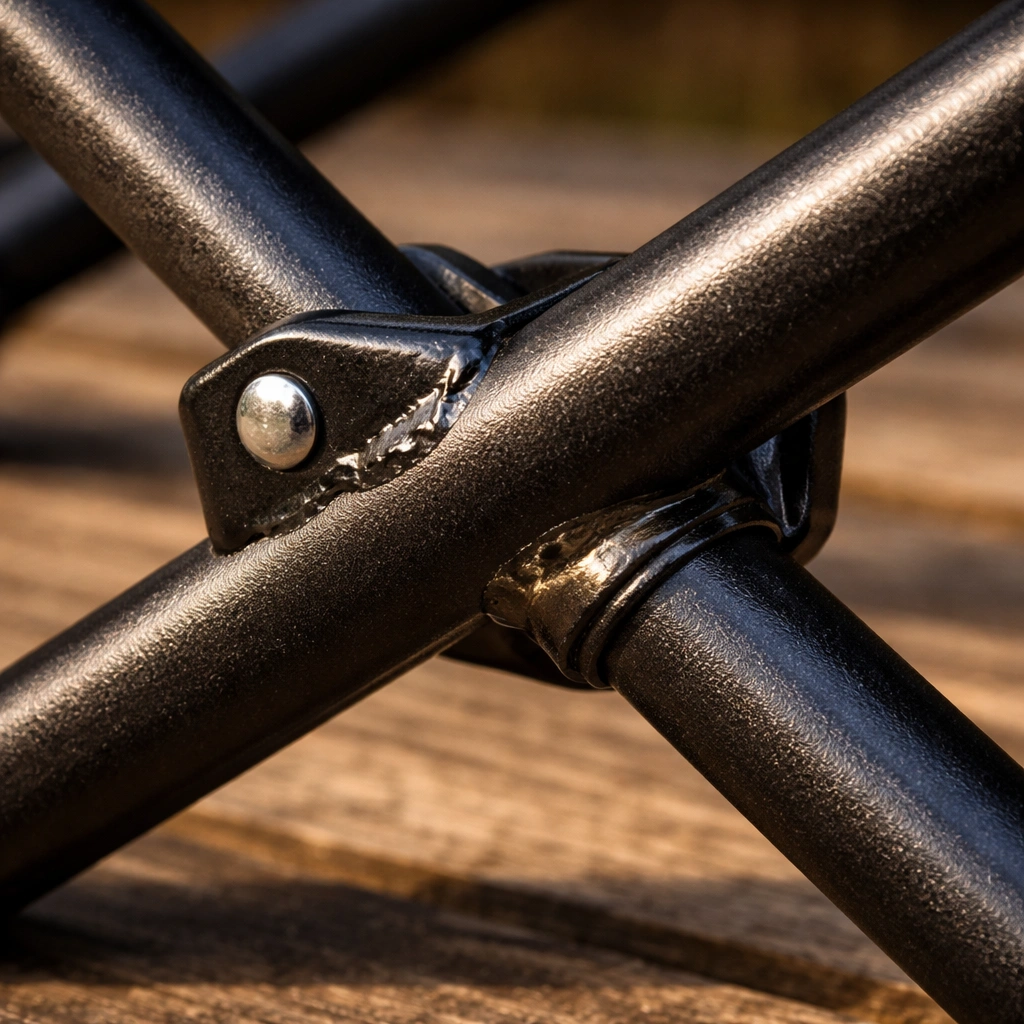
🔩 Steel Frames
Steel is heavy but exceptionally strong and affordable. Most standard camping chairs use powder-coated steel to resist rust. The powder coating creates a hard, baked-on finish that shields the underlying metal from moisture and scratches. However, if this coating chips—common at joint welds or where legs scrape against rocks—bare steel is exposed and rust can set in quickly.
Steel frames typically weigh between 8 and 12 pounds, which is why they're best suited for car camping where portability isn't a concern. On the plus side, steel's inherent rigidity makes these chairs feel extremely stable, even on uneven ground.
- ✅ Pros: High strength, excellent stability, low cost, forgiving under heavy loads.
- ❌ Cons: Heavy (8–12 lbs), prone to rust if coating scratches, bulkier packed size.
Best for: Car camping, tailgating, and users who prioritize budget and strength over weight.
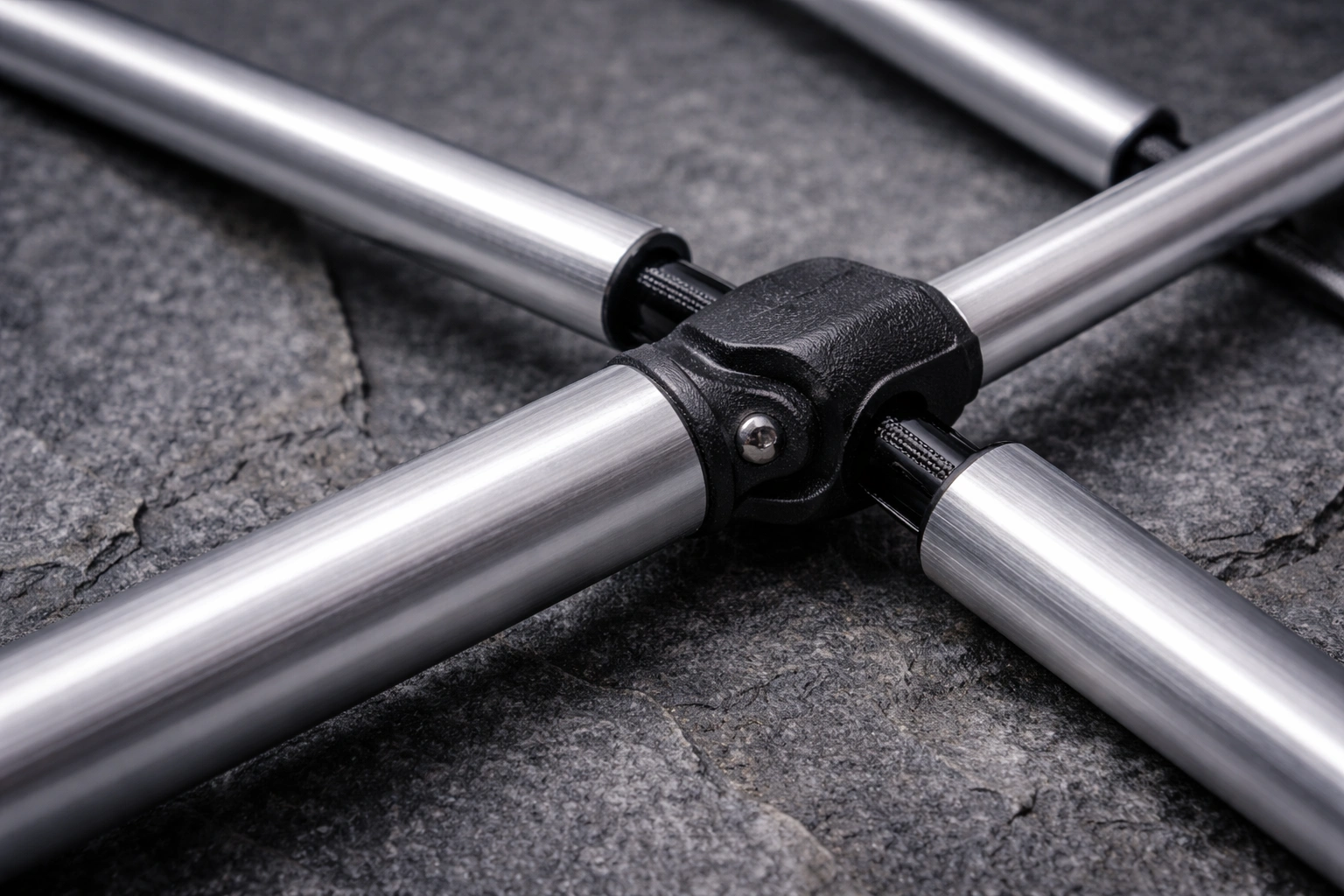
🪶 Aluminum Frames
Aluminum is the go-to choice for lightweight and backpacking chairs. Premium brands use aircraft-grade aluminum alloys—typically 6061 or 7075—which offer an outstanding strength-to-weight ratio. Unlike steel, aluminum naturally forms a protective oxide layer that resists corrosion without any coating, making it ideal for humid or coastal environments.
Aluminum chairs typically weigh between 1 and 4 pounds and collapse into a compact carry sack. The trade-off is price: high-grade aluminum alloys and precision-engineered joints cost significantly more than basic steel tubing. Some ultralight aluminum frames can also feel less stable on soft ground, as the thinner poles flex slightly under weight.
- ✅ Pros: Lightweight (1–4 lbs), corrosion-resistant, compact packing, modern aesthetics.
- ❌ Cons: More expensive than steel, can feel less stable on soft ground, lower weight capacity in some models.
Best for: Backpacking, kayaking, RV camping, and anyone who values portability.
Fabric & Seat Materials: Comfort Meets Durability
The fabric is what you actually sit on, and it determines breathability, tear resistance, and how well the chair ages under sun and rain. The wrong fabric can leave you sweating on a summer afternoon or soaked after a morning dew. Here's how the main materials compare.
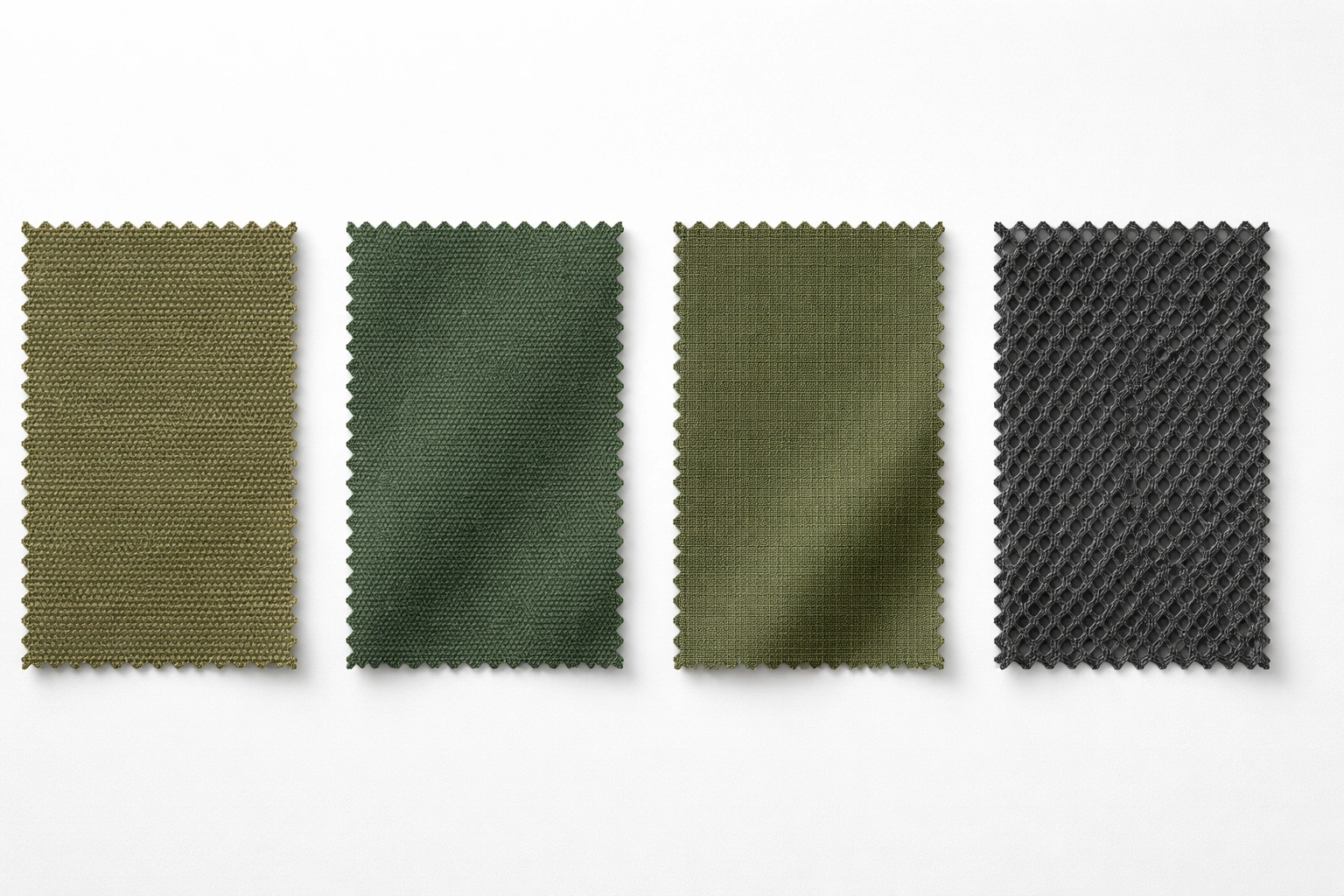
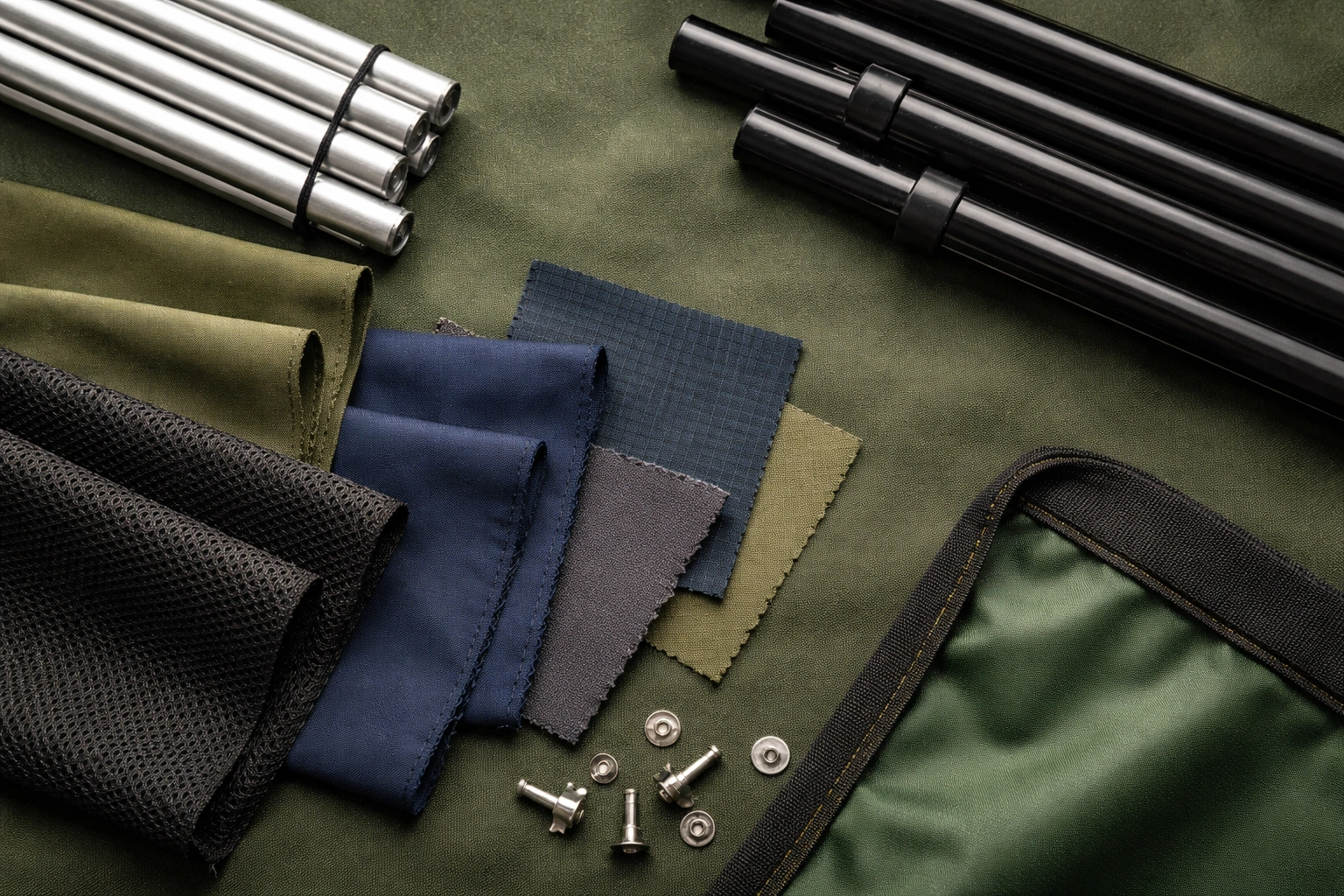
From left to right: canvas, polyester, ripstop nylon, and mesh — each fabric offers distinct advantages for different camping conditions.
| Material | Key Properties | Best Use Case |
|---|---|---|
| Polyester (300D–1200D) | Lightweight, UV-resistant, quick-drying, affordable. Higher denier = thicker and more durable fabric. Resists stretching better than nylon over time. | All-around camping; 600D is the sweet spot for durability without unnecessary bulk. |
| Canvas / Cotton Blend | Classic feel, breathable, very durable but heavy and slow to dry. Prone to mildew if stored damp. Develops a comfortable patina with use. | Director chairs, vintage-style chairs, extended basecamp setups. |
| Nylon (Ripstop) | Ultra-lightweight, high tear resistance, packs tiny. Ripstop grid pattern prevents small tears from spreading. Softer feel against skin. | Ultralight backpacking chairs, minimalist gear where every ounce matters. |
| Mesh / Textilene | Highly breathable, quick-drying, sand-resistant, ideal for hot weather. Textilene is a PVC-coated polyester mesh that resists fading. | Beach chairs, hot summer camping, fishing chairs where airflow is critical. |
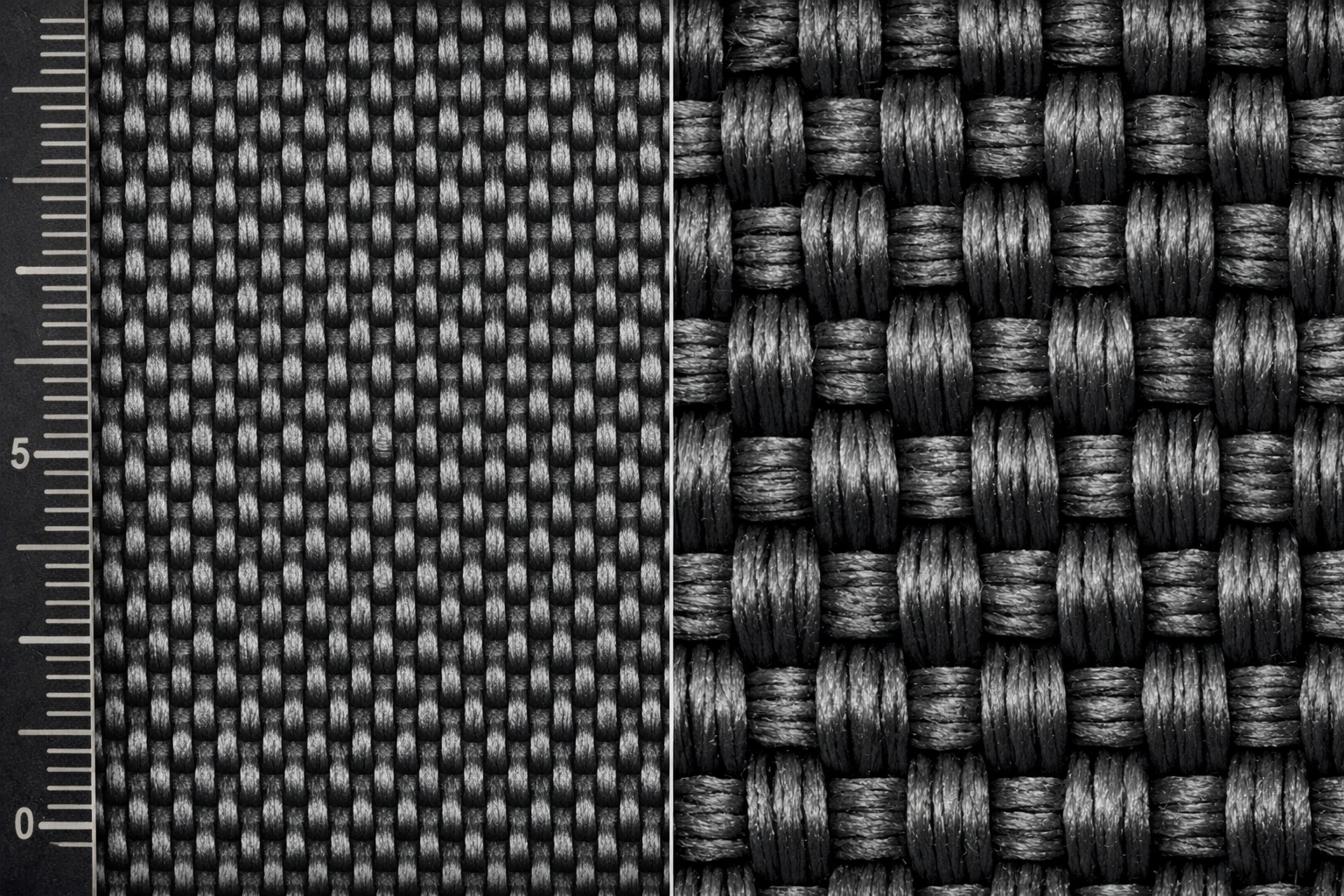
🧵 Understanding Denier (D)
One of the most critical terms to know when evaluating camping chair fabric is denier (D), which measures the mass in grams of 9,000 meters of a single fiber. In practical terms, a higher denier number means thicker, heavier, and more abrasion-resistant fabric.
For example, 200D nylon is thin and light—perfect for a backpacking chair where weight savings matter most. 600D polyester is the workhorse of family camping chairs, offering excellent tear resistance without excessive weight. 1000D–1200D fabrics are found on heavy-duty models designed for large users and commercial use.
A common misconception is that higher denier always means better quality. In reality, a well-woven 400D fabric can outperform a poorly woven 800D fabric in real-world durability. The weave pattern, thread quality, and any reinforcing coatings all play equally important roles.
Waterproofing & Coatings Explained
Many camping chair fabrics receive a polyurethane (PU) coating or a DWR (durable water repellent) finish. PU coatings are applied to the back side of the fabric and add meaningful water resistance—rain will bead up rather than soak through. However, PU coatings slightly reduce breathability, which can lead to condensation buildup in humid conditions.
DWR finishes, by contrast, are applied to the fabric surface and cause water to roll off without compromising breathability. DWR wears off over time and can be reapplied with spray-on products. For chairs that might be left out in light rain, a PU-coated polyester is a smart choice. Some premium chairs also feature UV inhibitors woven into the fabric to prevent fading and degradation from prolonged sun exposure—a critical feature for desert or high-altitude camping.
Learn more about fabric care in our washing guide to maintain water resistance and extend the life of your chair's materials.
Hardware, Joints & Connections
Often overlooked, the connectors and joints are the weakest link in any folding chair. A premium frame with cheap plastic hubs is a false economy—when a joint fails, the entire chair becomes unusable. Here's what separates durable hardware from disposable components.
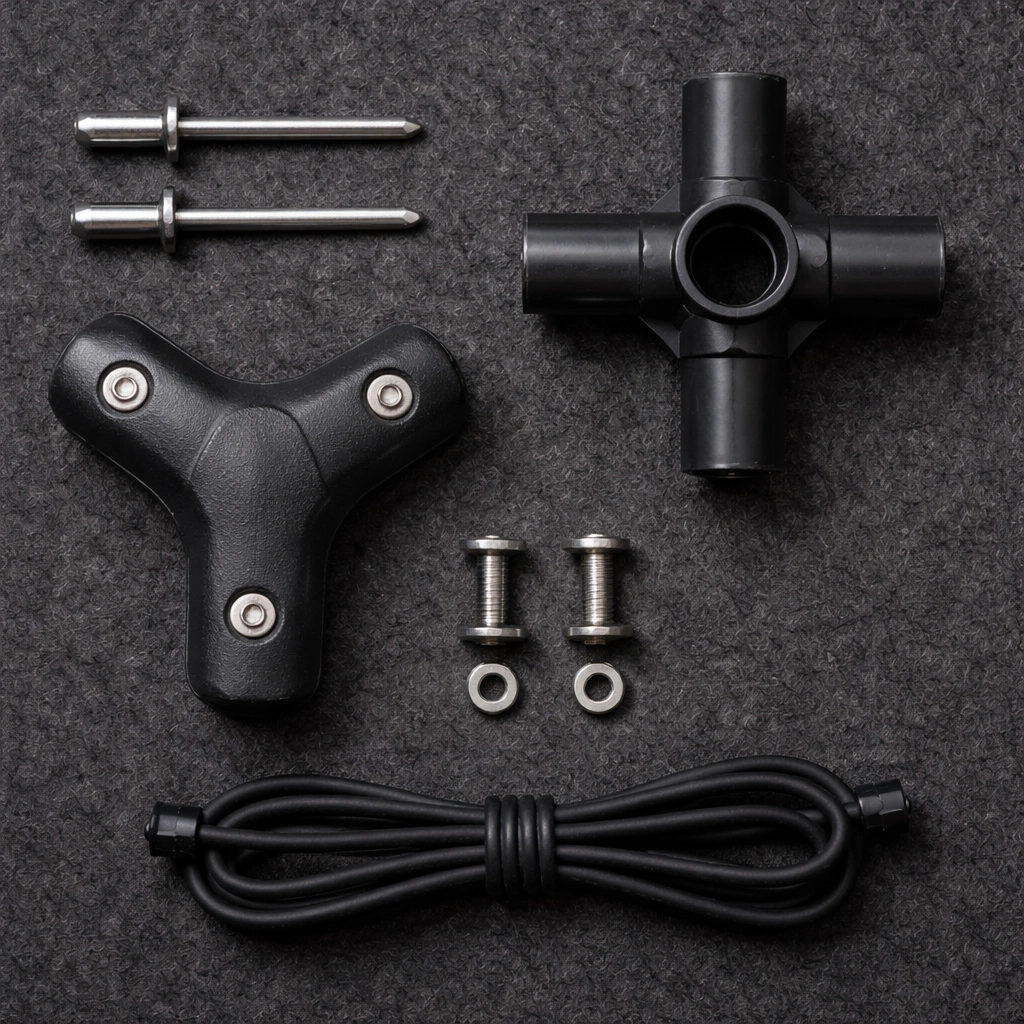
- Plastic vs. Metal Hubs: High-end chairs use reinforced nylon or aluminum hubs that distribute stress evenly across connection points. Budget chairs often use brittle polypropylene that can crack under heavy loads or in cold temperatures. Always check hub material in product specifications.
- Rivets & Fasteners: Stainless steel rivets or bolts resist corrosion far better than standard steel fasteners. Pay attention to reviews mentioning rust at rivet points—a common failure mode in coastal environments. Smooth, rattle-free operation also indicates better machining tolerances.
- Shock Cord Systems: Used in many ultralight pole-style chairs like Helinox and Nemo. High-quality shock cord retains elasticity for years, while cheap cord stretches out within months, making pole assembly frustrating. Replaceable cord is a bonus feature.
- Grommets & Eyelets: Where fabric meets frame, reinforced grommets prevent tearing. Steel grommets with smooth edges outlast plastic or rolled-fabric holes significantly.
How to Choose Materials Based on Your Camping Style
Your ideal material combination depends entirely on how and where you camp. A chair perfect for a beach trip would be miserable on a mountain summit, and vice versa. Use this guide to align materials with your specific priorities.
🏕️ Car Camper / Family
Priorities: Durability, comfort, budget-friendly.
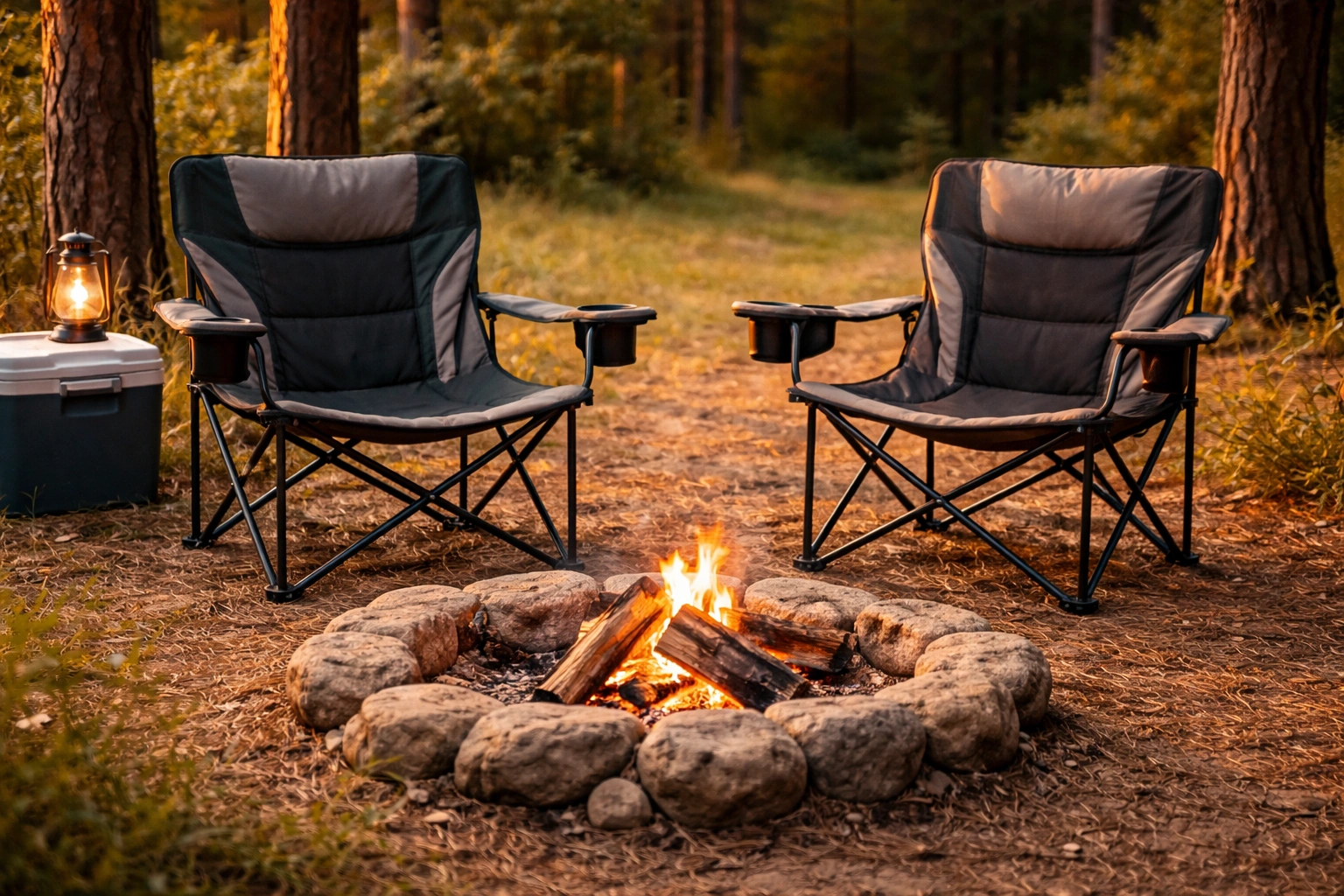
Choose a steel frame paired with 600D polyester fabric and look for a weight capacity of 300–400 lbs. Padded armrests, cup holders, and built-in coolers are common in this category. At 8–12 lbs per chair, weight is a non-issue when you have a vehicle.

🎒 Backpacker / Hiker
Priorities: Ultralight weight, minimal pack size.
Opt for aluminum or DAC alloy poles with ripstop nylon seating. Target a total chair weight under 2 lbs. Denier can be lower (200D–300D) to save weight without sacrificing adequate strength for a single user. See our top ultralight picks.
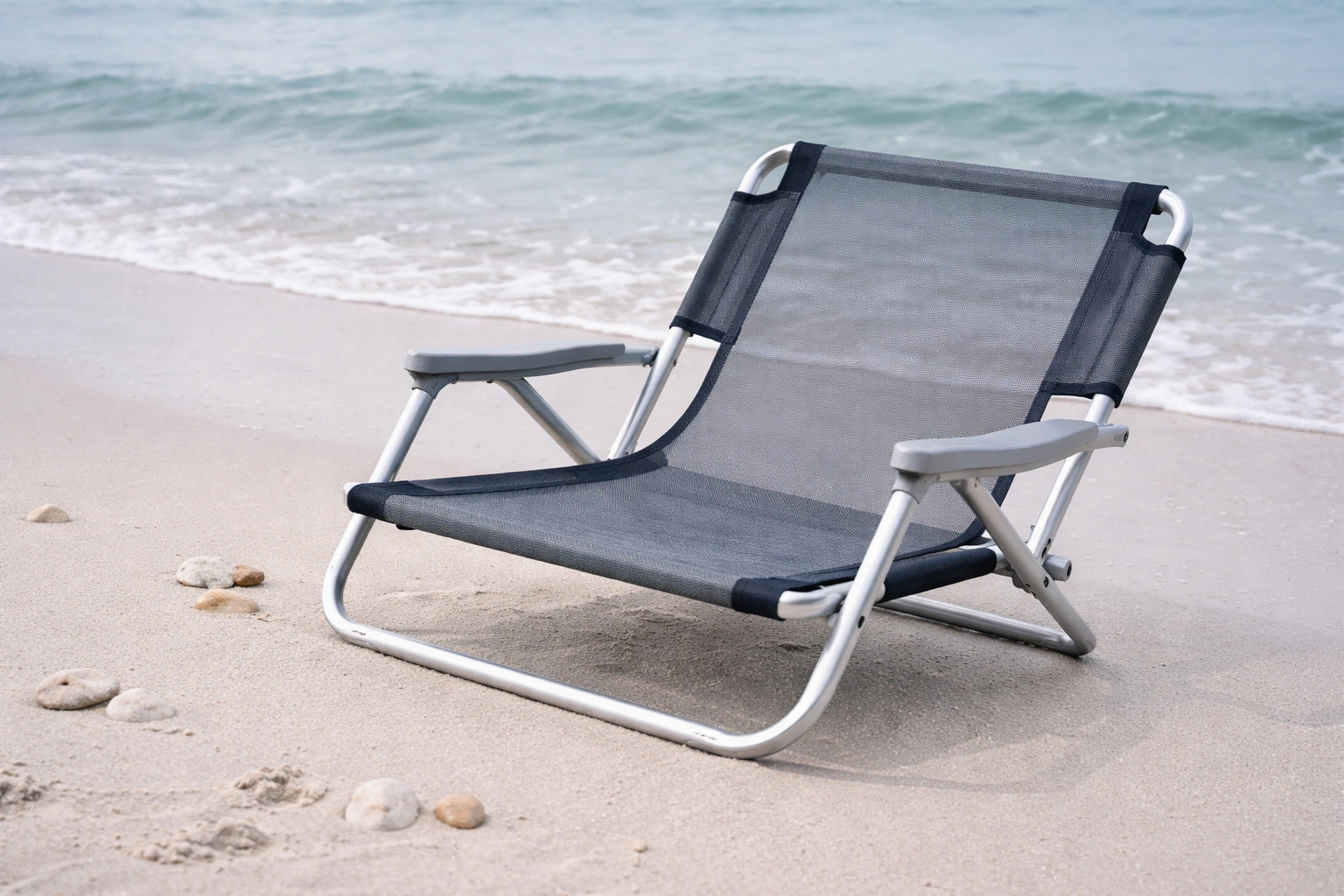
🌊 Beach / Waterfront
Priorities: Rust-proof construction, sand resistance, maximum airflow.
Look for aluminum or stainless steel frames with mesh or textilene seats. Avoid powder-coated steel—salt air and abrasive sand will eventually compromise the coating. Low-slung designs offer better stability on uneven sand. Explore beach-ready options.
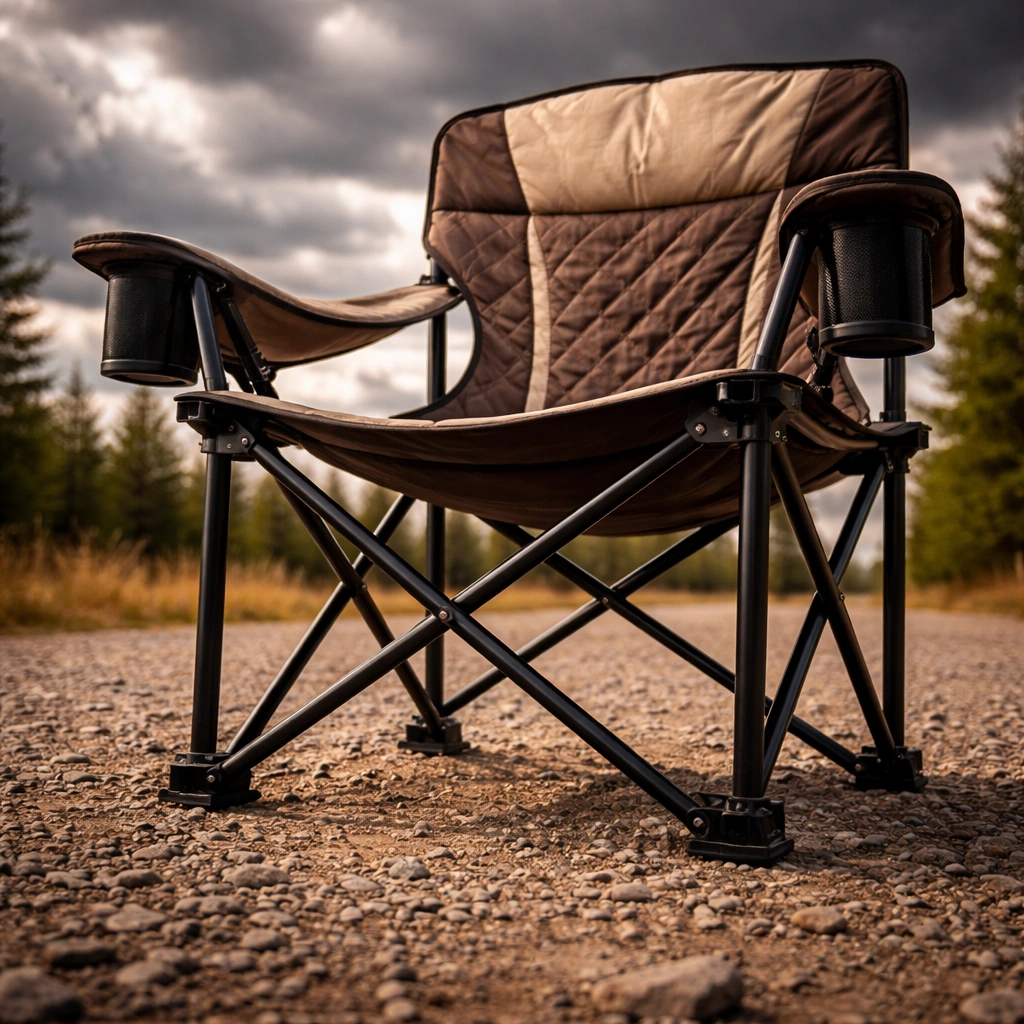
🪨 Heavy Duty / Big & Tall
Priorities: Maximum weight capacity, reinforced construction.
Choose chairs with extra-thick steel frames and double-reinforced stitching on 600D–1200D polyester fabric. Look for weight ratings of 400 lbs or higher, with wider seat dimensions and reinforced armrests. Explore heavy-duty options.
Sustainability in Camping Chair Materials
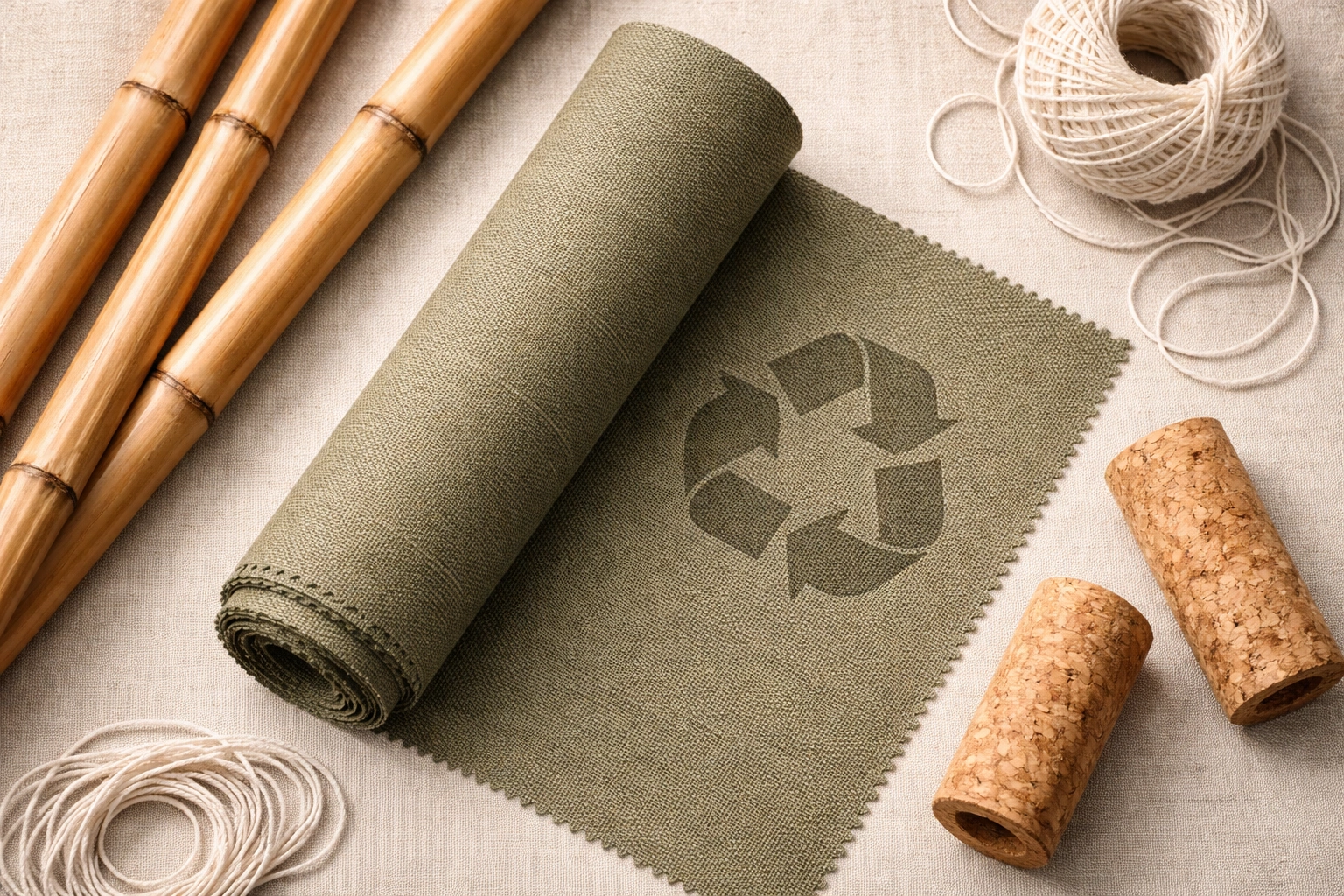
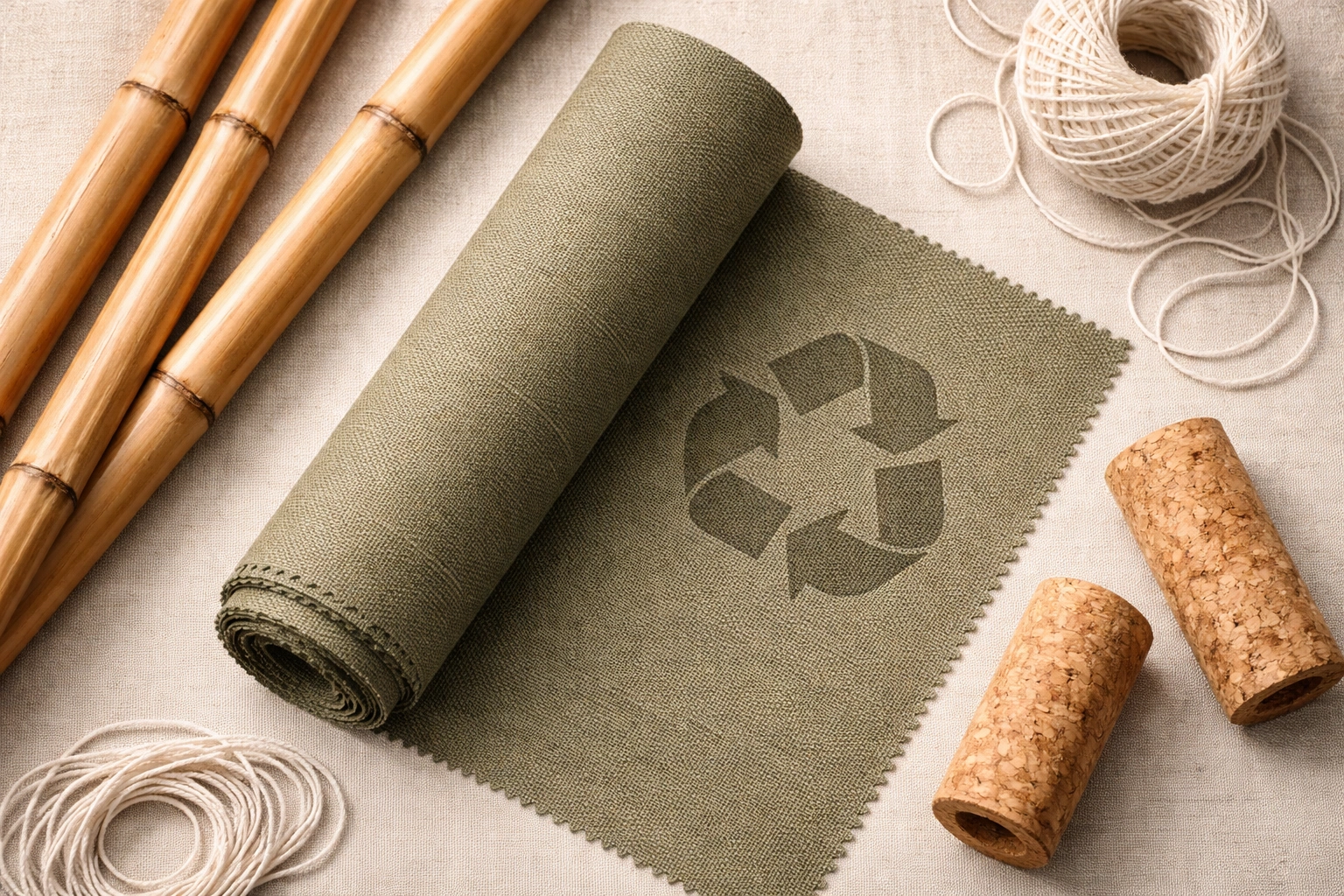
Eco-conscious campers now have more options than ever. Several forward-thinking brands are incorporating post-consumer recycled polyester (often sourced from recycled water bottles) into their chair fabrics. This material performs virtually identically to virgin polyester while diverting plastic waste from landfills.
Beyond recycled fabrics, look for PFC-free water repellents, which avoid the persistent environmental chemicals found in traditional DWR treatments. Some manufacturers are also exploring bamboo frame components for casual-use chairs, though bamboo isn't yet viable for high-stress applications.
Perhaps the most impactful sustainability choice is simply buying durable gear that lasts. A well-made aluminum-frame chair with quality nylon fabric can easily last a decade or more with proper care, whereas a cheap chair that fails after two trips creates unnecessary waste. Choosing modular designs with replaceable parts—slip-on seat covers, swapable leg sections—further extends product life. Dive deeper into our guide on eco-friendly camping gear.
Final Thoughts: Make an Informed Choice
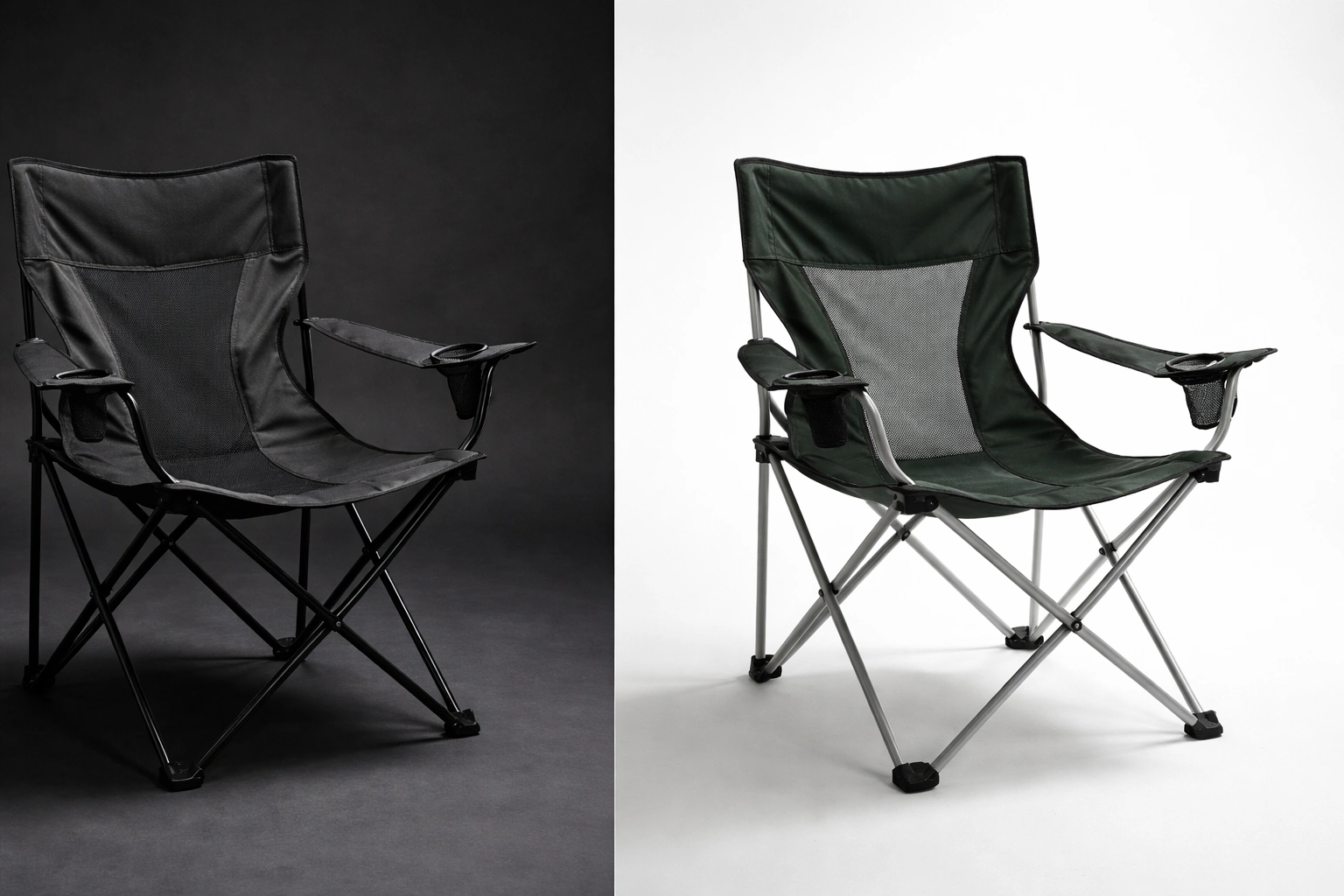
Understanding camping chair materials empowers you to cut through marketing jargon and choose a chair that genuinely matches your needs—whether that's a sub-2-pound backpacking throne or a heavy-duty recliner for the family campsite. The best material isn't universally "better"; it's the one that aligns with your camping style, environment, and budget.
Keep these key takeaways in mind as you shop:
- ✔️ Frame: Steel = strength & value for car camping; Aluminum = lightweight & portable for backpacking and travel.
- ✔️ Fabric: Higher denier (600D+) for family and heavy-duty use; ripstop nylon (200D–300D) for backpacking; mesh for hot-weather breathability.
- ✔️ Coatings: PU coatings add water resistance for rainy climates; DWR treatments maintain breathability; UV inhibitors prevent sun degradation.
- ✔️ Hardware: Metal or reinforced nylon joints, stainless steel fasteners, and quality shock cord all contribute to long-term reliability.
- ✔️ Sustainability: Recycled fabrics and durable construction reduce environmental impact over the chair's lifetime.
Ready to find your perfect chair? Browse our curated lists based on real-world tests and material analysis. For expert head-to-head comparisons, read our detailed Coleman vs Ozark Trail breakdown, or see how premium materials perform in our Helinox vs Nemo face-off.