
Comfort vs. Portability: The Definitive Camping Chair Trade-Off Guide
Should you carry a lightweight chair for miles, or pack a plush throne for basecamp? We break down every factor—weight, packed size, materials, and support—so you can make the right call.
When you're gearing up for the outdoors, one of the most common dilemmas is choosing between maximum comfort and ultra-light portability. The perfect camping chair doesn't exist in a vacuum—it depends on your adventure style, distance from the car, and how long you plan to lounge. In this guide, we'll dissect the real-world differences between comfort-oriented and portable camping chairs, helping you land on the sweet spot for your needs.
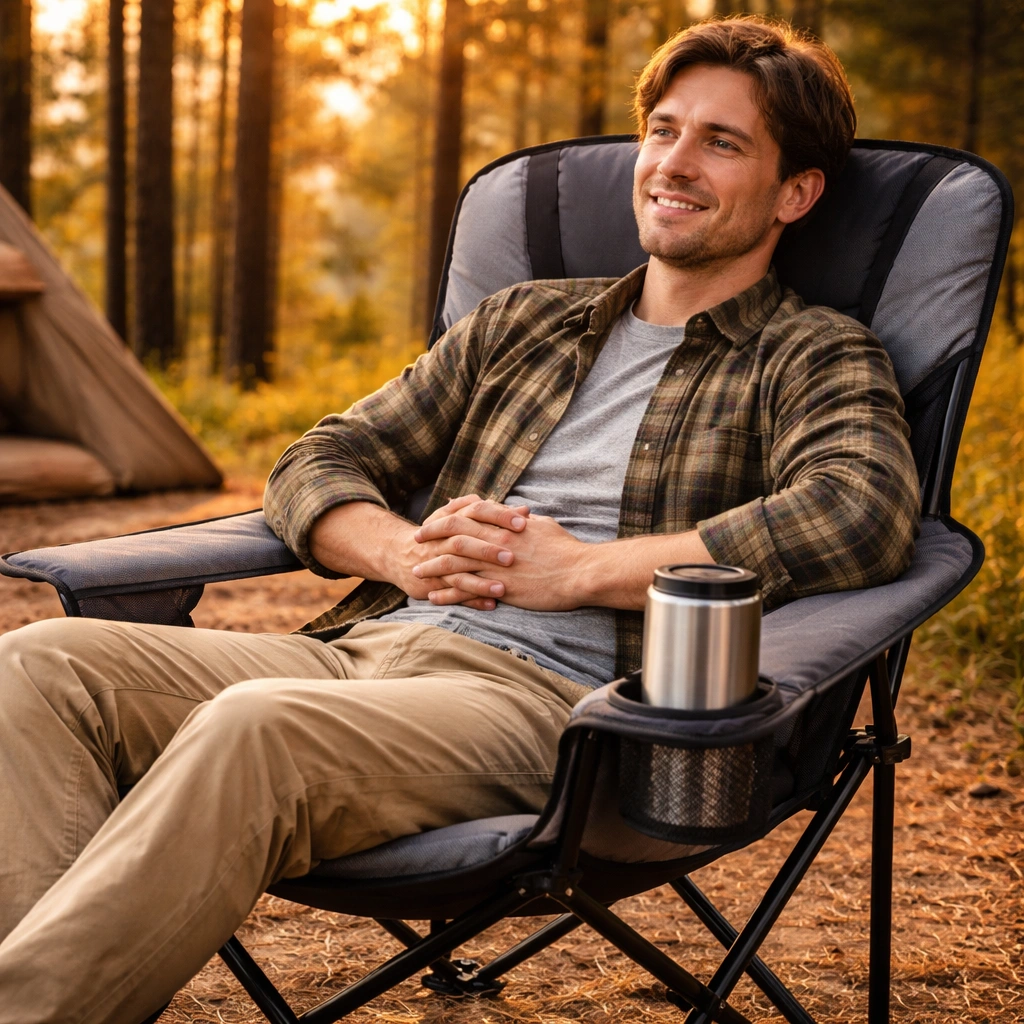
Comfort-First
Deep seats, high backs, padded armrests, and often extra features like cup holders, coolers, or side tables. Ideal for car camping, festivals, and long evenings by the fire.
➕ Plush padding ➕ High weight capacity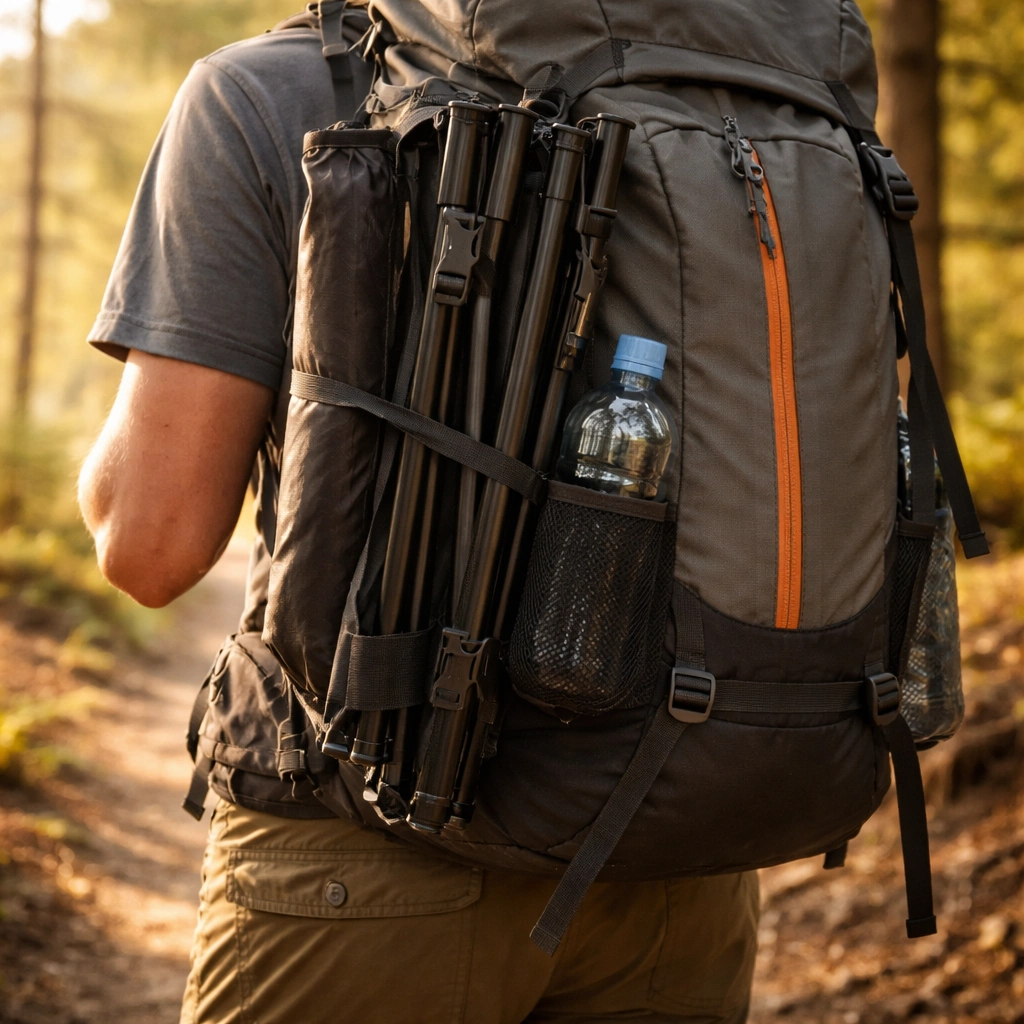
Portability-First
Featherlight materials, compact packed size (often the size of a water bottle), and minimalist frames. Perfect for backpackers, bikepackers, and hikers who count every ounce.
⚡ Under 2 lbs 📦 Fits in packWhat Defines Comfort in a Camping Chair?
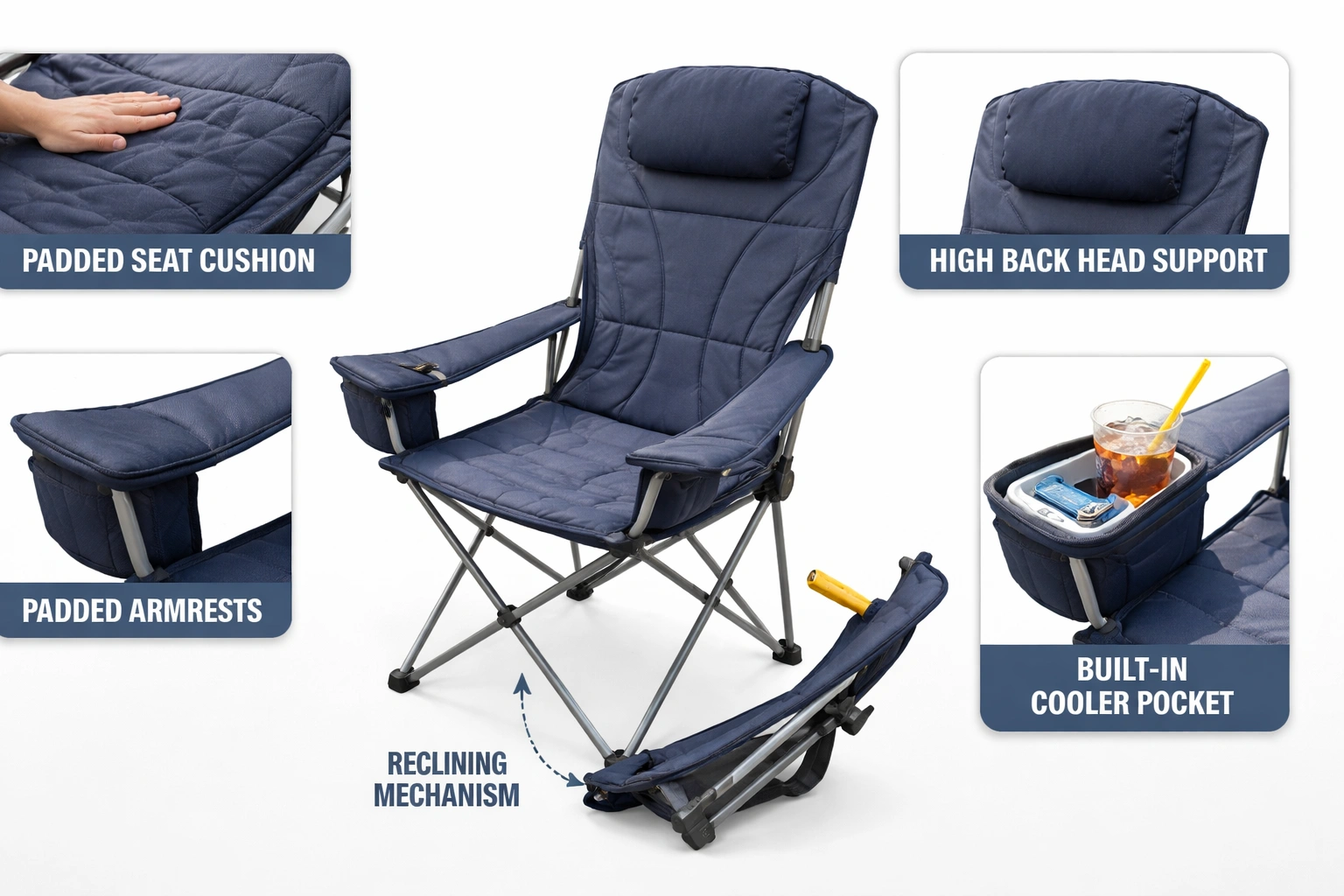
Comfort isn't just about soft cushions—it's about ergonomics, support, and how well the chair adapts to your body. A true comfort-focused camping chair usually features a high back that supports your head and neck, wide seat dimensions, and breathable yet padded fabric. Models like director chairs often include built-in side tables, while rocking camping chairs add soothing motion. If you suffer from back pain, a high-back camping chair can make hours of sitting feel effortless. Many heavy-duty options also provide reinforced steel frames and higher weight capacities — see our detailed heavy-duty camping chairs guide for extra support.
On the other side of the spectrum, portability revolves around packed size and weight. The lightest chairs fall under the lightweight backpacking chairs category, often weighing less than 2 lbs and packing down to 12–14 inches. Some are even designed for minimalists: camping stools trade back support for ultimate packability. For families and car campers, a compromise could be standard camping chairs that offer decent comfort while still being easy to carry from the trunk to the campsite.
Detailed Comparison: Comfort vs. Portability Features
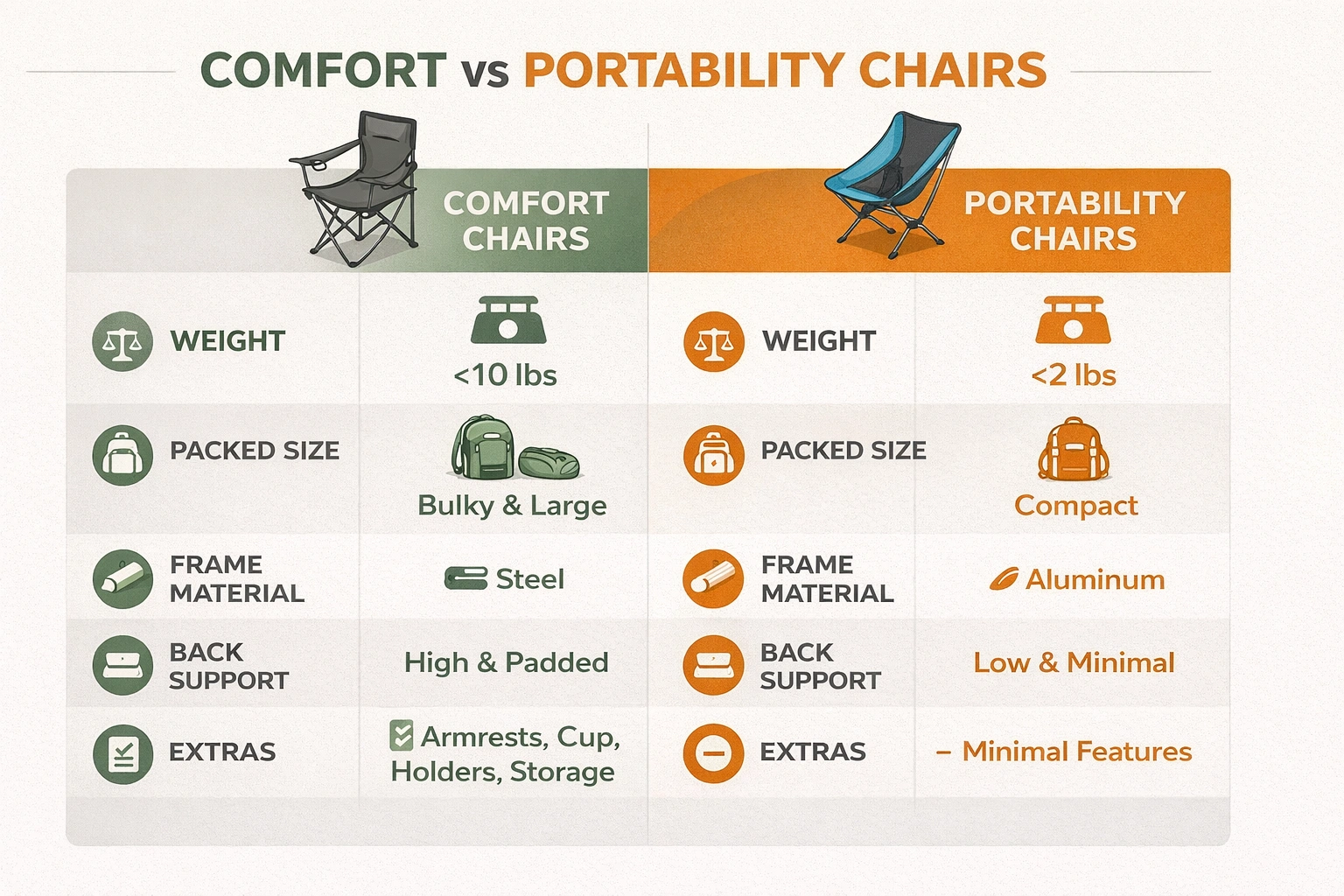
| Feature | Comfort-Focused Chairs | Portability-Focused Chairs |
|---|---|---|
| Weight | Typically 6–12+ lbs (heavy-duty models may exceed 15 lbs) | 1–4 lbs (ultralight models often under 2 lbs) |
| Packed Size | Usually 24–36 inches long, bulky bag | Compact 10–18 inches, fits inside backpack or side pocket |
| Frame Material | Steel for durability and stability — read more in steel vs aluminum | Aluminum or advanced alloys (lightweight but strong) |
| Seat Height & Depth | Higher seat (17–20 inches), deeper seat pan for lounging | Lower seat height, often minimalist geometry |
| Back Support | High back with headrest, often padded or mesh ventilation | Low-back or mid-back; some lack lumbar support |
| Extras | Built-in coolers, cup holders, side tables, footrests (like chairs with ottoman) | Minimalist, sometimes only a stuff sack |
Which Camping Style Matches Your Chair?
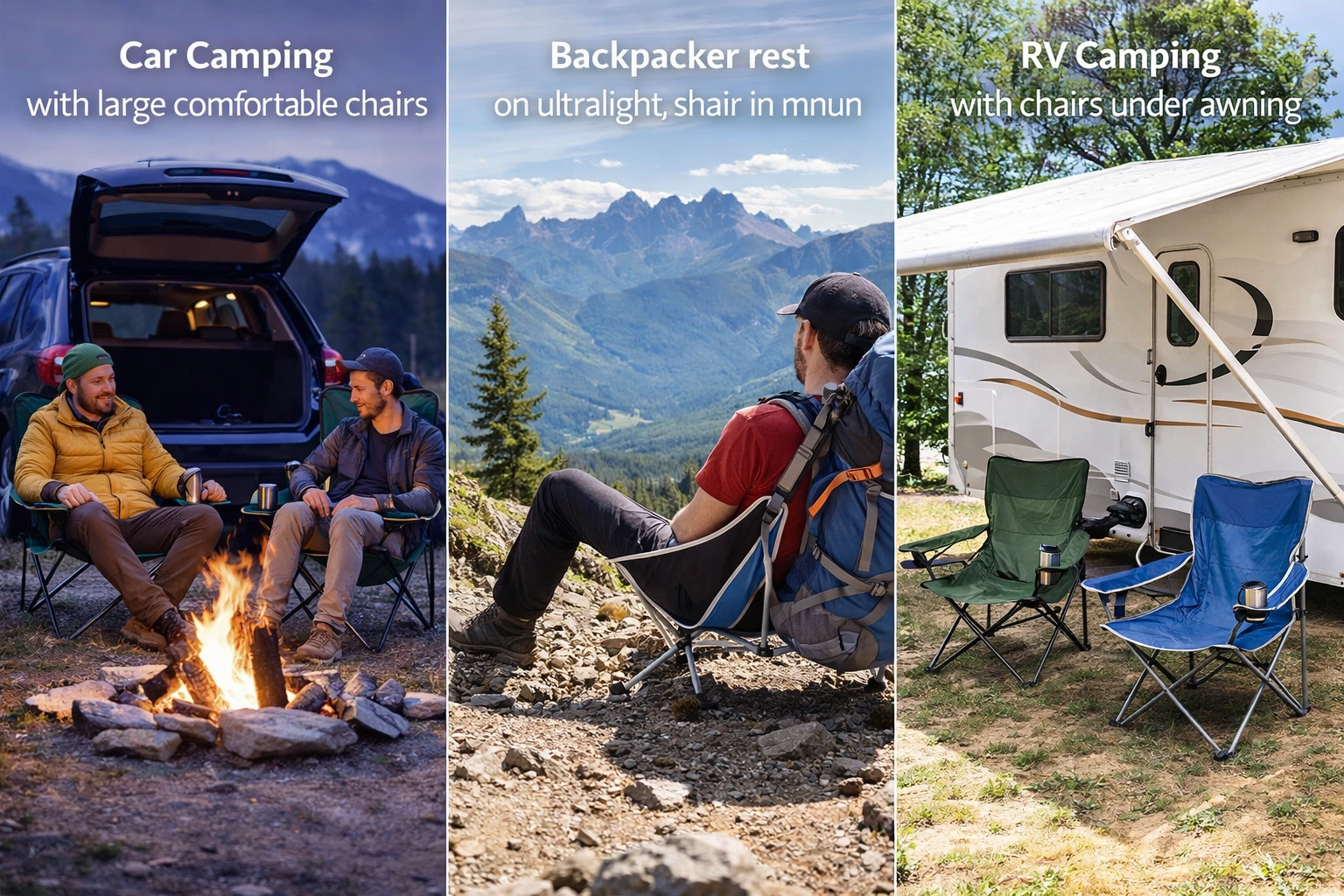
Your primary use case should be the ultimate decider. For car camping and basecamp setups, comfort usually wins. After a long hike or a day of exploring, sinking into a reclining camping chair with a built-in cooler can transform your evening. Many campers also pair a camping chair with side table to keep drinks and snacks within reach. Even for RV camping, large, cushy models like RV camping chairs are popular.
For backpacking, bikepacking, or any trip where you carry gear on your back, portability is non-negotiable. Every ounce matters. The ultralight category includes chairs like best ultralight backpacking chairs, which prioritize minimal weight while still offering a surprising level of sitting comfort. If you're a thru-hiker, consider a camping stool or a lightweight frame seat. For those who attend festival & concert chairs, you may need a balance: a chair that's easy to carry across a field but comfortable enough to sit for hours.
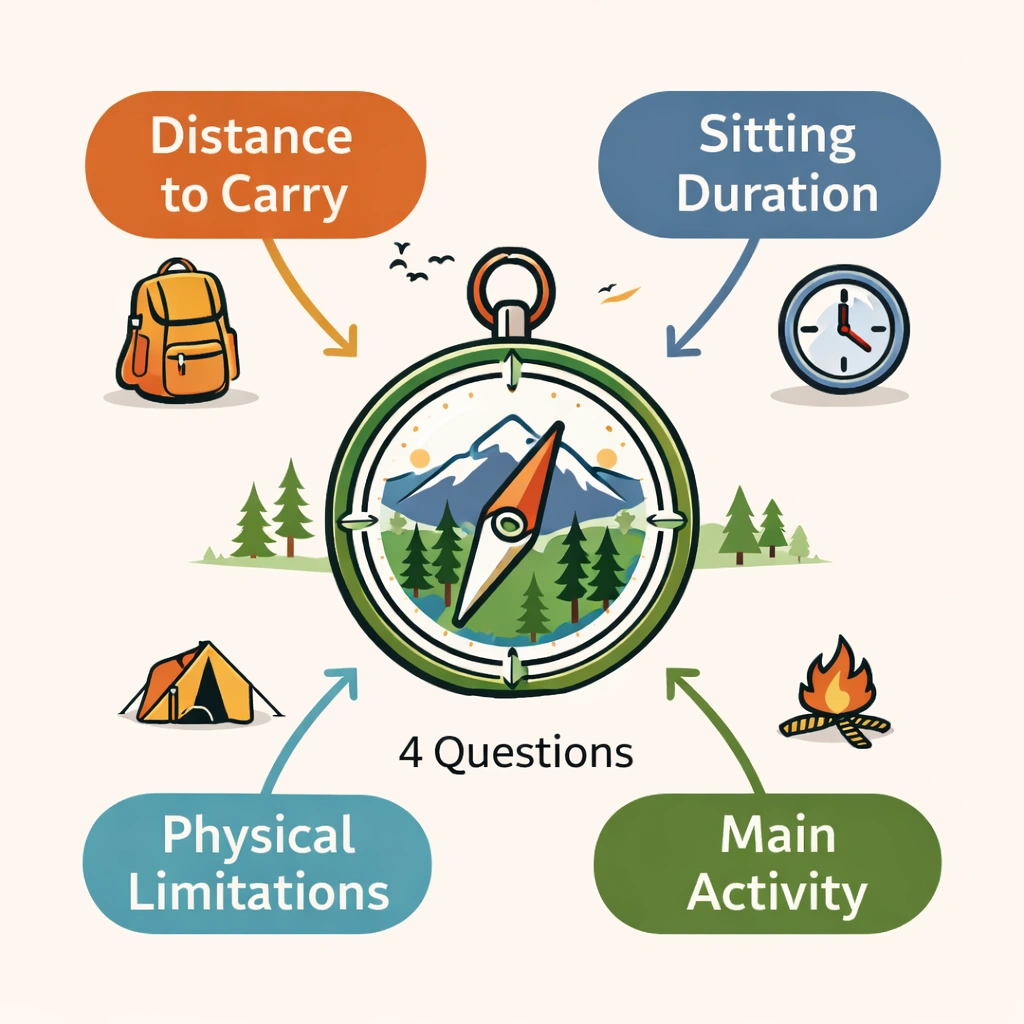
🤔 How to Decide: 4 Key Questions
- How far will you carry the chair? If you walk more than 0.5 miles from vehicle → prioritize portability.
- How long will you sit at a time? Longer sessions (2+ hours) favor comfort and back support.
- Do you have physical limitations? Taller campers may need tall-specific chairs; plus-size adventurers can refer to heavy-duty chairs (400lb+) which often overlap with comfort designs.
- What's your main activity? Car camping, tailgating, backyard BBQ → comfort. Backpacking, beach hiking, overlanding with limited space → portability.
Still uncertain? Our how to choose a camping chair guide walks through every decision metric, from frame materials to packed size comparison.
Materials, Durability & Long-Term Value
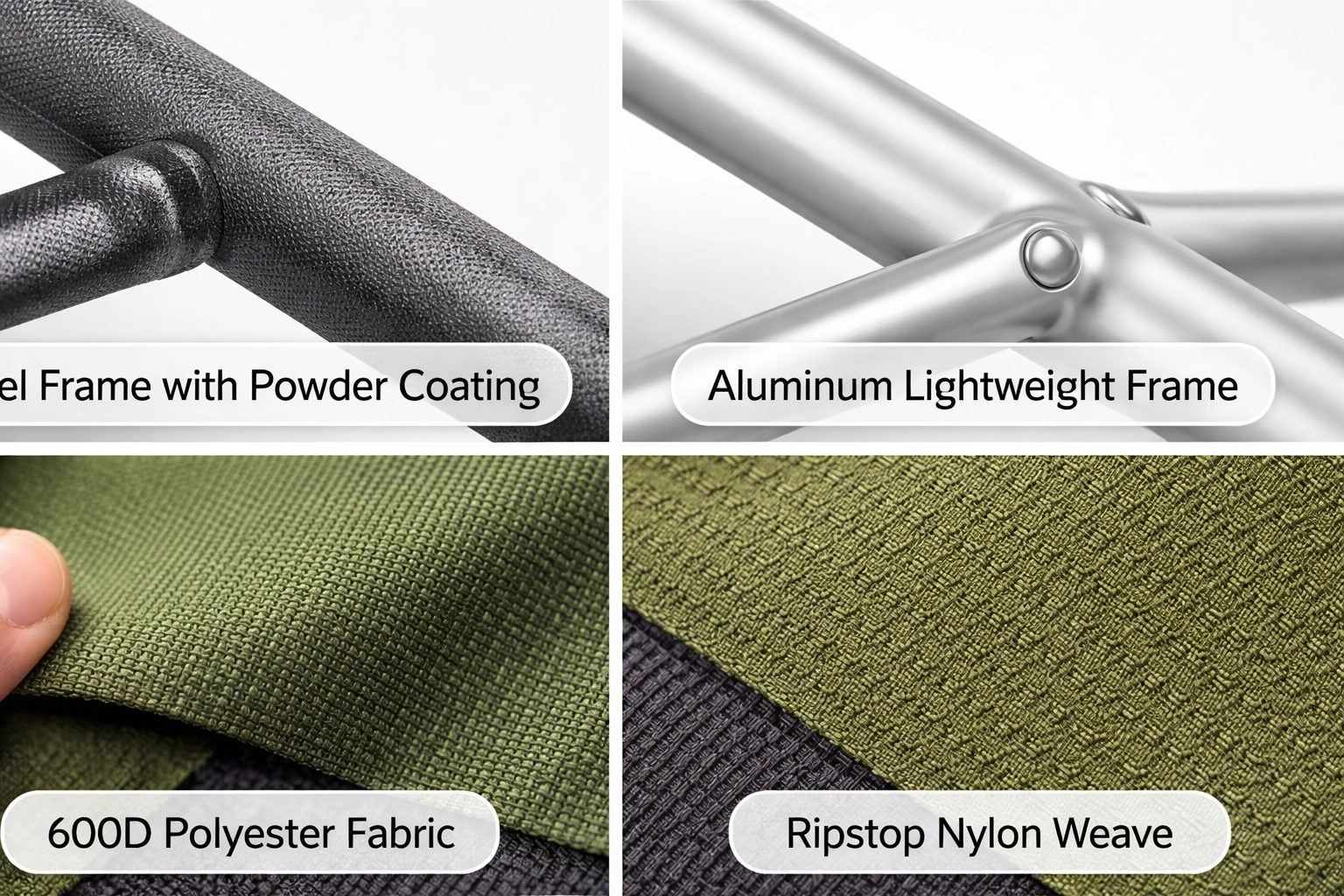
Materials impact both comfort and portability. Comfort chairs often use thicker polyester or canvas with padding, while portable models utilize lightweight ripstop nylon or mesh. If you want longevity, examine the denier rating — higher denier usually means more durable fabric. Learn more in our article on denier fabric explained. Frame materials: steel offers stability and supports higher weight, while aluminum saves weight. Both have pros, discussed in steel vs aluminum frame. To get the best of both worlds, some manufacturers are releasing hybrid chairs that keep weight moderate while adding generous padding and high backs — like many GCI Outdoor chairs or Kijaro models.
The Middle Ground: Best of Both Worlds
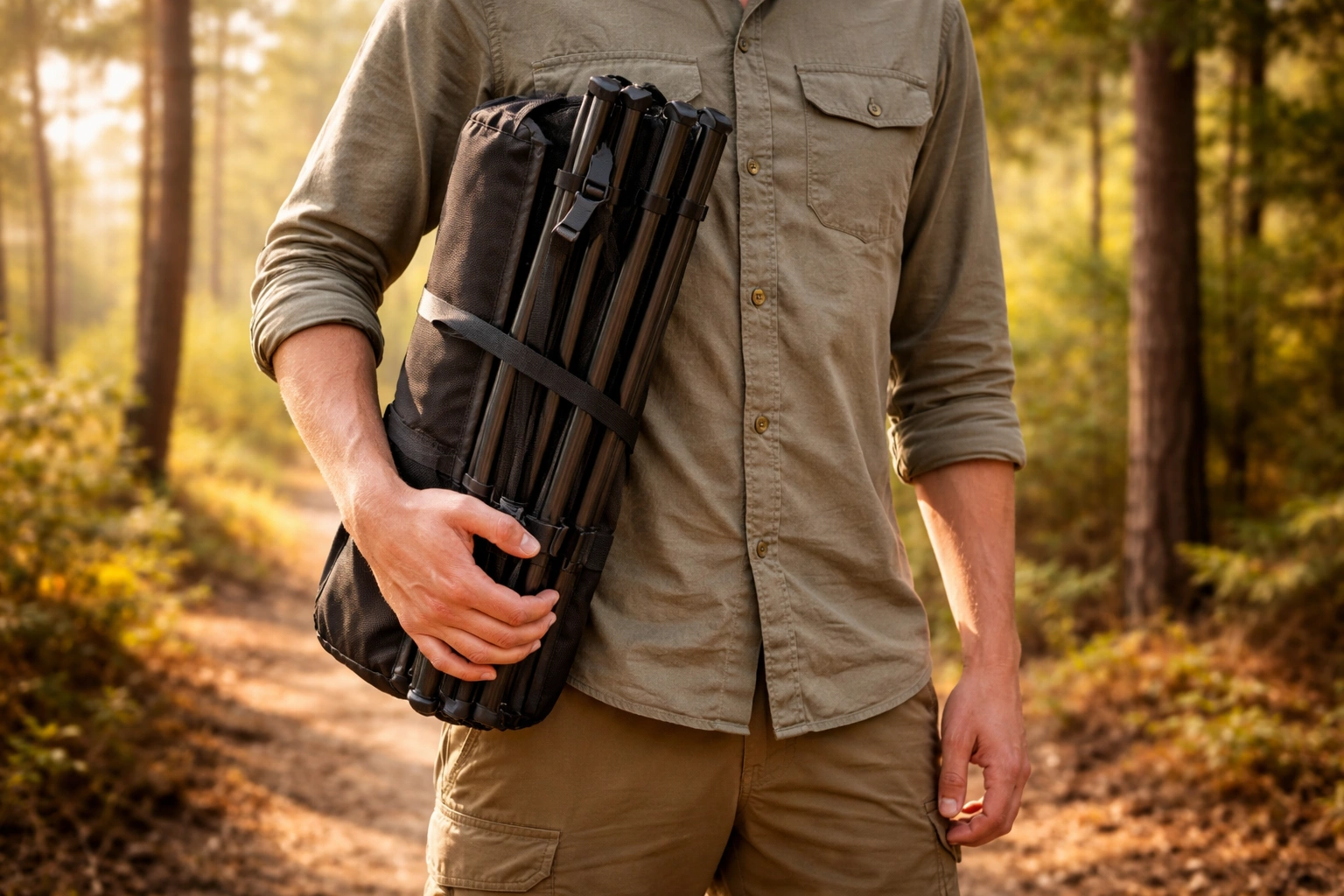
If you're still torn, know that the market is full of "hybrid" chairs that aim to balance comfort and portability. Look for chairs in the 4–6 lb range with a high back, aluminum frame, and compact fold. Some folding camp chairs now use collapsible designs that pack into a carry bag slightly larger than a briefcase but still offer padded seats and cup holders. Brands like Helinox and Nemo specialize in lightweight chairs that don't skimp on ergonomics. You can also find zero gravity chairs that recline fully and fold reasonably small for car transport.
Final Verdict: Make Your Choice with Confidence
Ultimately, the comfort vs portability debate comes down to your personal adventure profile. If you're a car camper who values relaxation above all, invest in a plush, high-back model with extra features — you'll thank yourself during rainy afternoons. If you're a minimalist backpacker, don't be seduced by heavy "luxury" chairs that you'll dread carrying. And if you do a mix of both, consider owning two chairs: one lightweight for the trail and one comfortable for basecamp. By understanding the trade-offs, you'll maximize your outdoor enjoyment.
Now that you know the difference, explore our curated selection of camping chairs below. Each product has been selected to help you find the right balance of support, durability, and packability. Click through to see current prices, real user reviews, and detailed specs — and feel confident that you're making an informed decision.


