
Steel vs Aluminum Camping Chairs: The Ultimate Frame Material Guide
Durability, weight, rust resistance, and cost — which frame material wins for your camping style? We break down everything you need to know before you buy.
JUMP TO VERDICT →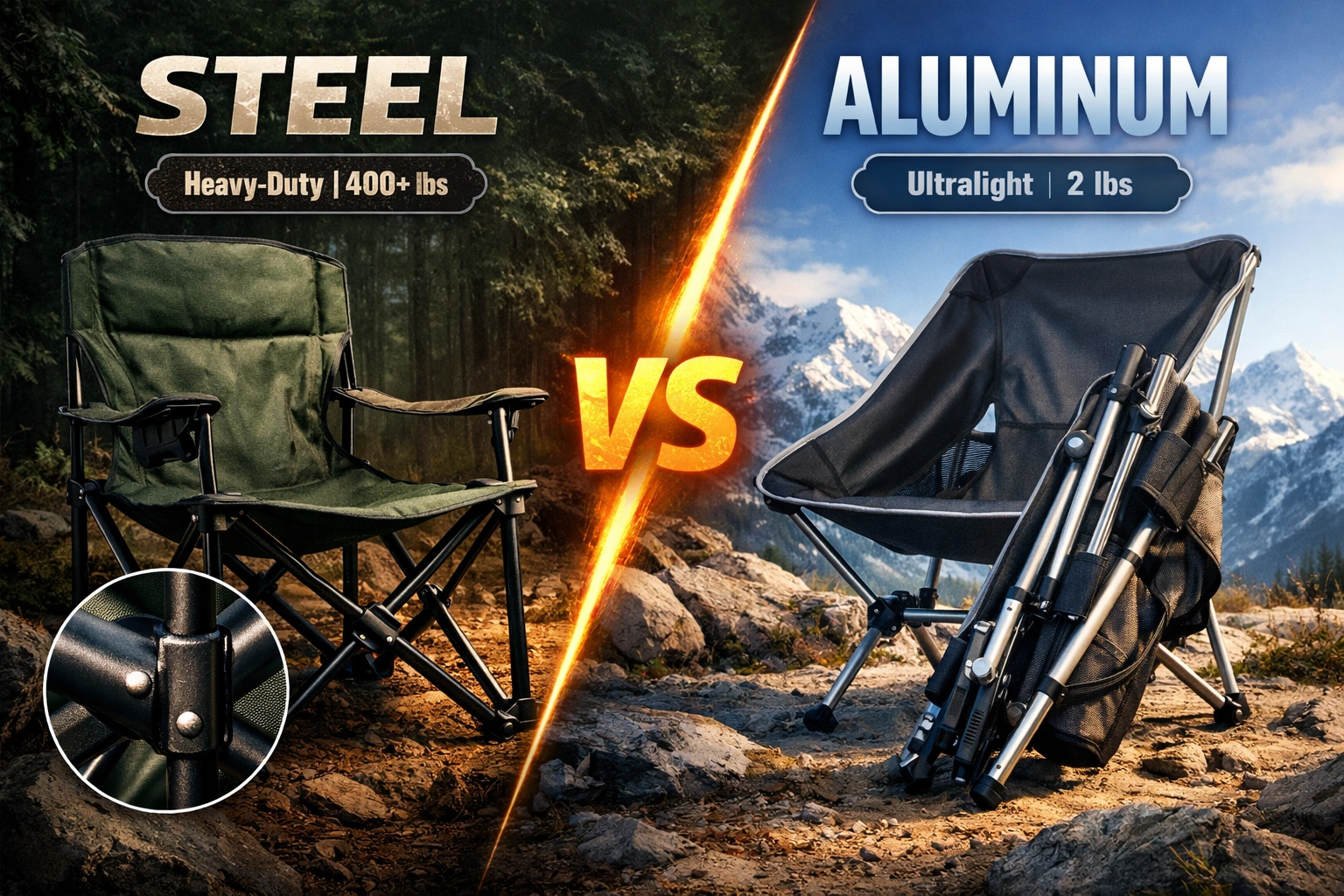
🔍 The Frame Factor: Most campers focus on fabric and comfort, but the frame material determines your chair's longevity, portability, and overall performance. Steel and aluminum dominate the market—each with distinct advantages. Understanding these differences will help you choose a chair that matches your camping lifestyle, whether you're a weekend car camper or a backcountry backpacker.
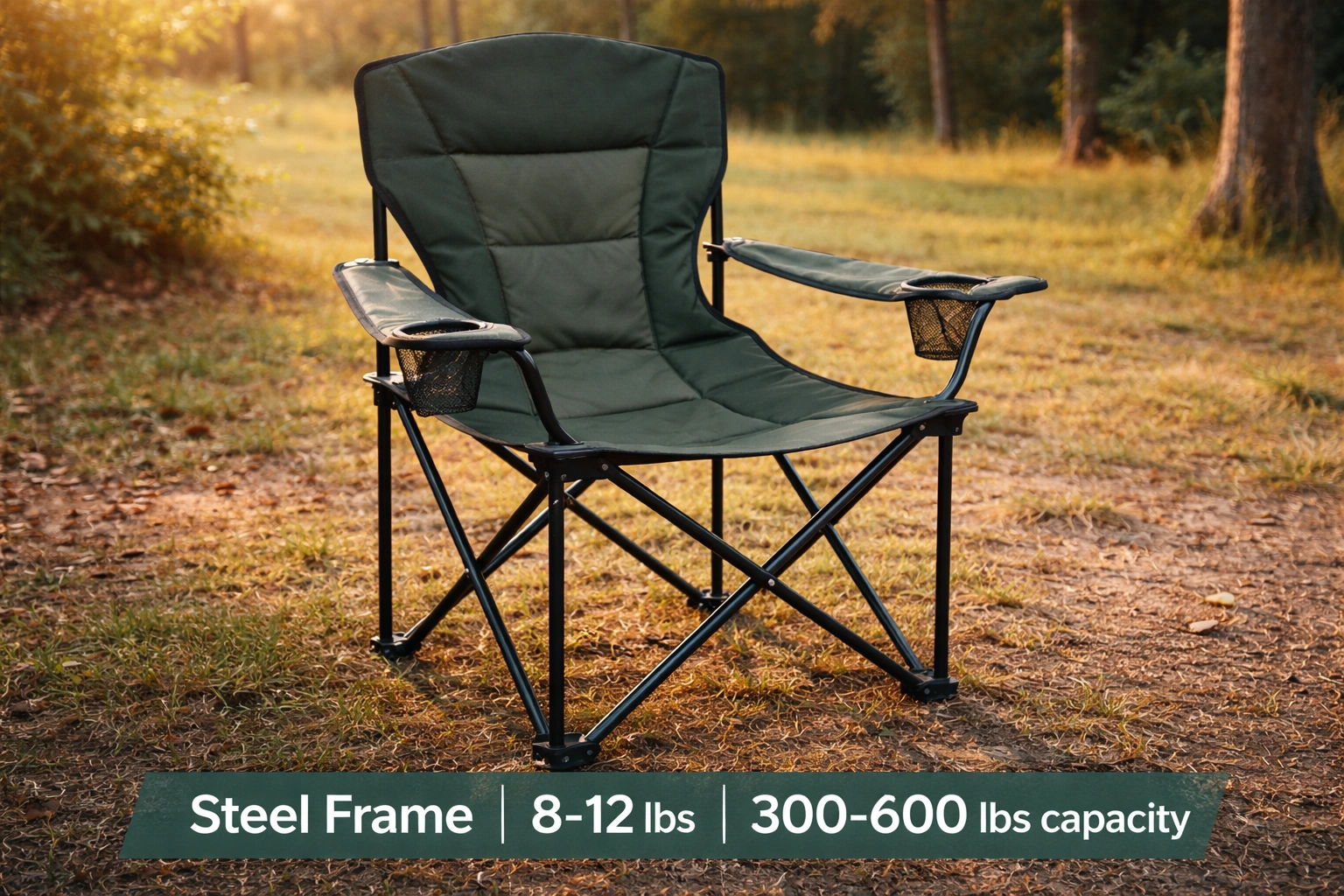
🔩 Steel Frame
Heavy-duty, durable, high weight capacity — ideal for car camping and families
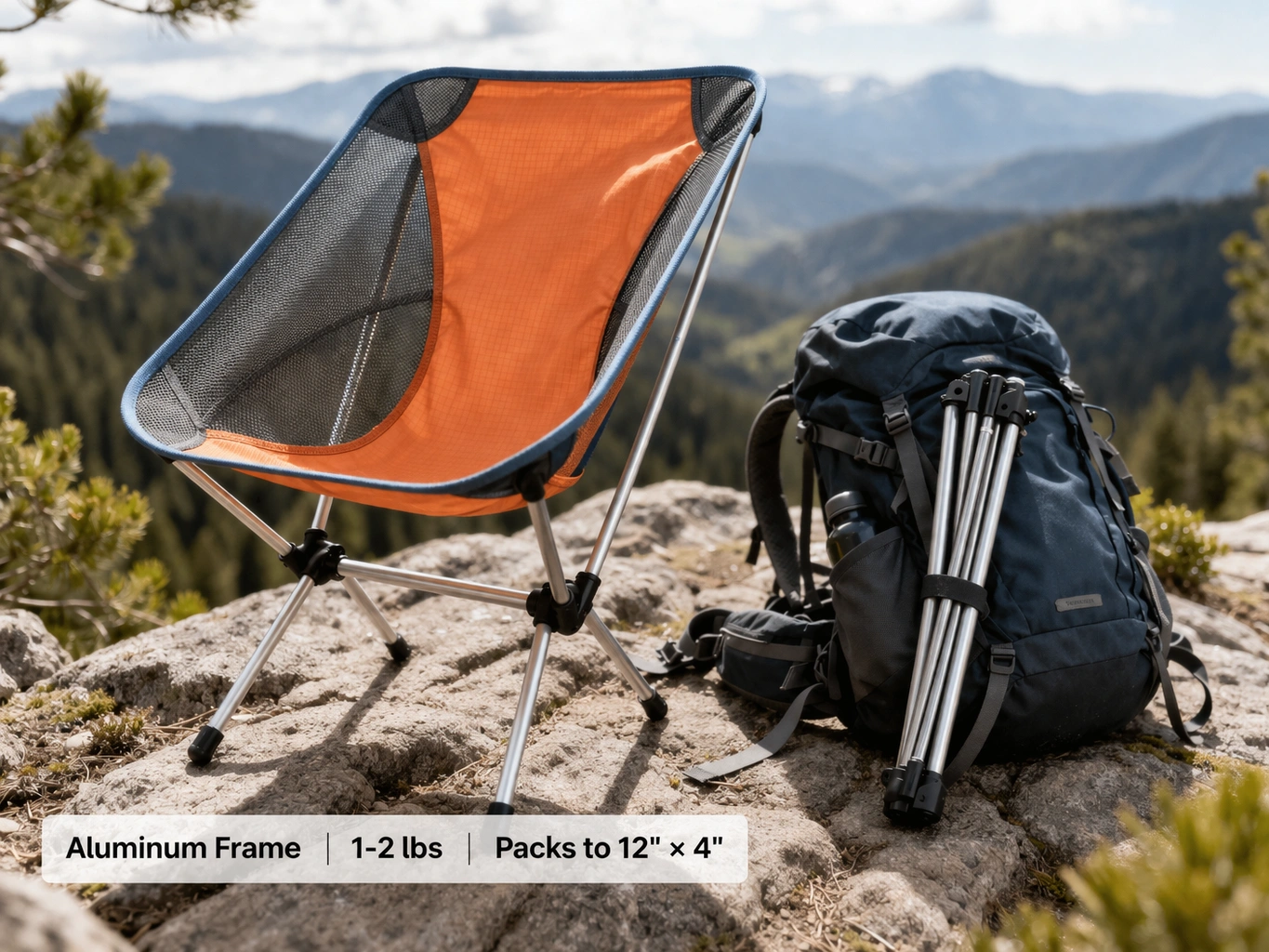
✨ Aluminum Frame
Ultralight, rust-proof, compact packing — perfect for backpacking and travel
Steel vs Aluminum: Quick Overview
When comparing steel vs aluminum camping chairs, the core trade-off is between strength/durability (steel) and lightweight portability (aluminum). Steel frames offer exceptional stability and higher weight capacity, making them ideal for car camping, tailgating, and heavy-duty use. Aluminum frames excel in backpacking and hiking scenarios where every ounce matters. Many top-tier brands like Helinox and Nemo use aircraft-grade aluminum to achieve ultralight designs, while budget-friendly Coleman chairs often feature steel frames for maximum strength at a lower price point.
Your choice ultimately depends on your primary use case. If you're loading gear into an RV or setting up a basecamp, steel's durability is a win. If you're hiking miles to a remote lake, aluminum's packability is non-negotiable. Let's explore every detail so you can make a confident decision.
| Feature | Steel Frame | Aluminum Frame |
|---|---|---|
| Weight | Heavier (typically 8–15 lbs) – less portable for hiking | Lightweight (2–6 lbs) – ideal for backpacking & hiking |
| Strength & Durability | Extremely strong; high weight capacity (300–600+ lbs). More resistant to bending under load. | Strong but can flex under extreme weight; premium aluminum (7000-series) rivals steel strength. |
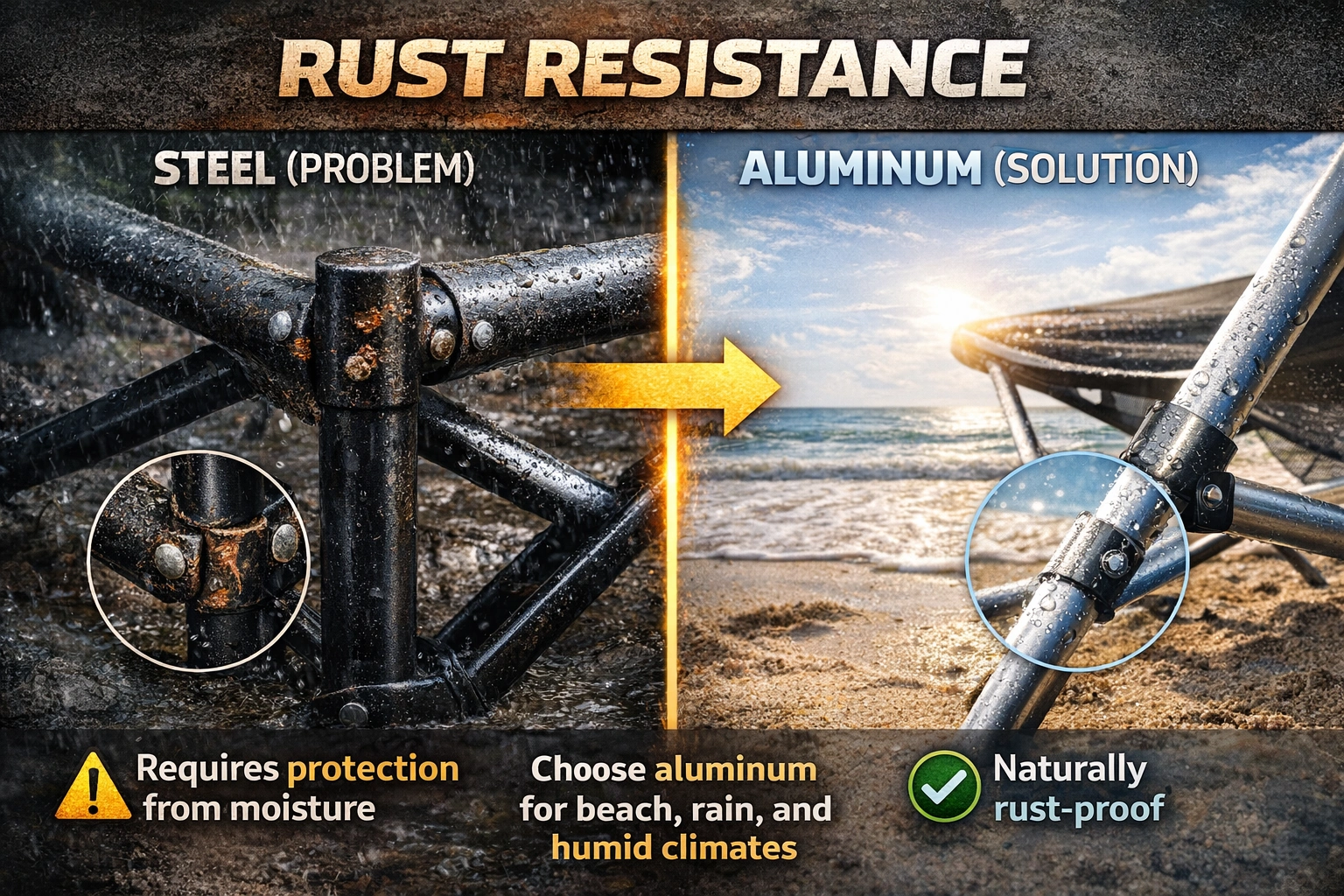
| Rust & Corrosion | Prone to rust if coating is scratched; requires care in wet/salt environments | Naturally corrosion-resistant; excellent for beach, humid climates, and wet conditions |
| Cost | Generally more affordable; budget chairs often use steel frames | Higher cost due to material and manufacturing; premium lightweight chairs command higher prices |
| Longevity | Long-lasting if kept dry and rust-free; can last decades with care | Extremely durable; no rust issues; often outlasts fabric components |
| Packed Size | Usually folds into a larger carry bag (most are not ultra-compact) | Collapses into small, lightweight bundles — some pack down to the size of a water bottle |
| Best For | Car camping, RV trips, tailgating, heavy-duty users, families | Backpacking, kayaking, motorcycle camping, minimalist travelers |
Detailed Comparison: Understanding the Differences
1. Weight & Portability
If you prioritize portability, aluminum frames are the clear winner. Premium aluminum camping chairs like those from Helinox and REI weigh as little as 1–2 lbs and pack down to the size of a Nalgene bottle—perfect for backpacking and ultralight adventures. Steel-framed chairs are heavier, often exceeding 8–10 lbs, making them impractical for carrying long distances. However, for car camping or RV camping, weight is less of a concern, and steel's robustness becomes a benefit.
2. Strength & Weight Capacity
Steel frames generally offer higher weight capacity, often supporting 300–600 lbs. This makes steel the go-to choice for heavy-duty camping chairs and XXL/big & tall models. Aluminum, while strong, can flex or feel less rigid under extreme loads. However, high-end aluminum chairs (like those from Nemo and Helinox) use 7000-series aluminum alloys that rival steel's strength while remaining featherlight. Always check the manufacturer's weight rating regardless of material.
3. Rust Resistance & Durability in the Elements
One of the biggest differentiators is rust resistance. Steel is vulnerable to oxidation when the powder coating is scratched, especially in humid, rainy, or coastal environments. If you frequently camp near the ocean, fish in saltwater, or store chairs in a damp garage, aluminum frames offer peace of mind. Aluminum naturally forms a protective oxide layer, making it ideal for beach camping chairs and wet conditions. Steel requires more maintenance—regular rust care and proper storage to extend lifespan.
4. Price & Value
Budget-conscious campers often gravitate toward steel-framed chairs. Brands like Coleman and Ozark Trail deliver sturdy steel chairs at affordable prices. Aluminum chairs command a premium due to material costs and engineering complexity. However, the investment often pays off in longevity (no rust) and convenience (easy carry). For premium camping chairs, aluminum is the standard for high-performance, lightweight gear.
5. Comfort & Design Flexibility
Frame material influences chair design. Steel's density allows manufacturers to create wide, robust frames for director chairs with side tables or rocking chairs. Aluminum's lightness enables innovative, compact folding mechanisms like those found in zero gravity chairs and recliners that still pack small. Both materials can deliver high comfort—it's more about the overall construction and ergonomics.
Pros and Cons at a Glance
✅ Steel Frame Advantages
- Higher weight capacity (ideal for heavy-duty and XXL users)
- Generally more affordable — best value for budget buyers
- Extremely rigid and stable — no flex under load
- Widely available in traditional, cushioned designs
- Easy to find replacement parts and repair
⚠️ Steel Frame Disadvantages
- Heavy — not suitable for backpacking or hiking
- Prone to rust and corrosion if coating is damaged
- Bulkier packed size — takes up more trunk/cargo space
- Can feel cold to the touch in winter camping
✅ Aluminum Frame Advantages
- Ultralight — perfect for backpacking and hiking
- Naturally rust-proof — ideal for beach, rain, and humid climates
- Compact packability — fits in small bags or even inside backpacks
- Long-lasting frame integrity — no corrosion over time
- Modern aesthetic and advanced folding designs
⚠️ Aluminum Frame Disadvantages
- Higher cost — premium lightweight chairs are expensive
- May feel less "solid" than steel under heavy weight
- Some lower-grade aluminum can flex or bend with rough use
- Not as commonly found in ultra-heavy-duty (500lb+) models
Material Science: Why It Matters for Your Camping Chair
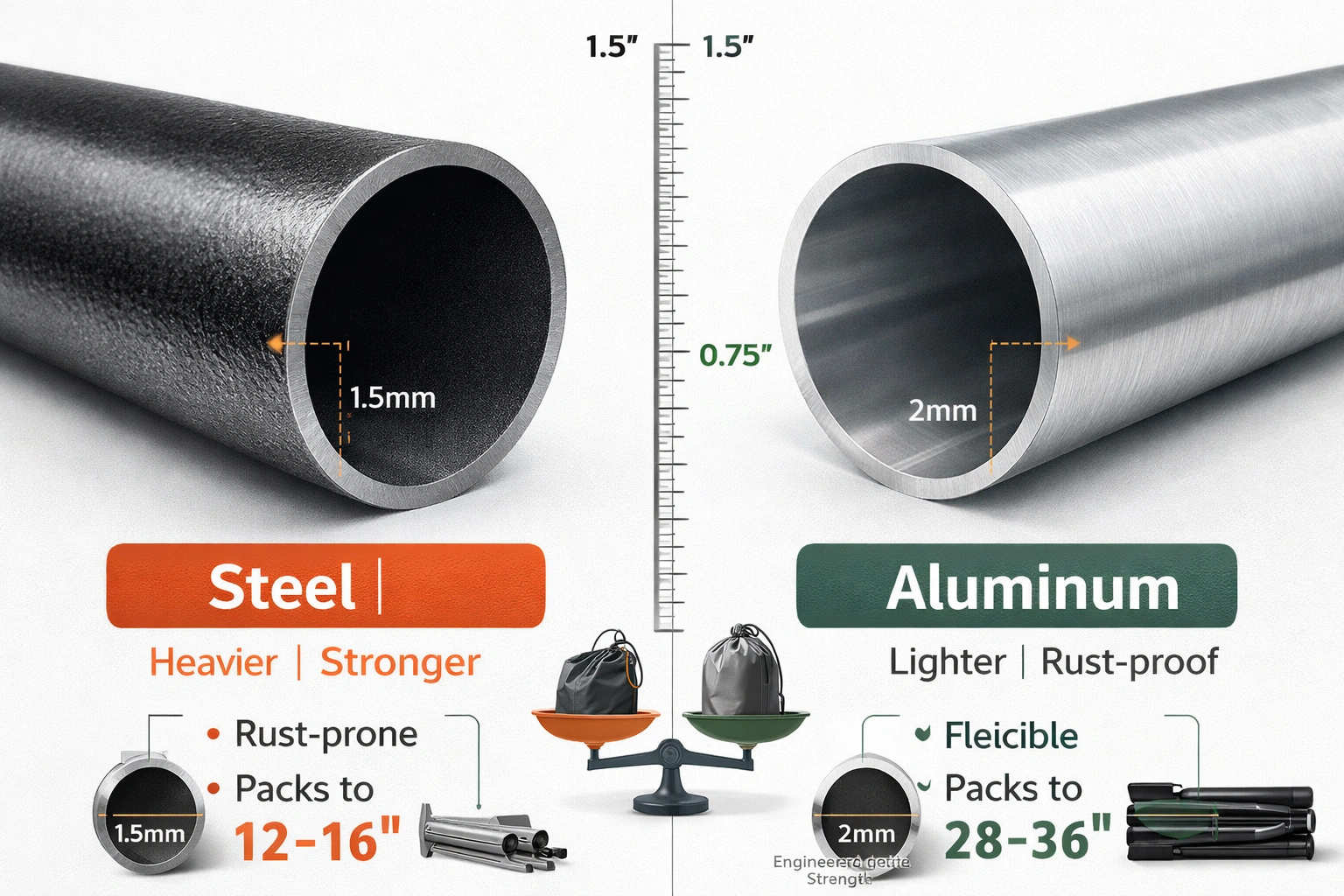
Beyond just weight, the material composition affects long-term durability. Most steel camping chairs use powder-coated steel tubing to resist rust. If the coating chips, rust can set in quickly—especially if stored damp. Aluminum frames are either 6000-series (more malleable, used in budget models) or 7000-series (aircraft-grade, used in high-end premium chairs). The latter offers the best strength-to-weight ratio. When comparing steel vs aluminum frame camping chairs, also consider the joint construction: riveted steel joints are bombproof, while aluminum chairs often use shock-corded poles (like tents) for collapsibility.
For those who camp year-round, aluminum's resistance to temperature extremes is a subtle advantage—steel can become freezing cold in winter. On the other hand, steel's heft can be reassuring for families with kids or pets who might climb on chairs. Understanding your primary camping scenario will guide you to the right material.
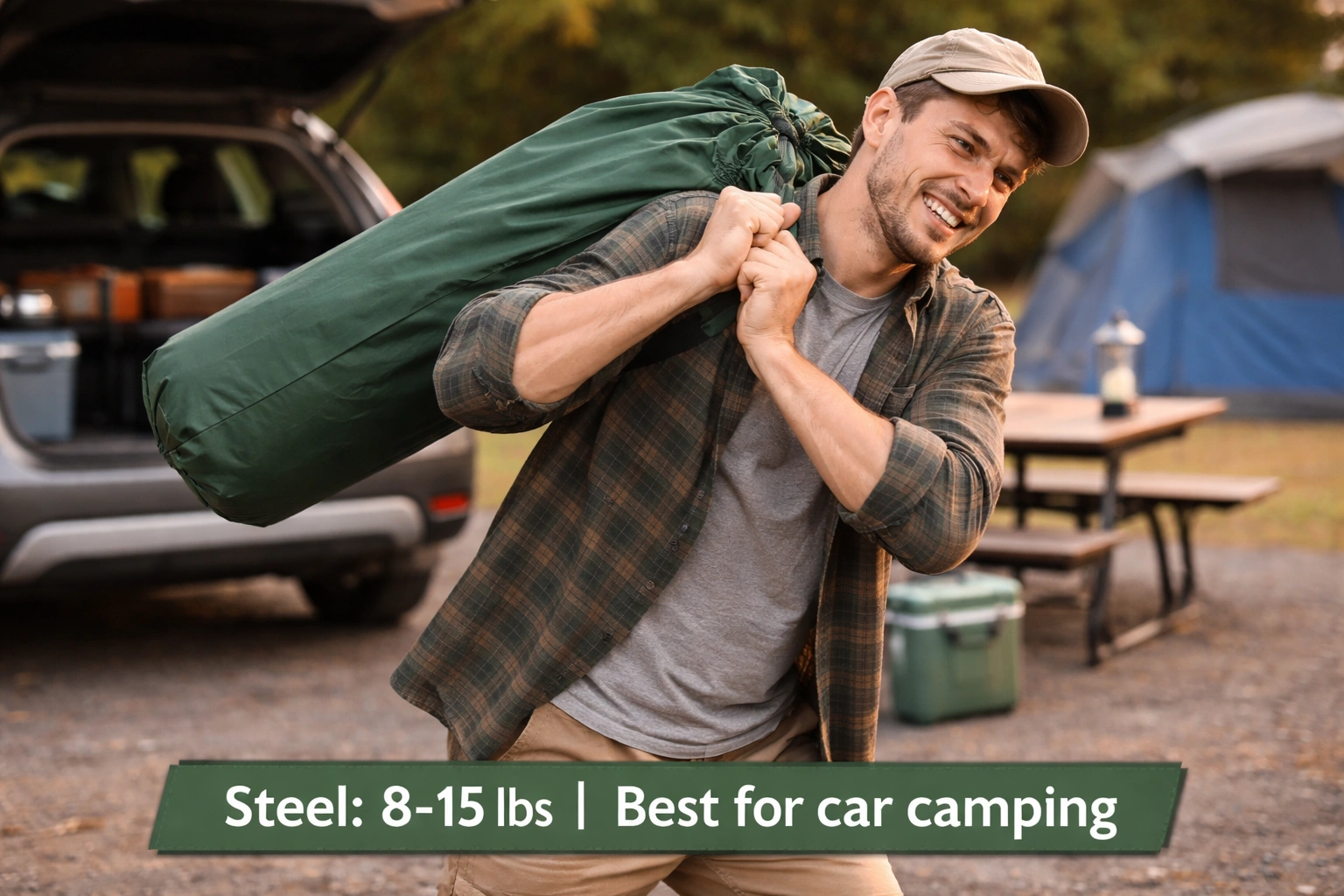
⚖️ Steel: 8-15 lbs
Sturdy but heavy — best for car camping where weight isn't an issue

🏃 Aluminum: 2-6 lbs
Ultralight and portable — perfect for backpacking and hiking
🏆 Final Verdict: Which Frame Should You Choose?
Choose STEEL if: You are a car camper, tailgater, or need a budget-friendly chair with high weight capacity. Steel is also ideal if you prioritize stability over portability and don't mind the extra weight. Families, RV enthusiasts, and heavy-duty users will appreciate steel's ruggedness.
Choose ALUMINUM if: You are a backpacker, hiker, kayaker, or value lightweight gear. If you camp in coastal or humid areas where rust is a concern, aluminum is a no-brainer. For those seeking ultralight camping chairs that pack down to almost nothing, aluminum is the only way to go.
Still undecided? Many campers own both types: a heavy-duty steel chair for basecamp and a compact aluminum chair for hiking day trips. Consider your most frequent activities and choose accordingly.
Maintenance Tips: Extend Your Chair's Life
Proper care ensures your chair lasts for years. For steel frames, inspect regularly for scratches in the coating. Apply touch-up paint or clear nail polish to prevent rust. Always store in a dry place and avoid leaving it outside overnight in rain. For aluminum frames, rinse off salt or sand after beach trips to prevent pitting. Lubricate folding joints occasionally with silicone spray. Both materials benefit from proper winter storage and cleaning before long-term storage. If you experience a broken leg or joint, consult our repair guides before replacing the entire chair.
For deeper dives into fabric choices, check out our guide on polyester vs canvas camping chairs and learn how materials affect comfort and durability alongside frame construction.
📖 Related Guide: Still weighing your options? Read our full Comfort vs Portability guide to see how frame material fits into the bigger picture. Also, don't miss our Top 10 Camping Chairs featuring both steel and aluminum winners across all categories.


