Camping Chair Frame Rust Care: Prevention & Removal Guide
Protect your investment with expert techniques to prevent, treat, and eliminate rust on steel and aluminum camping chair frames.
Early surface rust on a steel camping chair frame — caught early, it's fully treatable
🛡️ Why Rust Care Matters: Rust isn't just an eyesore—it weakens structural integrity, compromises safety, and shortens your chair's lifespan. A well-maintained frame can last 5-10 years or more, saving you money and ensuring reliable comfort on every adventure.
Understanding Your Chair Frame: Steel vs. Aluminum
Before tackling rust, it's crucial to know what your camping chair frame is made of. Most camping chairs use either steel or aluminum frames, each with distinct characteristics when it comes to rust resistance. If you're unsure, check your chair's specifications or look for labeling on the frame itself.
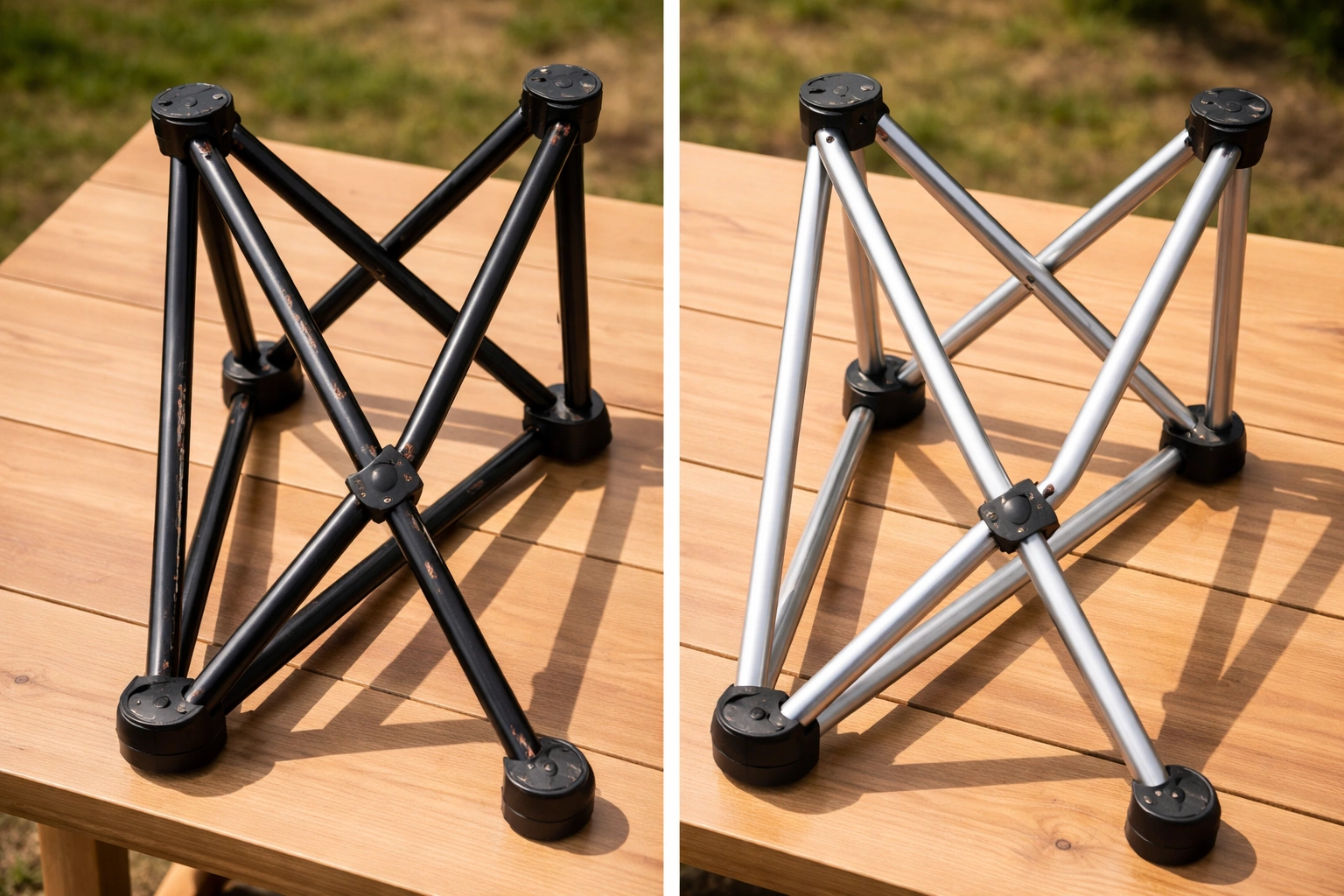
Why Material Choice Matters
Steel frames are strong and affordable but vulnerable when their protective coating gets scratched. Aluminum naturally forms a protective oxide layer, making it inherently rust-resistant. Understanding which material you have determines your entire care approach — what products to use, how often to inspect, and whether rust spots are even true rust (aluminum can develop surface oxidation that looks similar but isn't corrosive).
How to Prevent Rust on Camping Chair Frames
Prevention is always easier than repair. By adopting a few simple habits, you can dramatically extend the life of your chair's frame and keep it looking great for years.
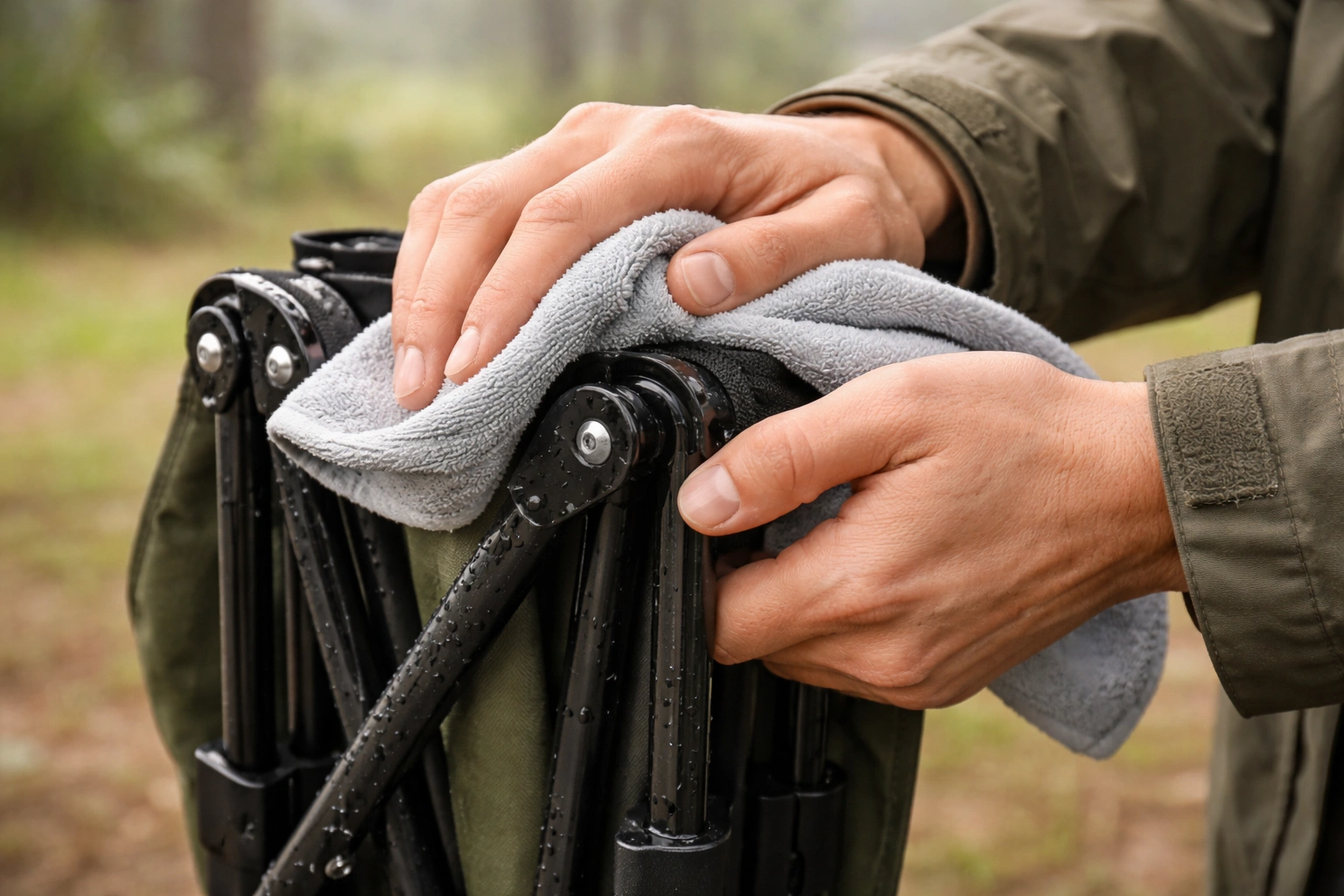
1. Dry Thoroughly After Use
Moisture is rust's best friend. After camping in rain, near water, or even after morning dew, wipe down your chair with a dry cloth.
- Use a microfiber cloth for best absorption
- Open and close the chair to dry moving parts
- Store only when completely dry

2. Apply Protective Coating
A light coat of lubricant or rust inhibitor creates a barrier against moisture on steel frames.
- Apply 2-3 times per year
- Focus on pivot points and joints
- Wipe excess to prevent dirt accumulation
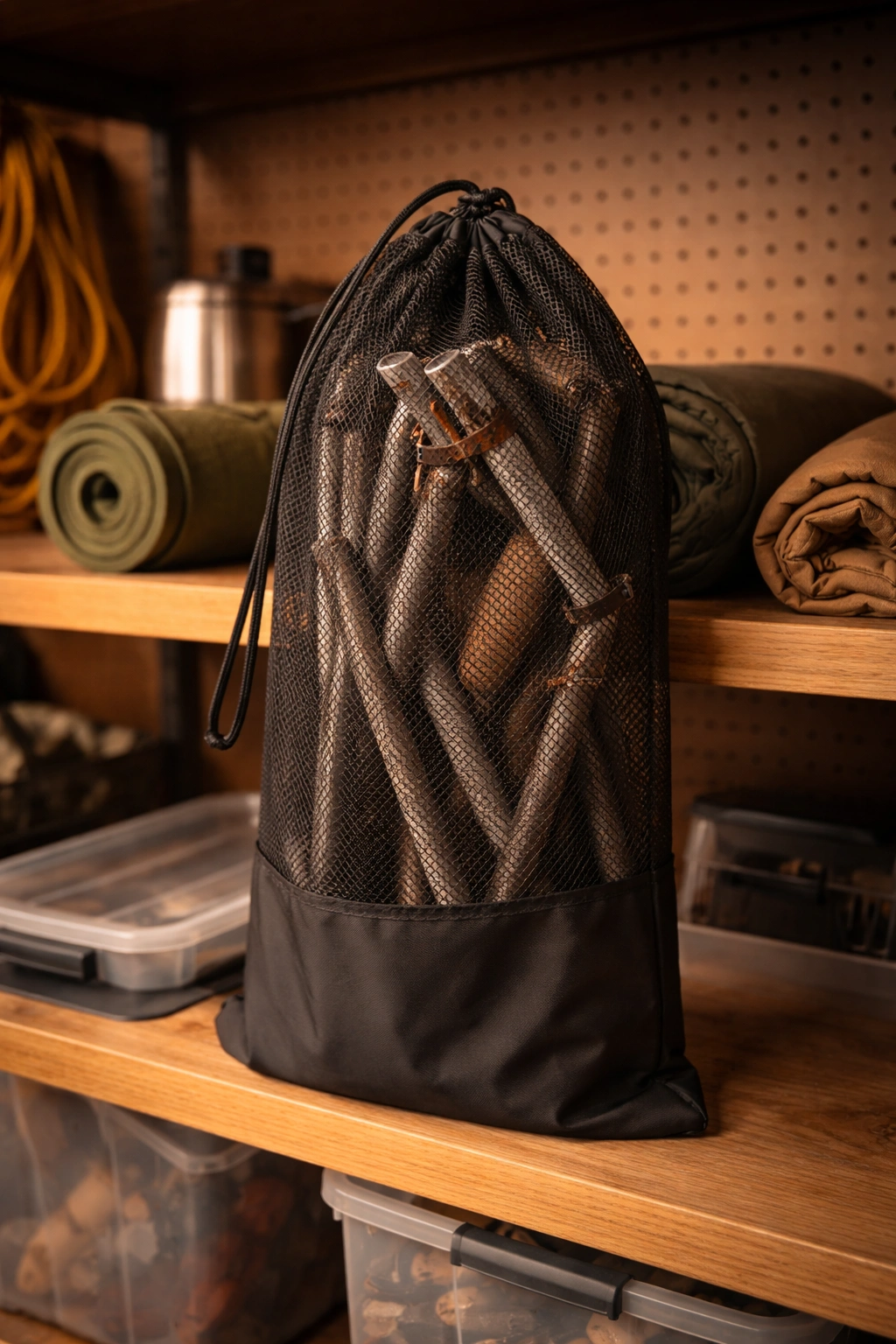
3. Proper Storage Matters
Where and how you store your camping chair between trips significantly impacts rust risk.
- Store in a cool, dry indoor space
- Use a breathable storage bag
- Keep away from concrete floors (retain moisture)
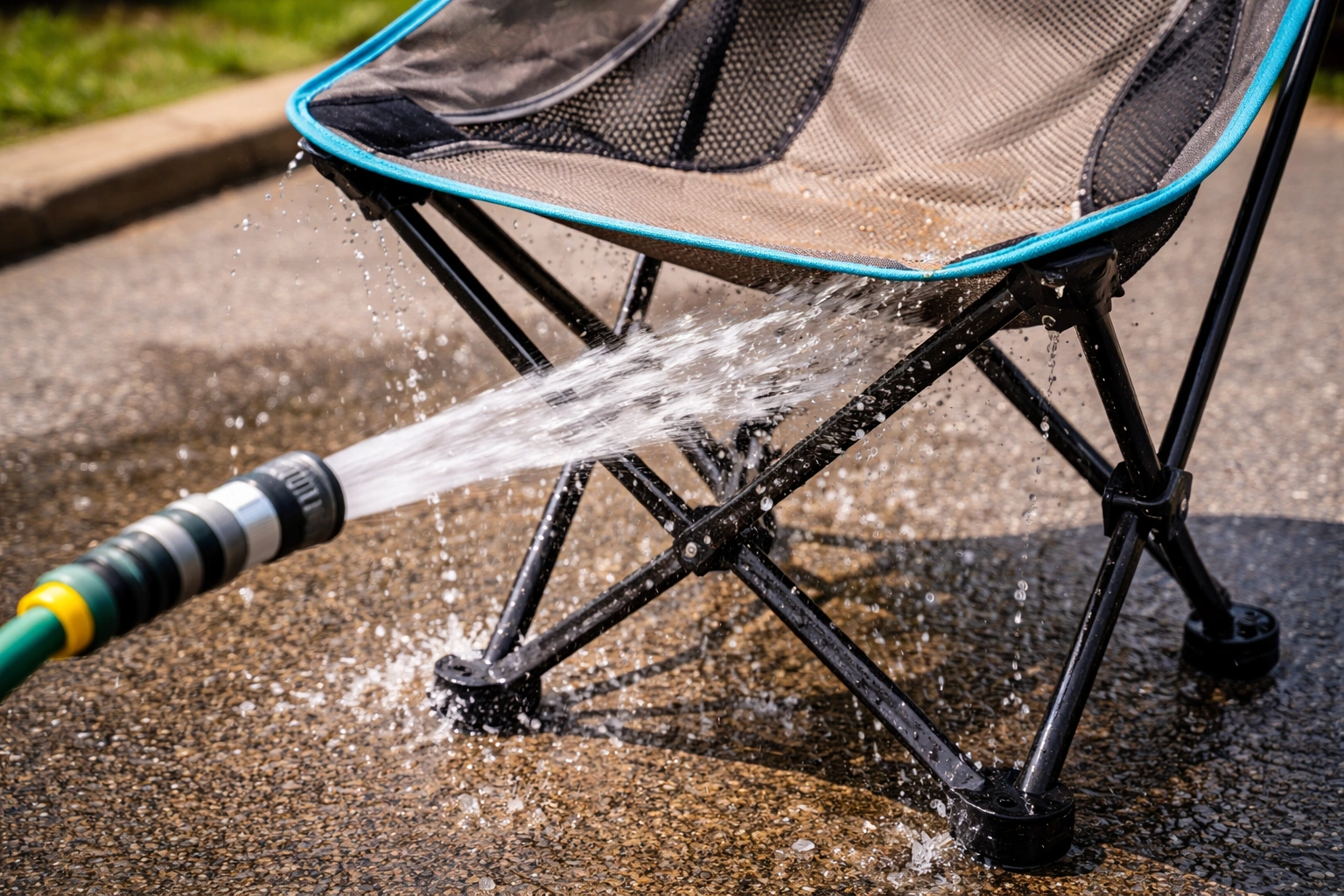
4. Rinse After Salt Exposure
Salt accelerates corrosion dramatically. Rinse the frame with fresh water immediately after beach trips.
- Use a garden hose with gentle pressure
- Dry thoroughly with a towel
- Apply protective spray after drying
Step-by-Step Rust Removal Guide
If you've already spotted rust on your camping chair frame, don't panic. Most surface rust can be removed with household items and a little elbow grease. Follow these steps to restore your chair safely.
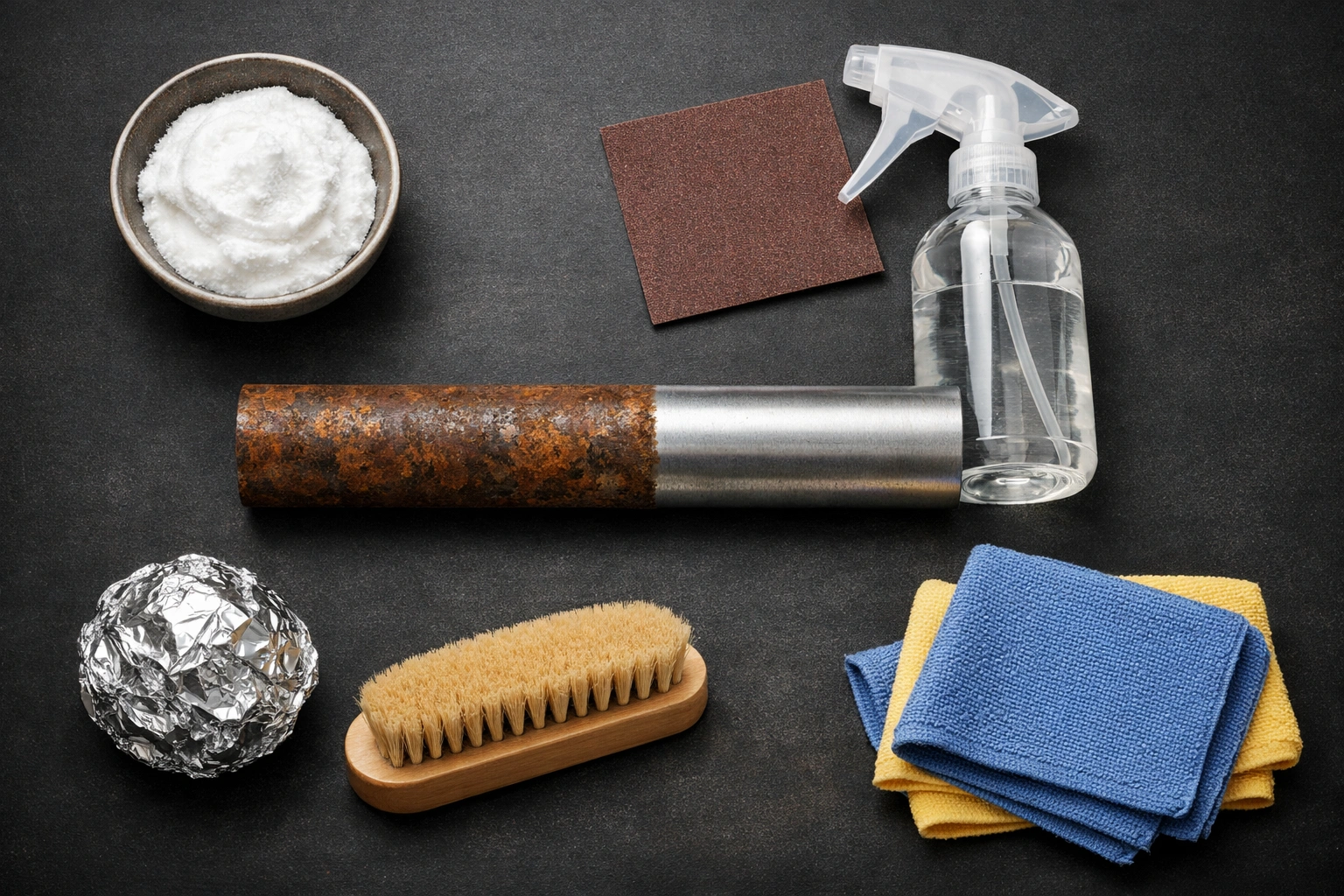
Essential rust removal tools — most are already in your kitchen
⚠️ Safety First: Always work in a well-ventilated area when using chemical rust removers. Wear gloves and eye protection. If your chair has severe structural rust (deep pitting, weak spots), consider replacing it for safety.
1
Identify the Rust Severity: Light surface rust (orange discoloration) is easiest to treat. Heavy rust (flaking, pitting) requires more aggressive methods and may compromise structural integrity.
2
Clean the Area: Wash the frame with mild soap and water to remove dirt and debris. Dry completely before starting treatment. This prevents scratching during rust removal.
3
Apply Rust Remover: For light rust, make a paste with baking soda and water, or use white vinegar. Apply to affected areas and let sit for 10-15 minutes. For tougher rust, use a commercial rust converter like Naval Jelly (follow product instructions).
4
Scrub Gently: Use a soft-bristle brush, aluminum foil ball (dipped in water), or fine-grit sandpaper (220-400 grit) to scrub away loosened rust. Scrub in circular motions, being careful not to damage paint on steel frames.
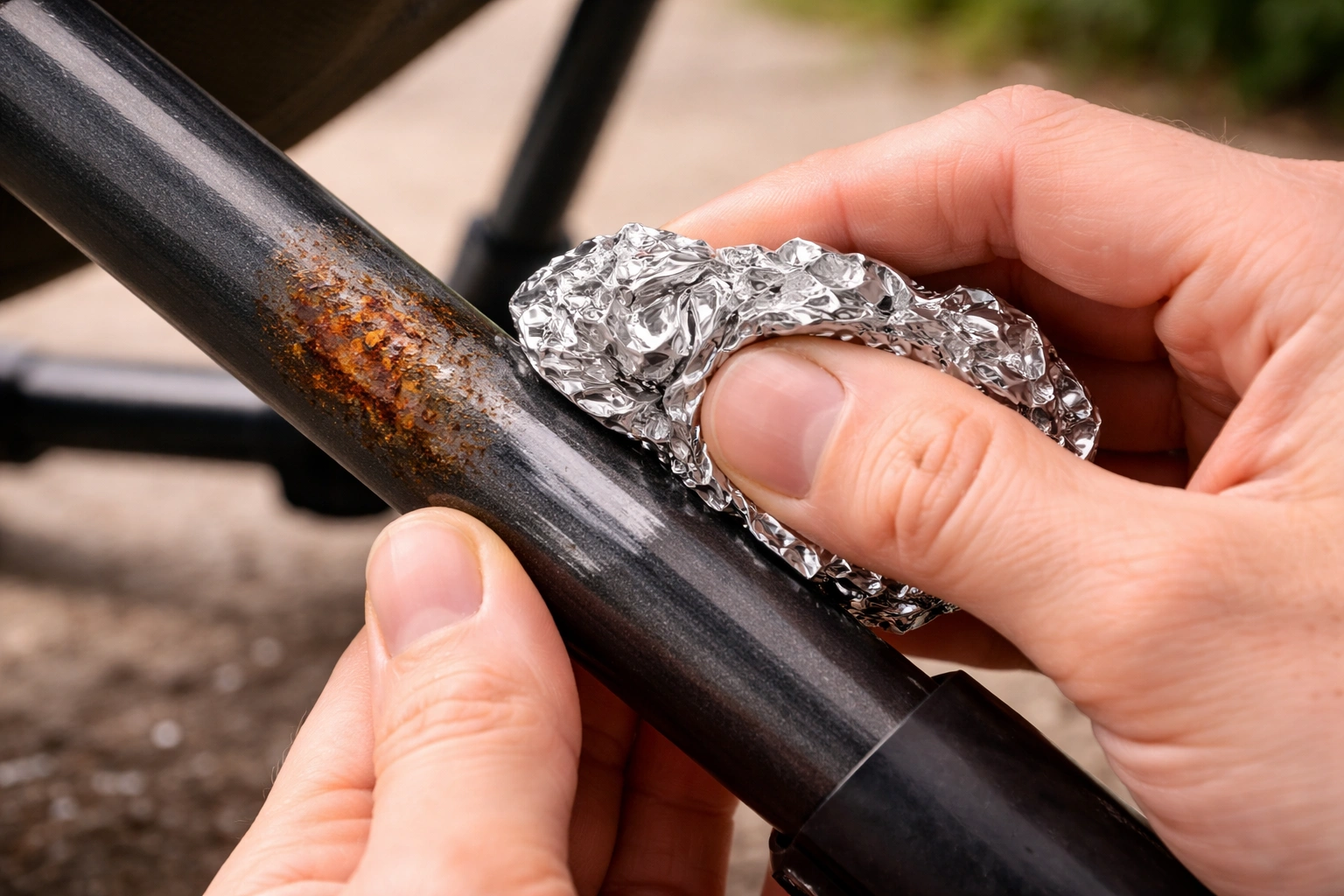
5
Rinse and Dry: Wipe away residue with a clean damp cloth, then dry the area thoroughly. Inspect for remaining rust spots and repeat if necessary.
6
Touch Up Paint (Steel Frames): For steel frames with exposed metal after rust removal, apply rust-inhibiting primer and matching paint to protect bare metal. Allow to cure fully before use.
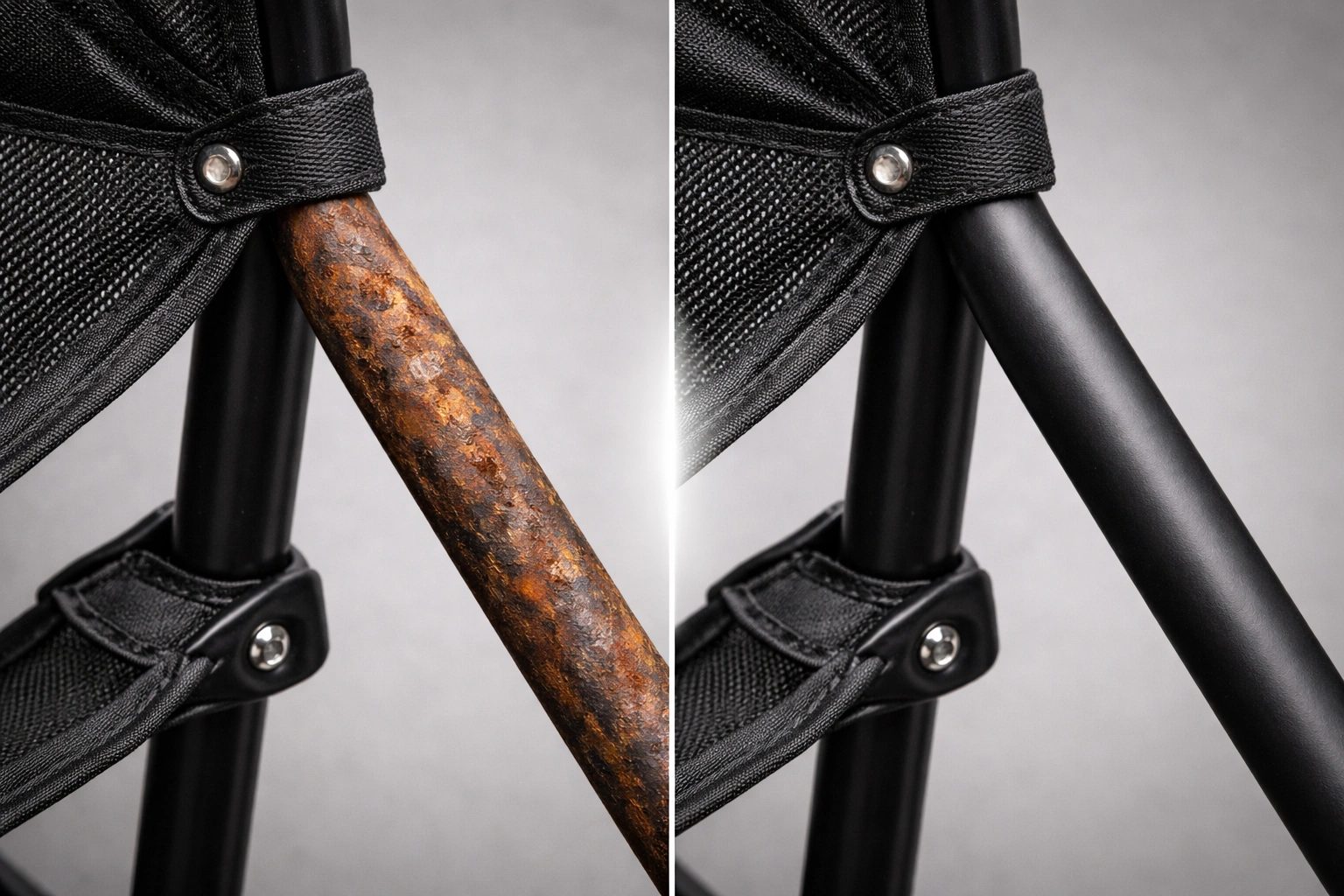
BEFORE
AFTER
The same frame section — left side untreated with flaky rust, right side fully restored with primer and paint
Special Care: Hinges, Joints & Hardware
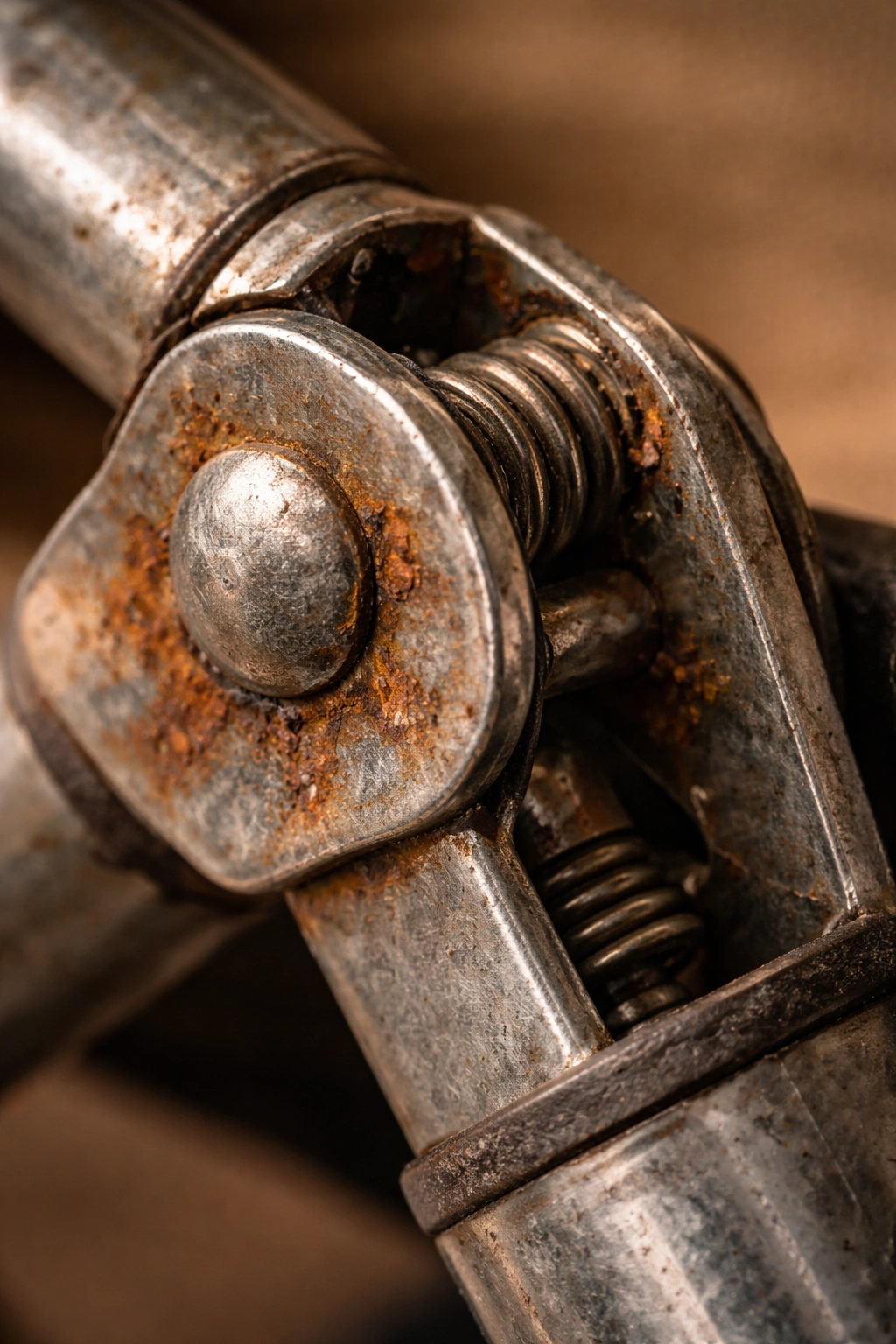
The Most Vulnerable Areas
The most vulnerable rust spots on any camping chair are the moving parts—hinges, rivets, and folding joints. These areas trap moisture and experience friction that wears away protective coatings. Even aluminum chairs can develop corrosion at these points if dirt and moisture accumulate over time. Regular attention here pays the biggest dividends in long-term durability.
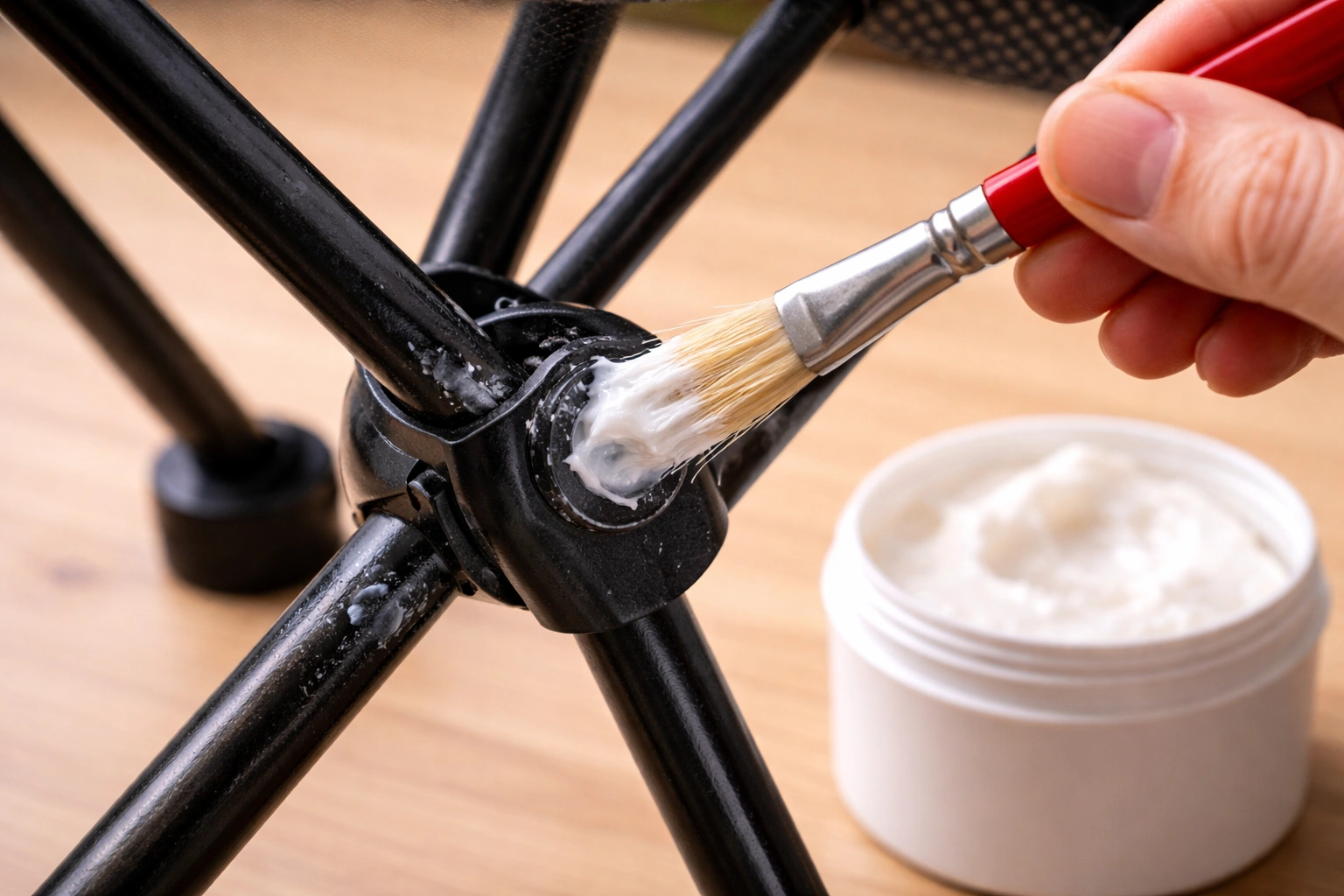
Proper Lubrication Technique
Not all lubricants are equal. Silicone spray works best for plastic-on-metal contact points common in modern camping chairs. For metal-on-metal hinges, white lithium grease provides longer-lasting protection. The key is applying sparingly — excess lubricant attracts dirt and sand, which accelerates wear instead of preventing it.
🔧 Pro Maintenance Tips for Metal Components
- Quarterly Inspection: Check all joints for early signs of rust or stiffness at the start of each camping season and before storage.
- Use the Right Lubricant: Silicone spray for plastic-on-metal, white lithium grease for metal-on-metal joints.
- Avoid Over-Lubrication: Excess oil attracts dirt and sand — apply sparingly and wipe away excess.
- Replace Damaged Rivets: If a rivet is rusted or loose, replace it promptly. Check our camping chair repair parts guide for replacement hardware.
Common Rust-Related Problems & Solutions
Squeaky, Stiff Hinges
Cause: Rust or corrosion buildup in joints.
Fix: Clean with WD-40 to loosen, then apply silicone lubricant. Work the joint back and forth until smooth. For persistent rust, use fine steel wool before lubricating.
Orange/Brown Stains on Fabric
Cause: Rust bleeding from frame onto fabric.
Fix: Treat frame rust first. For fabric stains, use lemon juice and salt, or a commercial rust stain remover. Always spot-test first. See our fabric cleaning guide.
Stuck Folding Mechanism
Cause: Rust seizing moving parts.
Fix: Apply penetrating oil and let sit for 30 minutes. Gently work the mechanism back and forth. If still stuck, carefully tap joints with a rubber mallet — never force with excessive pressure.
Flaking Paint on Steel Frame
Cause: Rust forming under paint.
Fix: Remove loose paint with wire brush, treat rust with converter, then apply rust-inhibiting primer and matching paint. Especially important for heavy-duty chairs.
When Rust Means It's Time to Replace
While surface rust is treatable, there are clear signs that a chair has reached the end of its safe lifespan. Using a compromised chair risks sudden collapse and injury.
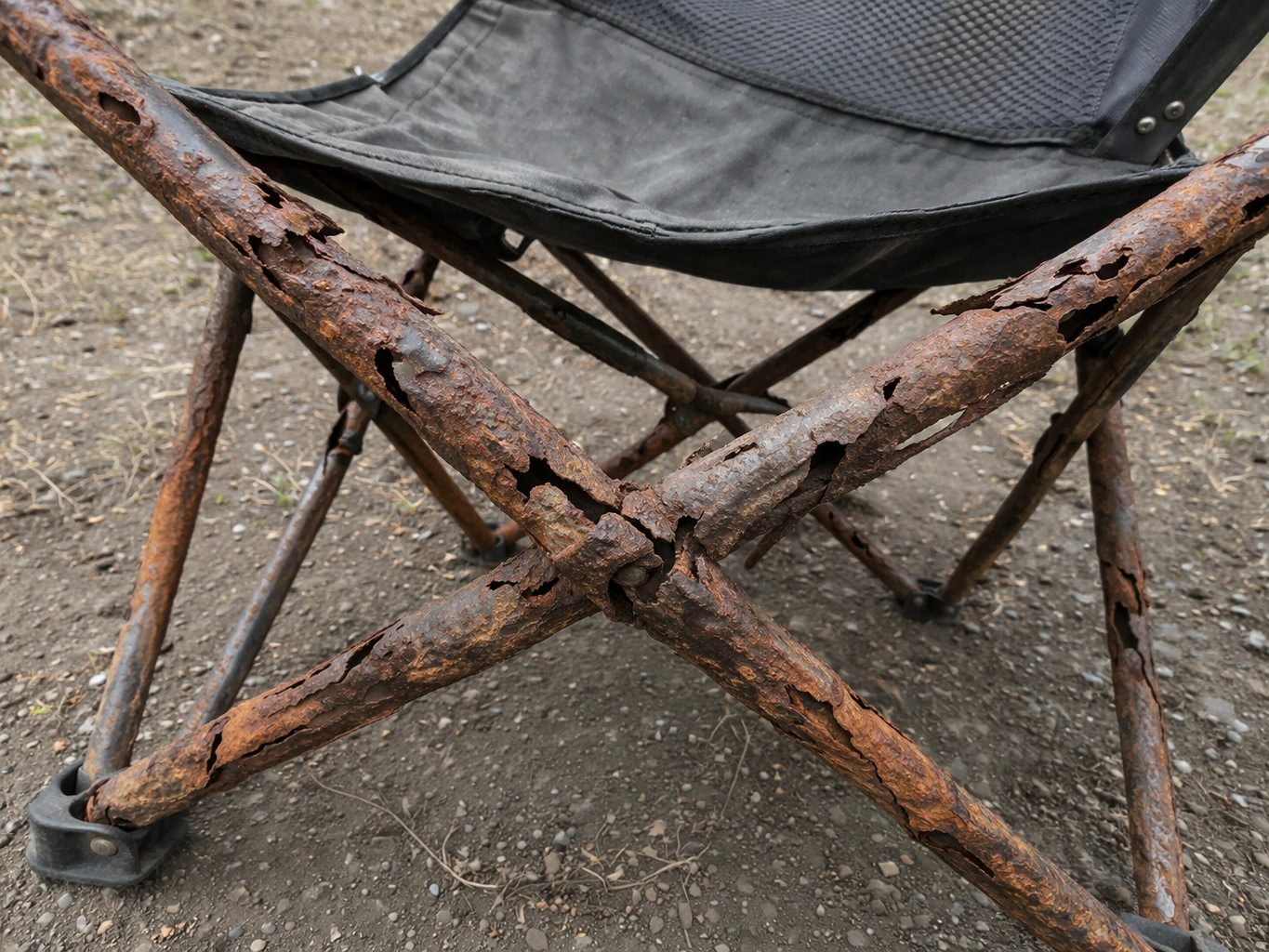
🚨 Danger Signs: Replace, Don't Repair
- Deep pitting or holes in frame tubing
- Structural weakness — frame bends or wobbles under normal weight
- Rust inside tubing near joints (brown dust around connections)
- Failed welds or cracked metal at stress points
- Repeated repairs in the same area
If your chair shows these signs, browse our top-rated camping chairs for a safe, reliable replacement. Investing in a new chair is far less expensive than a trip to urgent care.
Create Your Rust Prevention Routine
Consistency is key to keeping your camping chairs rust-free. Here's a simple maintenance schedule to follow throughout the year:
After Every Trip: Wipe down & inspect
Seasonally: Deep clean & coat
Before Winter: Full inspection & store
After Beach: Rinse salt immediately
- After Every Trip: Wipe down frame, dry thoroughly, inspect for scratches or early rust spots.
- Seasonally (Spring & Fall): Deep clean frames, apply protective coating, lubricate hinges, touch up paint chips.
- Before Winter Storage: Perform full inspection, treat any rust, store in climate-controlled space. Read our winter storage guide for cold-climate tips.
- After Beach Trips: Immediate fresh-water rinse and thorough drying to remove salt residue.
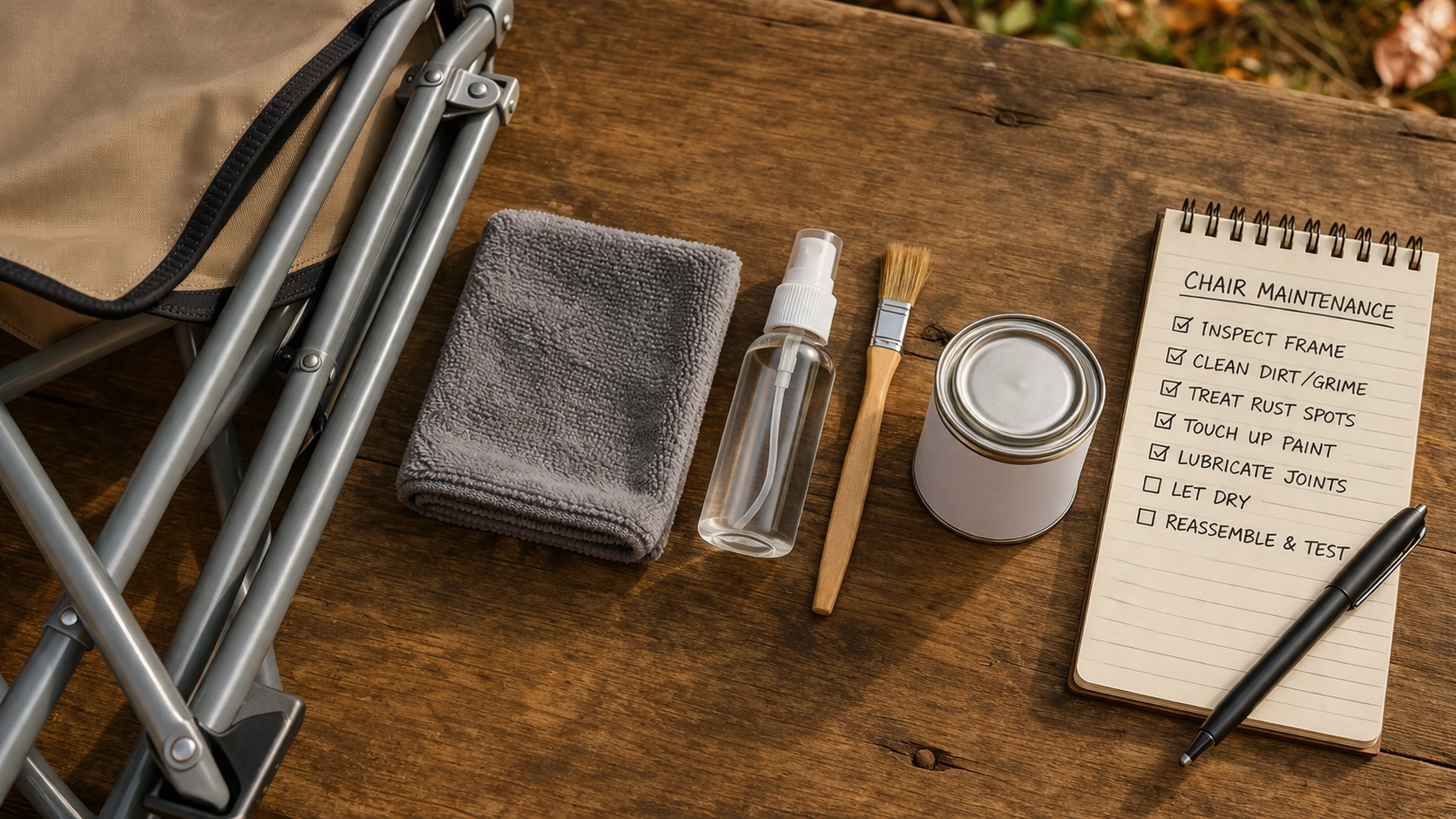
A simple seasonal maintenance kit keeps your chairs in top condition year-round
📚 Keep Learning: Extend your gear knowledge with these related guides:
Protecting your camping chair from rust is one of the simplest ways to ensure years of reliable comfort on your outdoor adventures. With regular inspection, proper cleaning, and timely treatment, your chair will remain safe, sturdy, and ready for every campfire, beach sunset, and mountain vista. Now that you know how to care for your frame, you're ready to make an informed purchase if you're in the market for a new chair.


