
How to Lubricate Camping Chair Hinges: Step-by-Step Guide
Stop squeaky, stiff, or stuck folding mechanisms. Learn the right way to lubricate your camping chair hinges for smooth operation and extended lifespan.
🔧 Why Hinge Maintenance Matters: A well-lubricated hinge means effortless setup, silent folding, and years of reliable use. Whether you own a folding camping chair, a director chair, or a rocking camp chair, hinges are the most stressed moving parts.
Regular lubrication prevents rust, reduces wear, and keeps your chair from becoming a frustration at the campsite. It takes just 10 minutes and can add years to your gear's life.
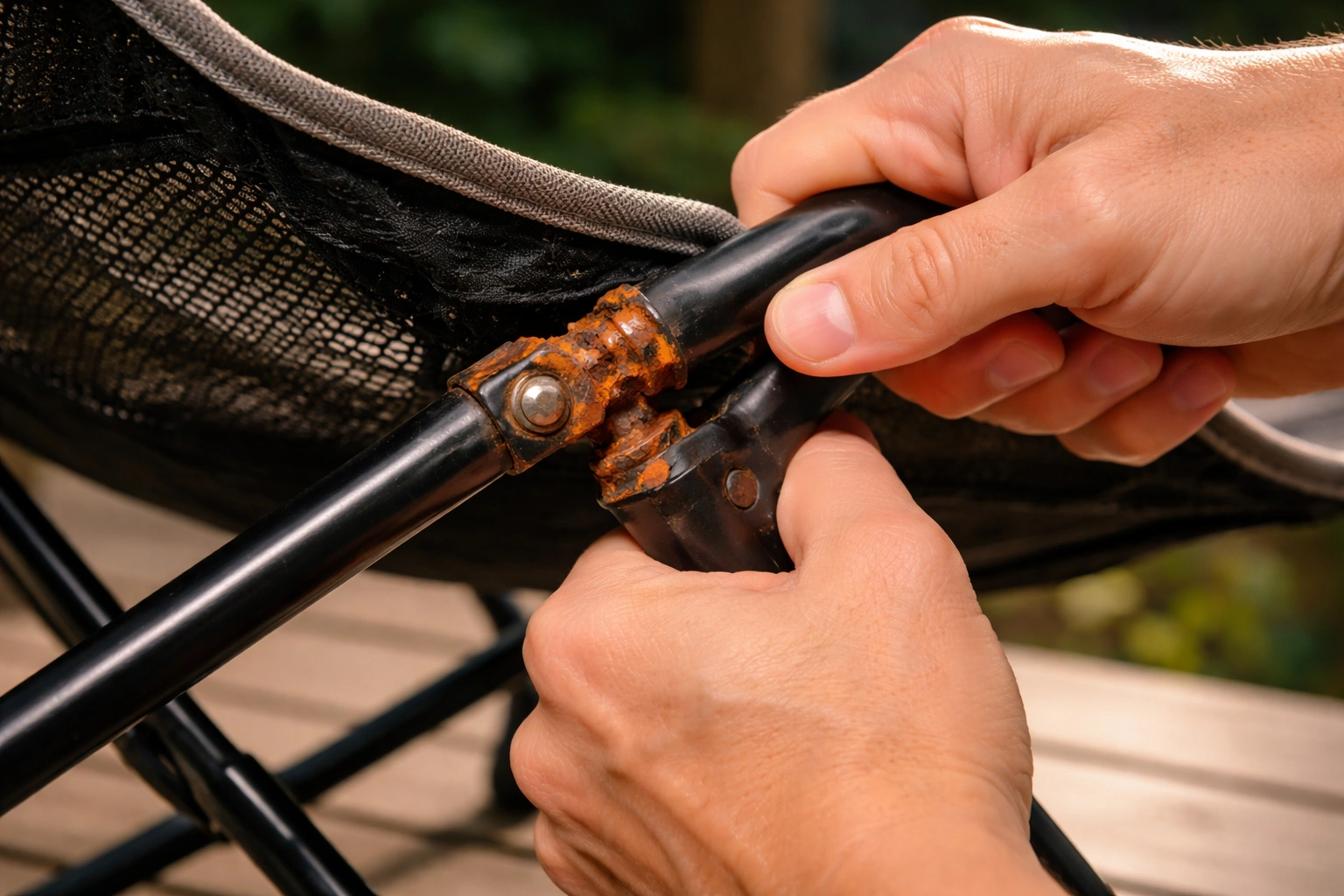
When Does Your Chair Need Lubrication?
Camping chairs face dust, sand, moisture, and temperature changes. Over time, hinges collect debris and lose their smooth movement. Here are clear signs it's time to lubricate:
- Squeaking or grinding noises when opening or closing
- Stiff or hard-to-fold mechanism requiring extra force
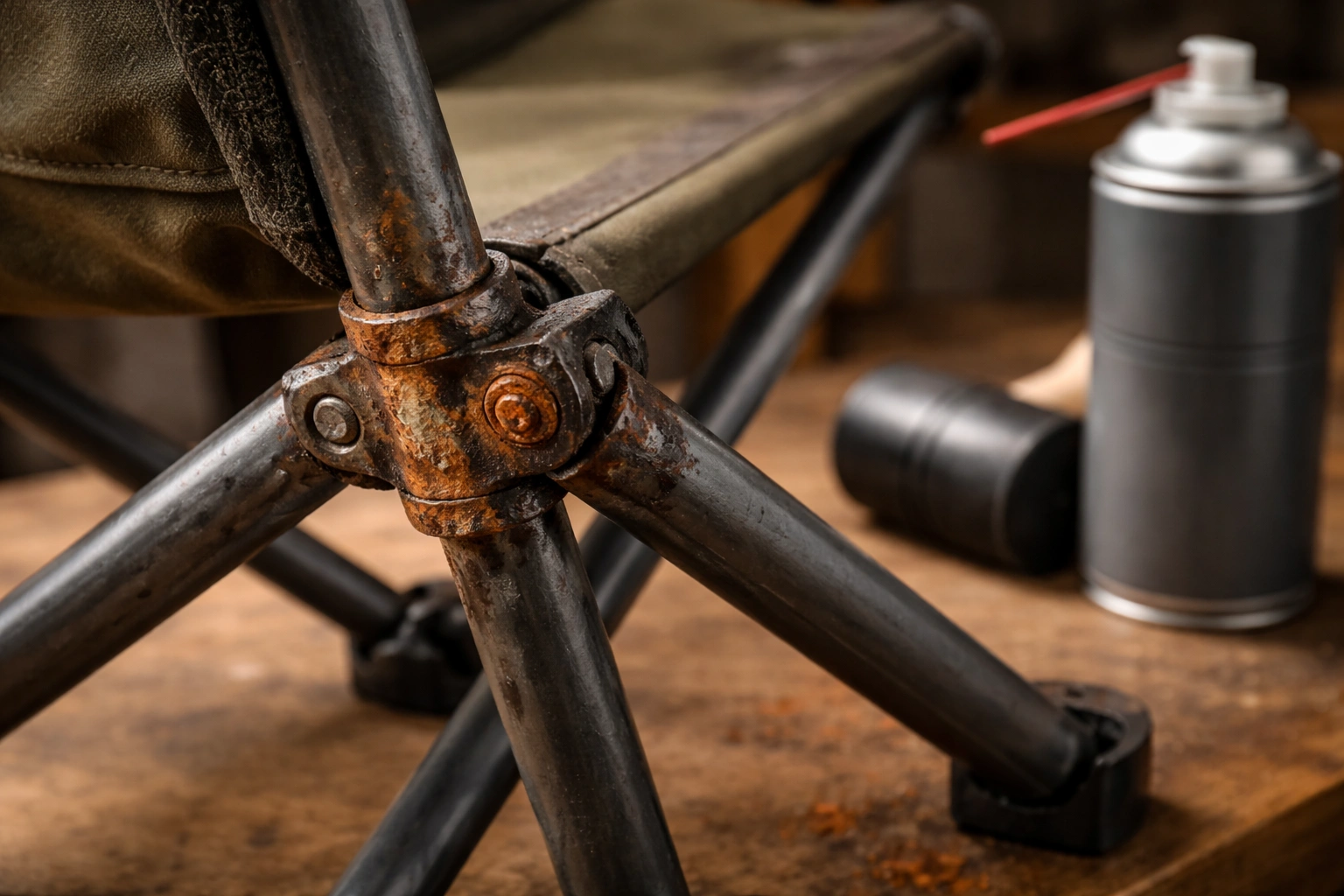
- Visible rust or white corrosion on metal hinge joints
- Sticking in half-open position — won't lock properly
- After exposure to rain, sand, or saltwater (especially for beach sand chairs)
Best Lubricants for Camping Chair Hinges
Not all lubricants are created equal. Using the wrong product can attract dirt or damage plastic components. Below are the top choices recommended by outdoor gear experts:
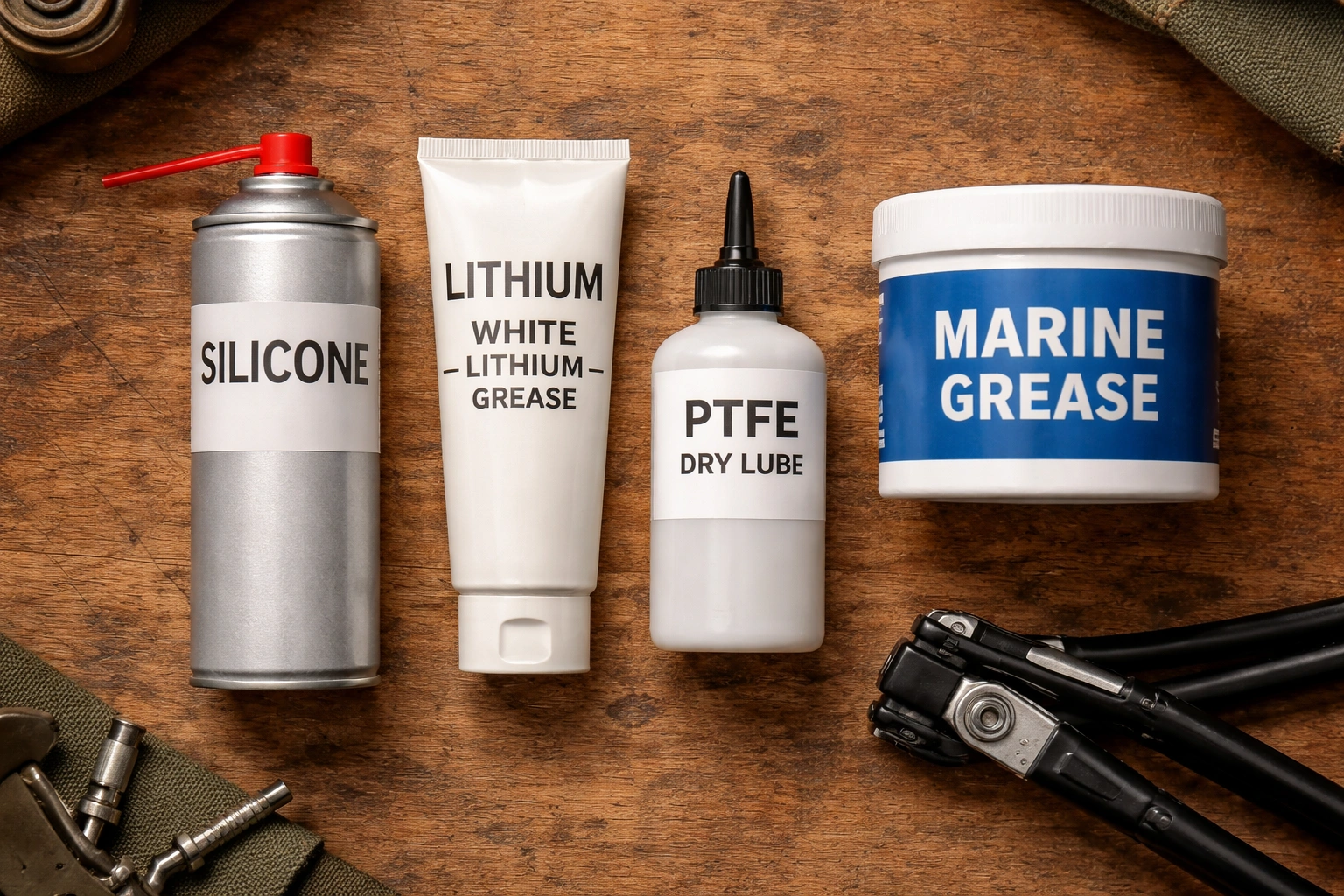
Silicone Spray
Best all-rounder. Water-resistant, doesn't attract dust, safe for metal and plastic. Ideal for most standard camping chairs and lightweight frames.
Dry PTFE Lubricant
Creates a non-stick film that repels dirt. Perfect for dusty or sandy conditions. Great for ultralight backpacking chairs with exposed joints.
White Lithium Grease
Thicker formula for heavy-duty hinges. Excellent for heavy-duty chairs and steel-frame models that endure high weight loads.
Marine Grease / Corrosion-X
Best for coastal or wet environments. Provides superior rust protection for chairs used near saltwater.
Step-by-Step Guide to Lubricate Hinges
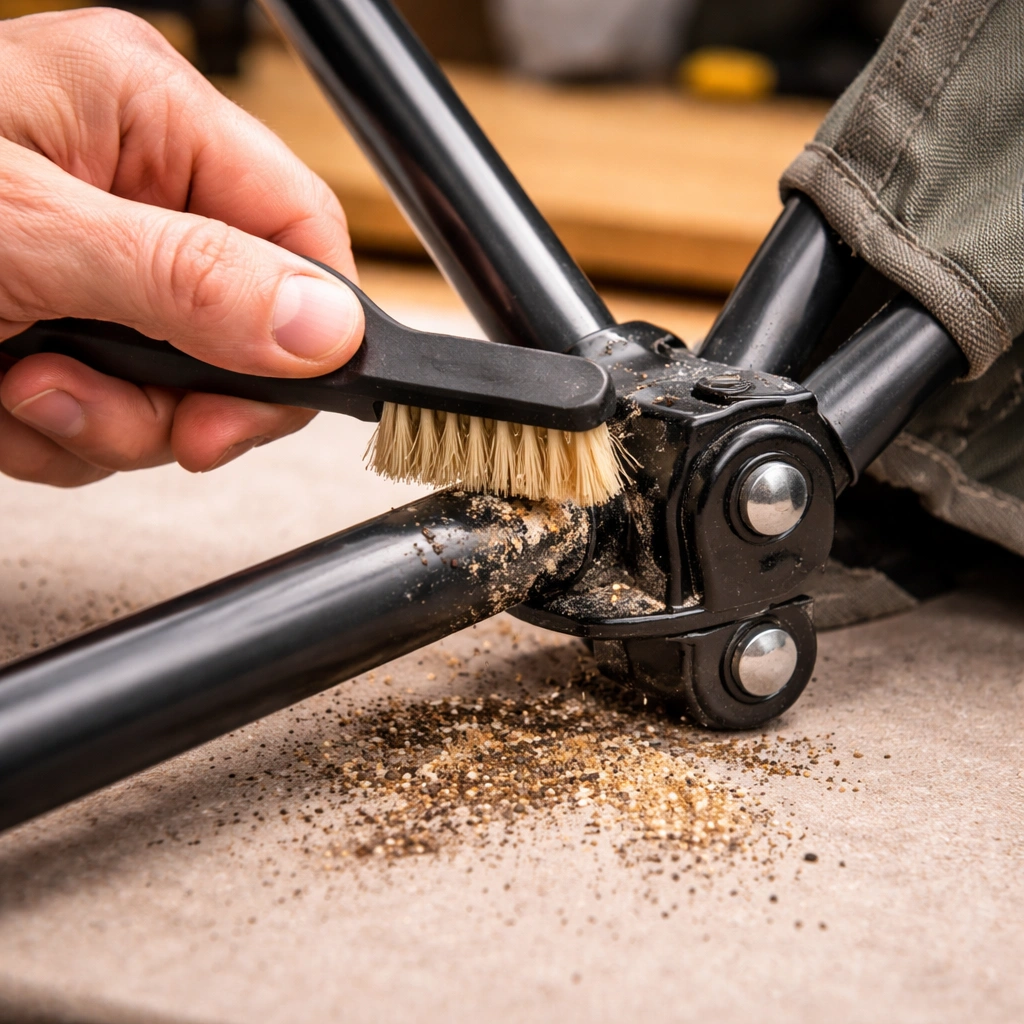
Clean the Hinges Thoroughly
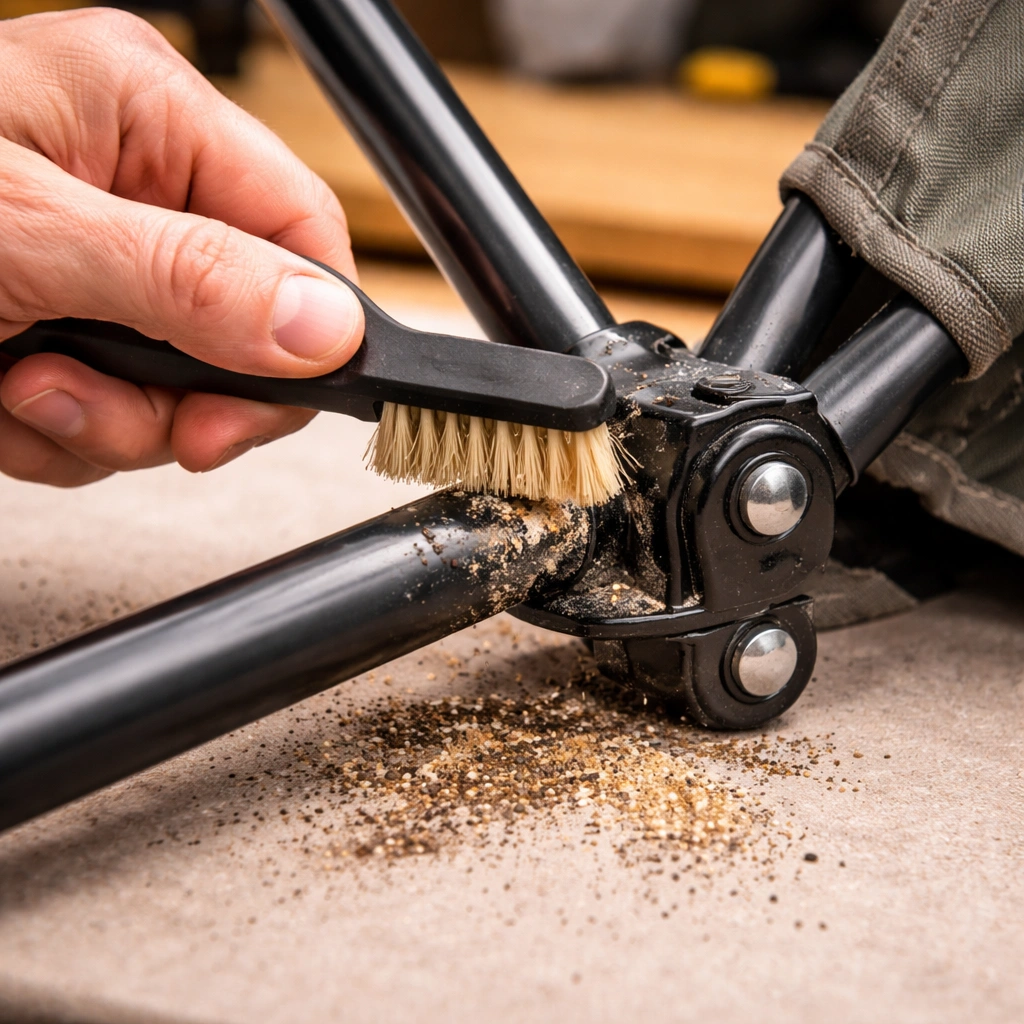
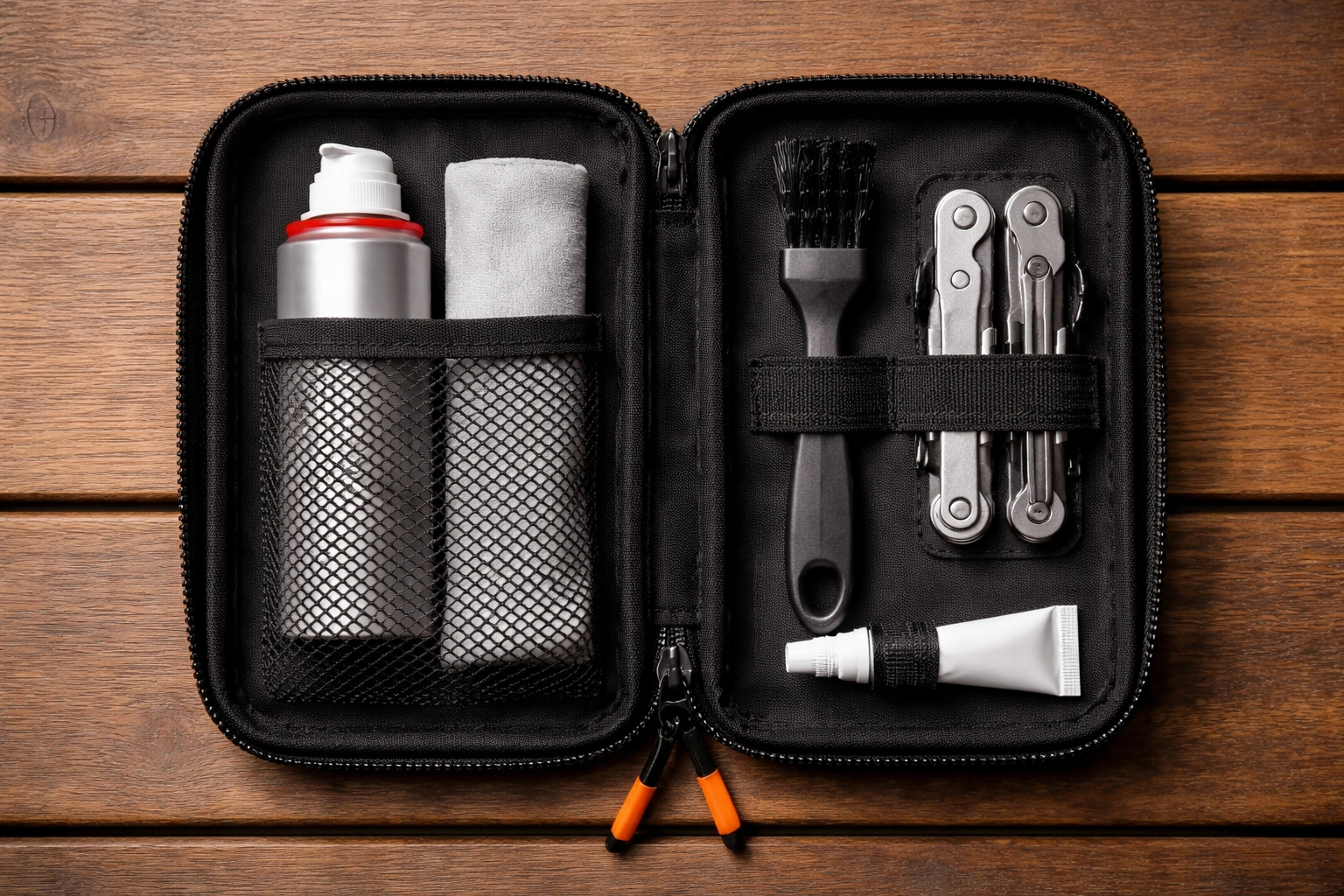
Open your chair fully and locate all hinge points. Use a soft brush or an old toothbrush to remove dust, sand, and debris. For stubborn grime, wipe with a cloth dampened with mild soap and water. Allow to dry completely — a clean surface ensures lubricant penetrates effectively.
If your chair has fabric tears or structural damage, first check our repair parts guide before lubricating.
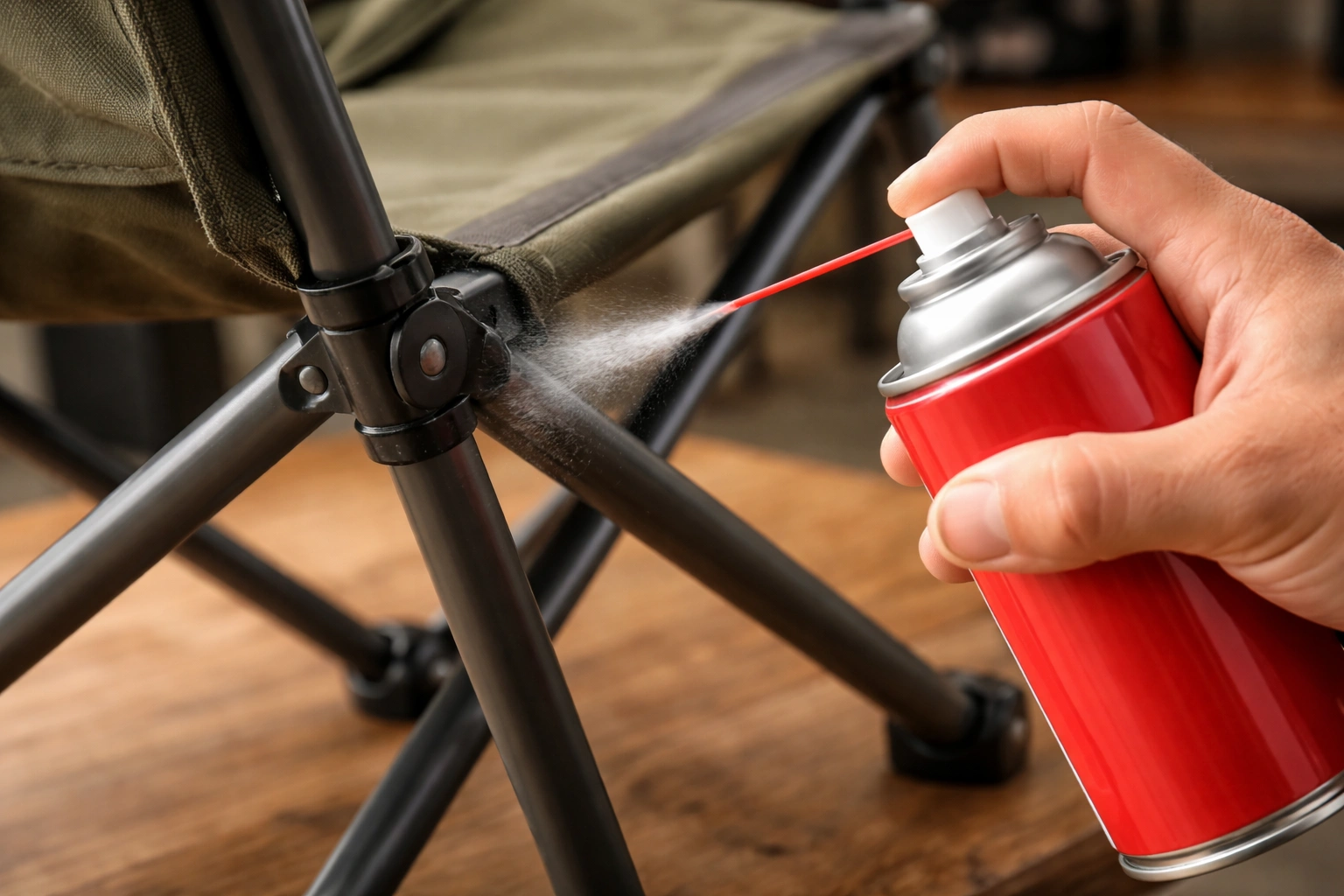
Apply Lubricant to Each Hinge Joint
Hold the can or bottle nozzle close to the hinge pivot point. Apply a small amount — you don't need to oversaturate. For spray lubricants, use the straw attachment for precision. Rotate the hinge slightly while applying to work the lubricant into the joint.
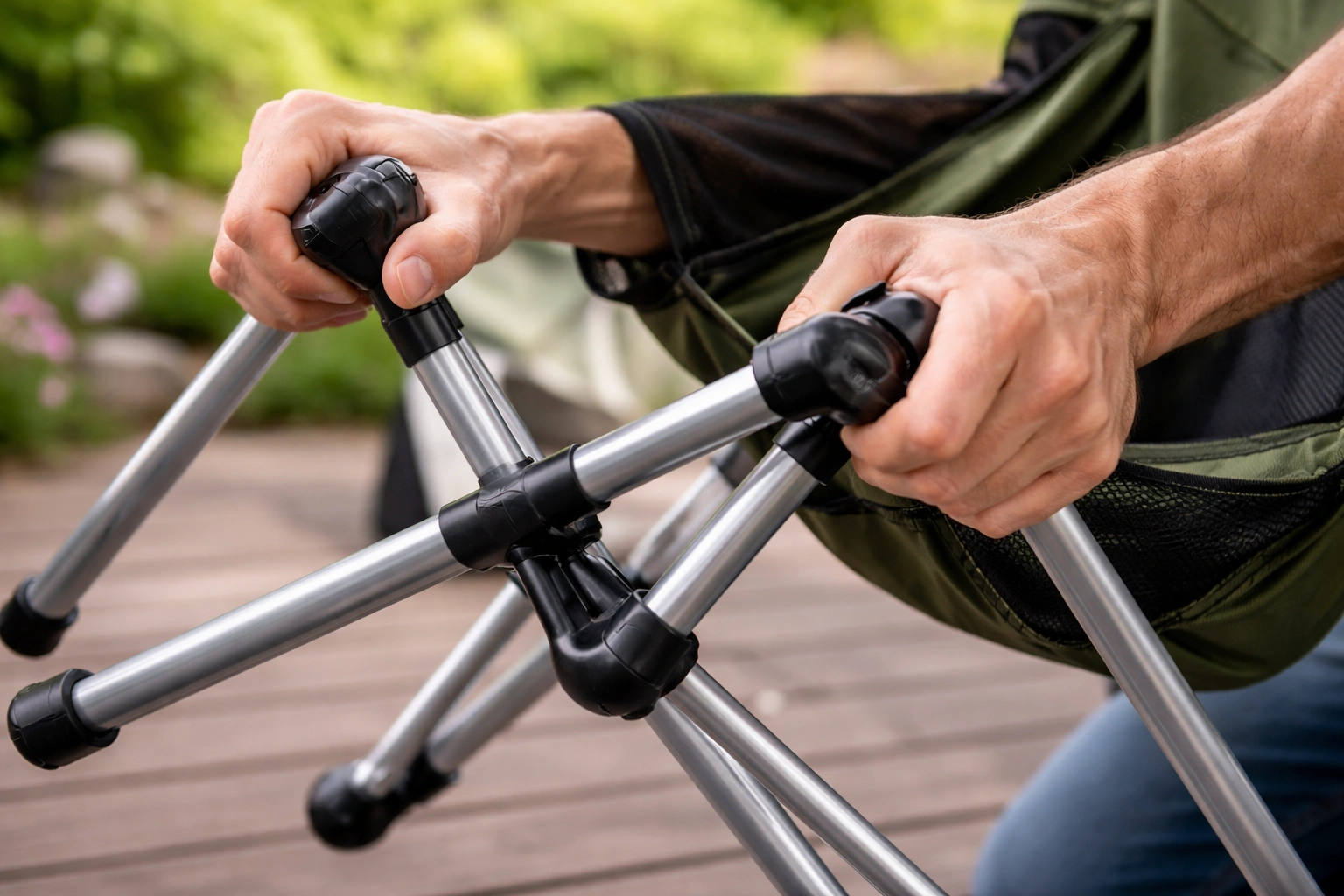
Work the Mechanism
Open and close the chair 8–10 times to distribute the lubricant evenly across all moving surfaces. This action helps break down any remaining residue and ensures smooth operation. Listen for any remaining squeaks — if present, repeat application on that specific hinge.
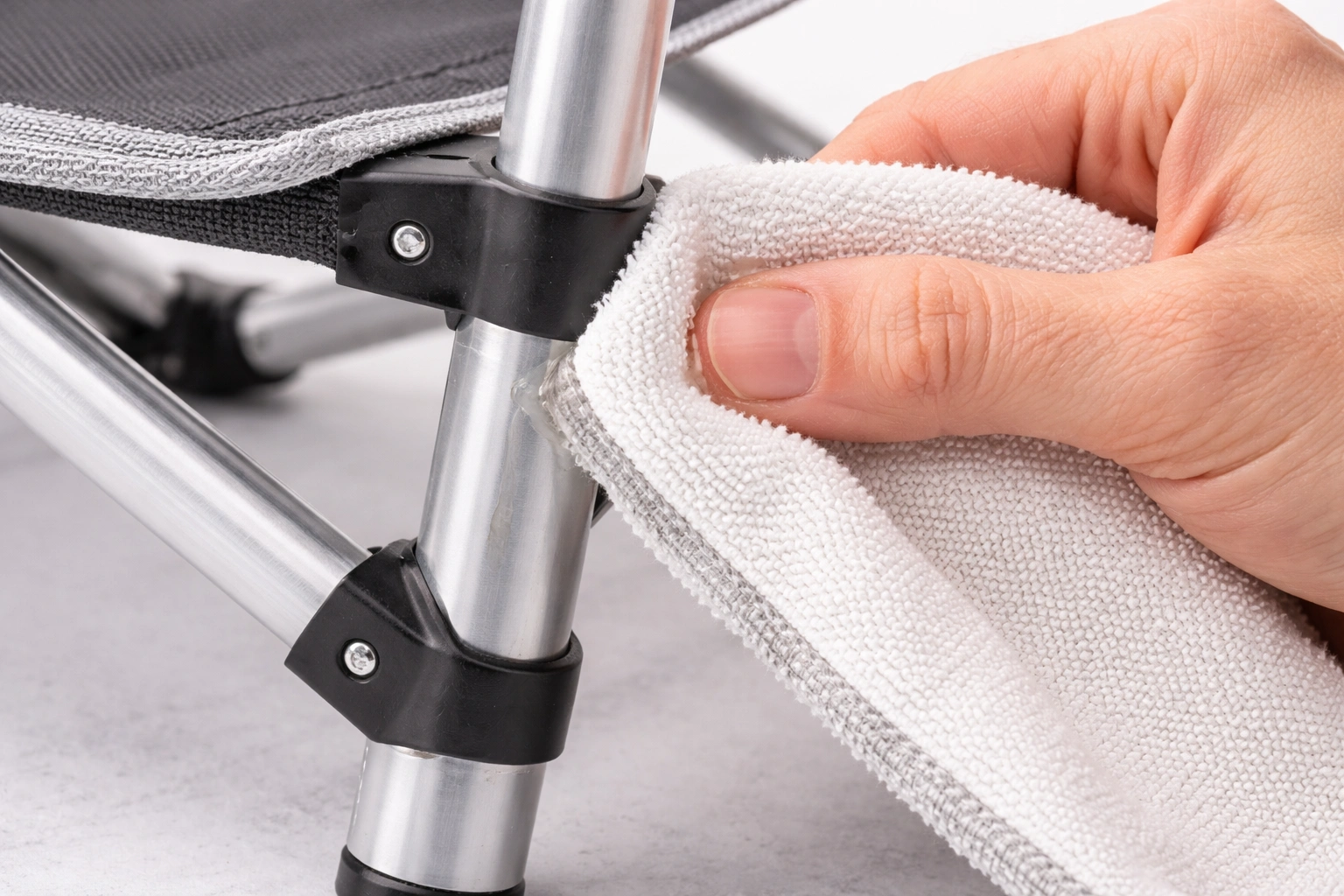
Wipe Off Excess Lubricant
Use a clean, dry cloth to remove any excess lubricant from the frame and fabric. This prevents dirt accumulation and keeps your chair clean. Pay special attention to areas near the fabric to avoid staining.
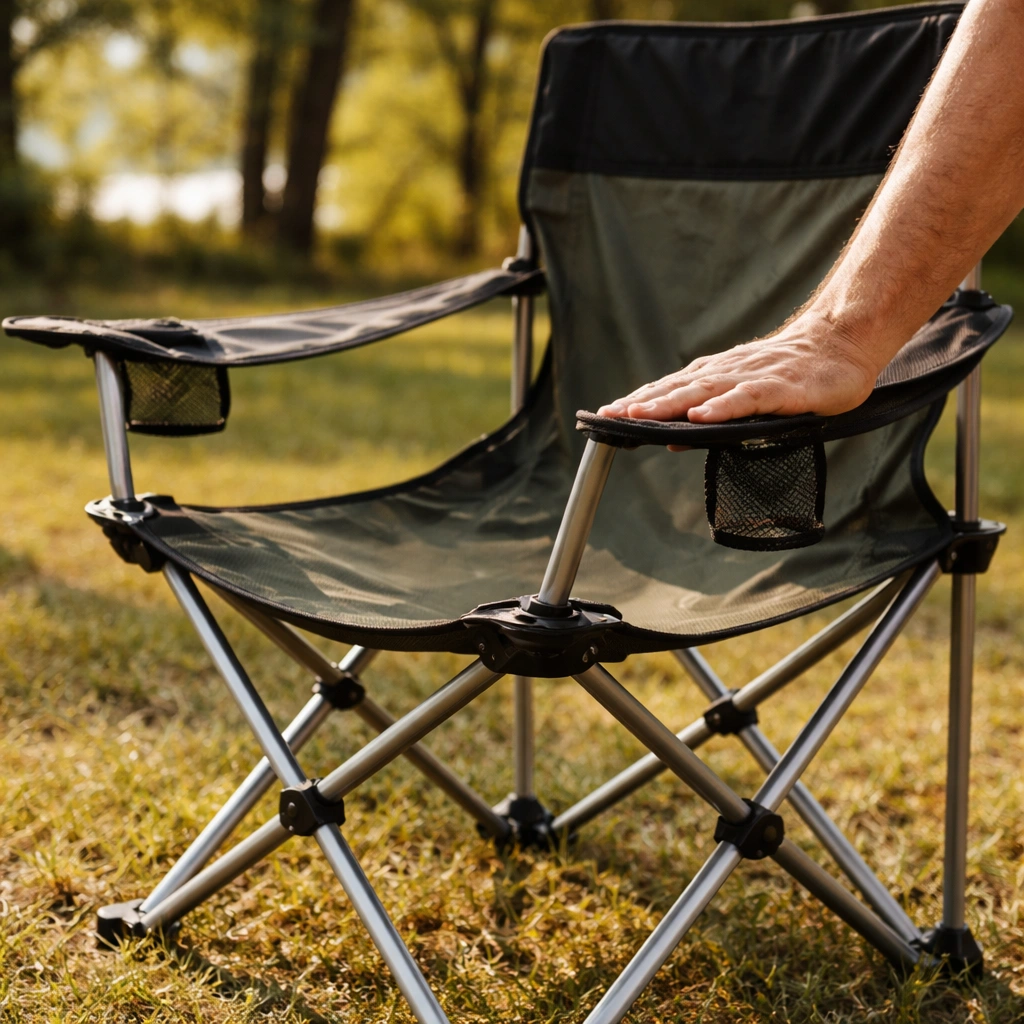
Test and Inspect
Fold and unfold the chair 2–3 more times, checking for smoothness and locking security. If your chair has a reclining mechanism (like reclining camping chairs), test all positions to ensure everything moves freely.
Troubleshooting Common Hinge Problems
Sometimes lubrication alone doesn't solve the issue. Here's how to handle more complex hinge problems:
🔩 Stuck or Seized Hinge: Apply penetrating oil and let it sit for 10–15 minutes, then gently tap with a rubber mallet while working the joint. Once free, clean and apply silicone lubricant.
🪑 Loose Hinge / Wobble: Check if bolts or rivets are loose. For bolt-on hinges, tighten with a wrench. For riveted frames, explore replacement parts.
🦀 Rust on Steel Hinges: Light rust can be removed with fine steel wool, then lubricate immediately. For extensive rust, see our frame rust care guide.
How Often Should You Lubricate?
Frequency depends on usage and environment. For regular car camping, lubricating hinges twice a year (spring and fall) is sufficient. If you use your chair heavily in sandy or coastal areas, increase to once every 2–3 months. Always lubricate before storing for winter — this prevents moisture from seizing joints during cold months. Our winter storage guide offers more seasonal tips.
Preventive Care: Beyond Hinge Lubrication
A well-maintained camping chair lasts for years. Combine hinge lubrication with these best practices:
- Clean after every trip: Sand and grit accelerate hinge wear. Rinse with fresh water if used at the beach.
- Inspect fabric and stitching: Torn fabric can stress the frame. Learn how to wash camping chair fabric safely.
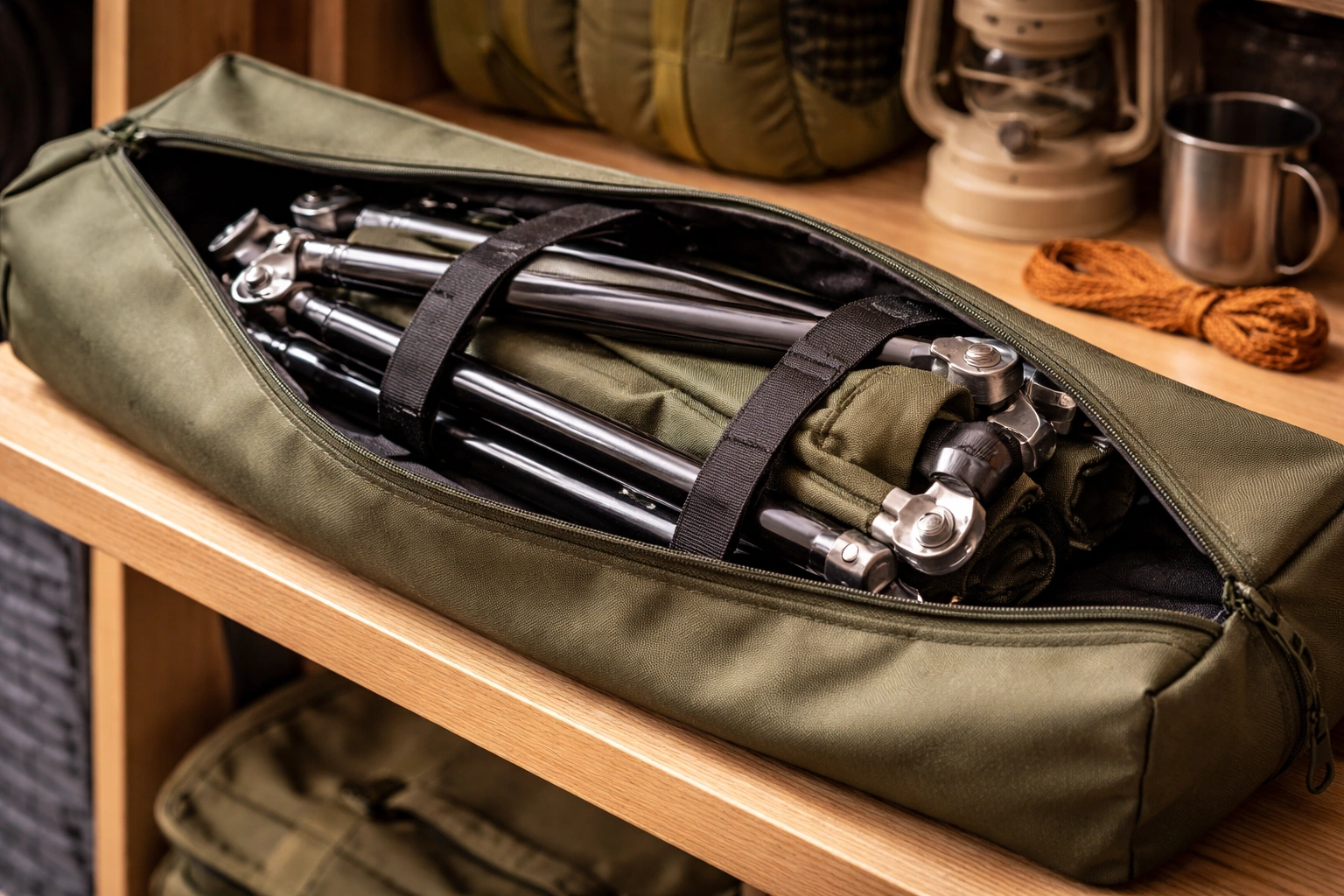
- Store properly: Keep chairs in a dry place, away from direct sunlight. Use carry bags to protect hinges during transport.
- Replace worn parts early: Don't wait until a hinge breaks. Explore replacement parts to keep your favorite chair functional.
Frequently Asked Questions
No. Cooking oils go rancid, attract insects, and gum up over time. They also provide no rust protection. Always use a purpose-made lubricant like silicone spray or PTFE lubricant.
A popping sound often indicates a misaligned hinge or a bent frame component. Check if the frame is bent. If not, clean thoroughly and lubricate. If the pop persists, inspect for cracks or refer to our fix wobbly leg guide for structural issues.
Riveted hinges are common in budget-friendly chairs. Use a spray lubricant with a straw to target the gap between rivet and frame. Work the joint while applying. If the rivet becomes too loose, you may need to replace the chair or explore repair kits.
Extend the Life of Your Gear
Proper hinge lubrication takes only 10 minutes but can add years to your camping chair. Now that you've mastered maintenance, explore our complete care & maintenance hub for more tips on keeping all your outdoor gear in top shape.
Still need the perfect chair? →

