How to Clean Camping Chairs: The Ultimate Care Guide
Expert step-by-step methods to wash fabric, remove mold, prevent rust, and extend the life of your outdoor seating. Keep your gear fresh and durable season after season.
Your camping chair goes through a lot — muddy campsites, morning dew, spilled coffee, sunscreen, and trail dust. Over time, dirt buildup can weaken fabrics, cause mildew, and even damage frame joints. Learning how to clean camping chairs properly not only preserves their appearance but also maintains structural integrity, weight capacity ratings, and safety. Whether you own a lightweight backpacking chair or a heavy-duty camping chair rated for 400+ lbs, the right cleaning routine makes all the difference.
In this guide, we'll cover everything from routine cleaning to deep stain removal, mold remediation, and rust prevention. By the end, you'll be equipped to keep your gear in peak condition — saving money and ensuring comfort on every outdoor adventure.
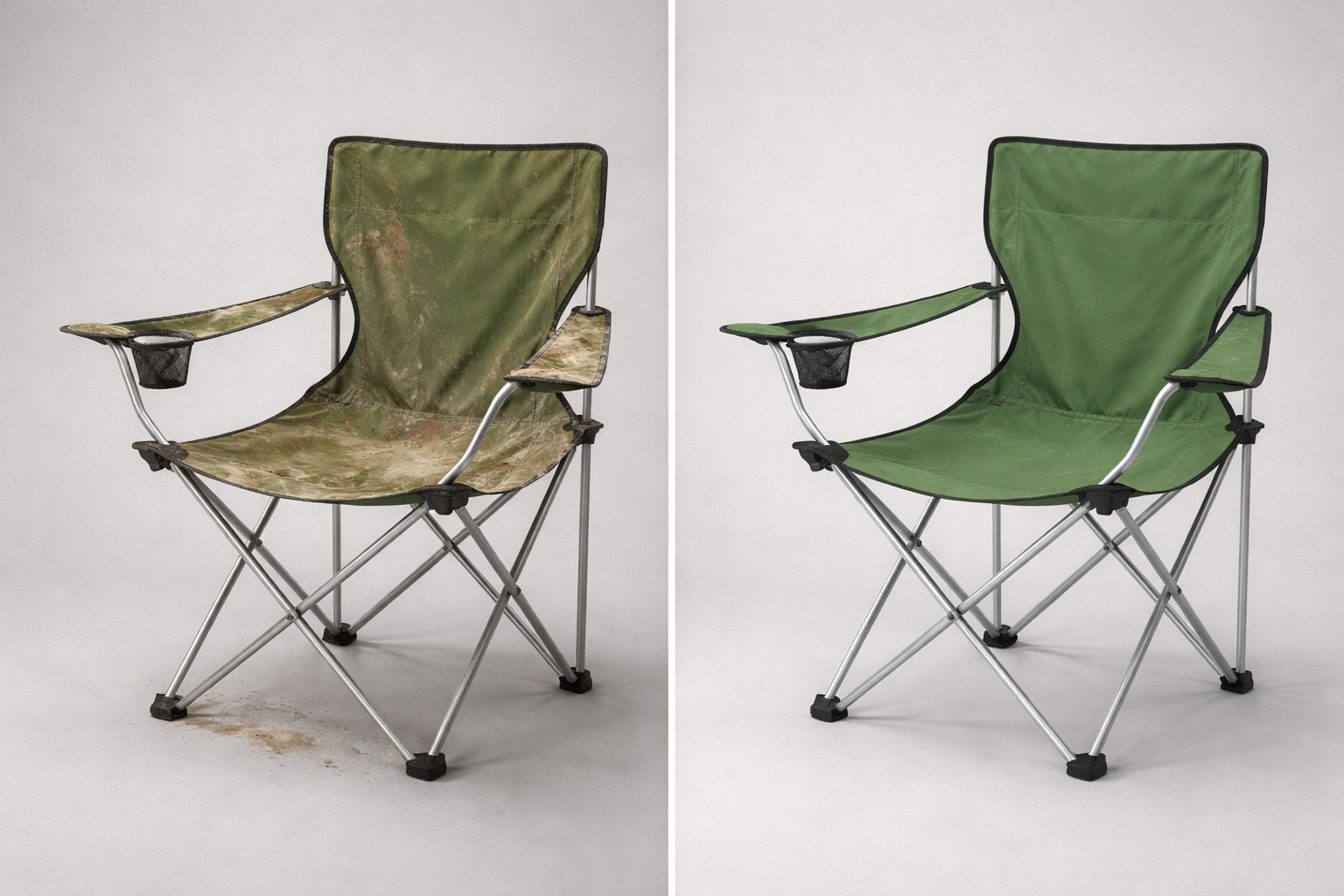
The difference a proper cleaning routine makes — same chair model, dramatically different condition
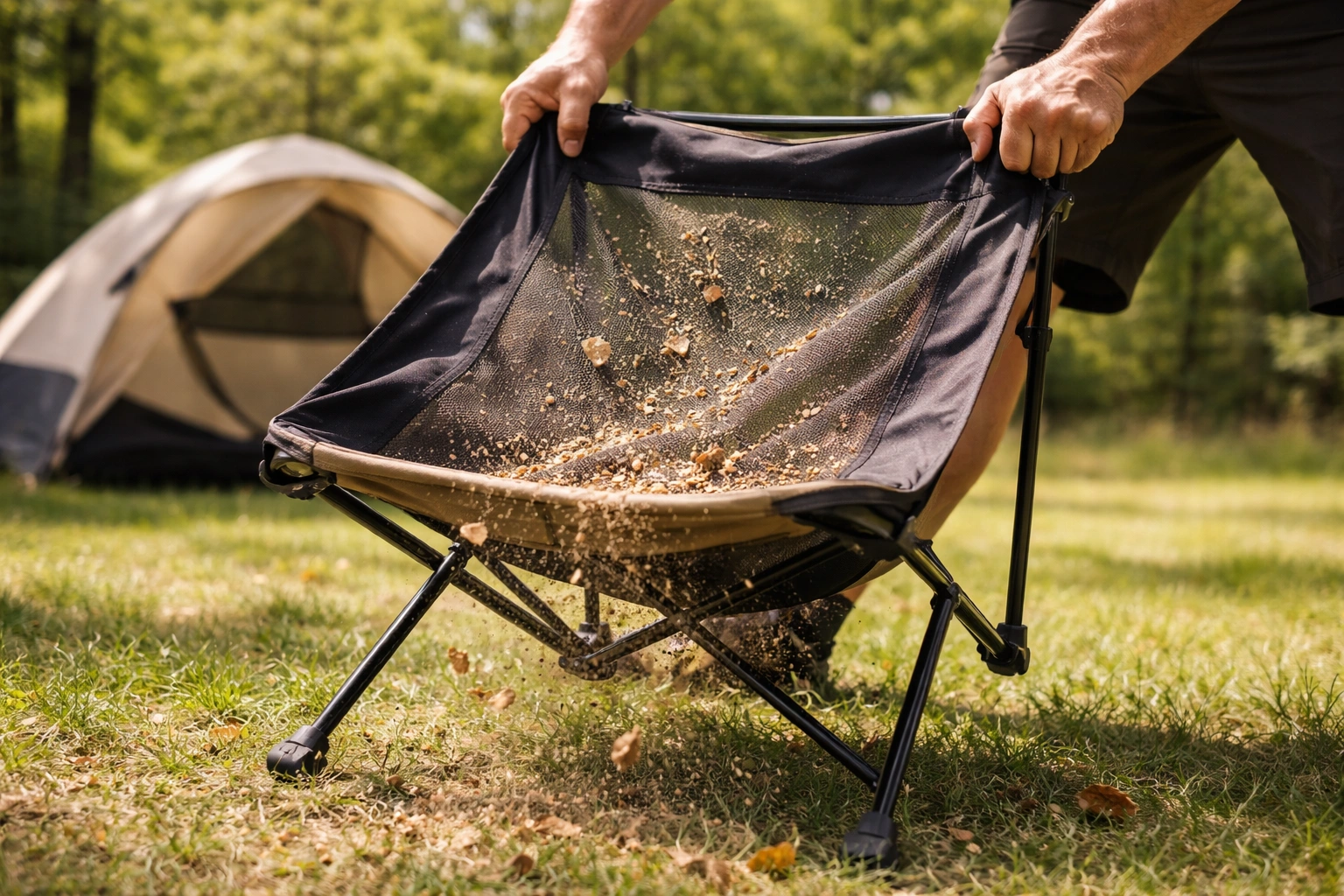
1. Routine Cleaning: After Every Trip
Prevention is easier than deep restoration. After each camping trip, follow this 5-minute routine to keep your chair fresh. The goal is to remove surface debris before it works into the fabric weave or settles into frame joints — where it becomes much harder to remove later.
- Shake off debris: Unfold the chair fully and shake vigorously to dislodge sand, leaves, pine needles, and food crumbs. Pay extra attention to seat corners and pocket crevices where particles accumulate.
- Wipe down frame: Use a damp microfiber cloth with a few drops of mild dish soap to clean aluminum or steel tubing. Focus on folding joints, leg feet, and armrest connection points where grit causes the most wear.
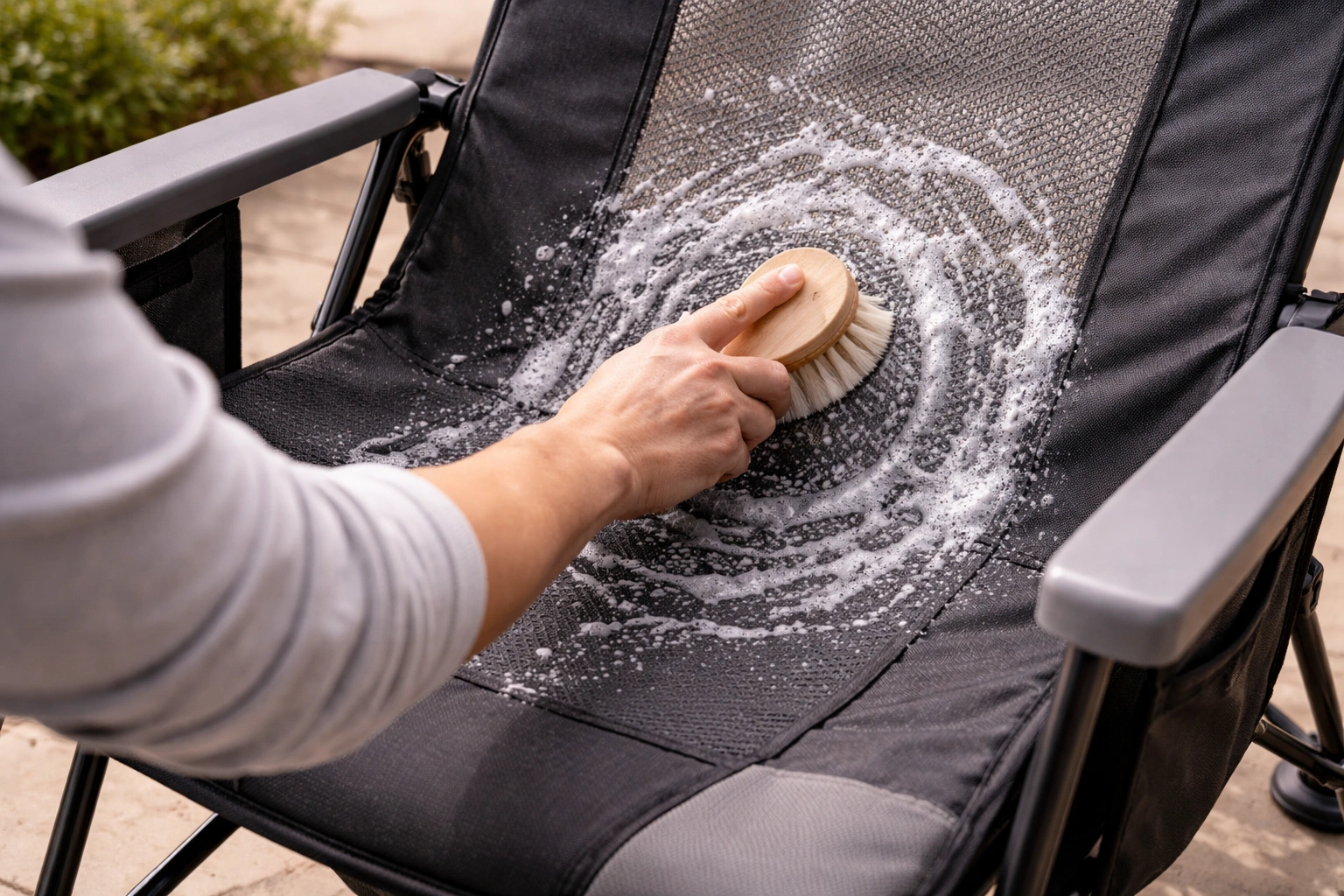
- Spot-clean fabric: Mix warm water with a few drops of dish soap; gently scrub stains with a soft-bristled brush in circular motions. Focus on high-contact zones like the seat center, backrest, and headrest if applicable.
- Air dry completely: Never store a damp chair — moisture encourages mold and rust within 24–48 hours. Leave it open in a shaded, well-ventilated area until every part is fully dry to the touch.
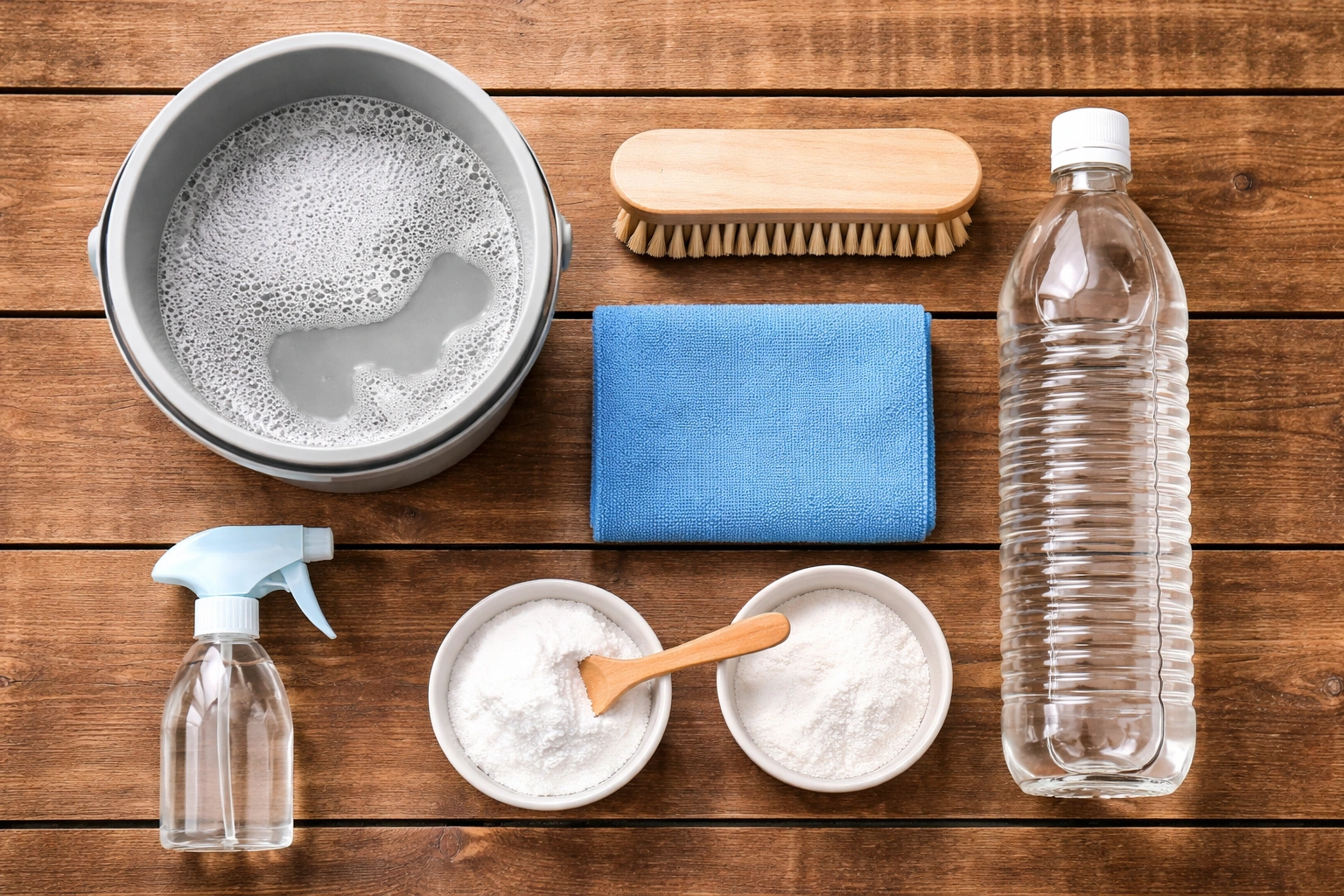
2. Deep Cleaning Fabric & Mesh Seats
When your chair has ground-in dirt, sweat stains, tree sap, or food residue from a season of heavy use, a thorough wash is required. Different fabrics demand specific care — polyester and canvas behave differently when wet, and mesh requires a gentler approach.
- Remove the fabric (if possible): Some camping chairs have removable seat covers with Velcro or snap attachments. If yours does, remove it for easier cleaning. Check the manufacturer's care instructions first — some fabrics have waterproof coatings that can be damaged by detergents.
- Prepare cleaning solution: Mix 1 tablespoon of mild liquid laundry detergent per gallon of lukewarm water. Avoid bleach, fabric softeners, or harsh degreasers — these weaken nylon and polyester fibers and strip protective coatings.
- Scrub gently in circular motions: Dip your brush and scrub with moderate pressure. Work from the top of the seat downward to avoid pushing dirt into already-cleaned areas. Focus extra attention on seam lines and stress points where grime concentrates.
- Rinse thoroughly: Use a garden hose with a gentle shower setting or wipe repeatedly with a clean wet cloth until all soap residue is gone. Leftover detergent attracts dirt and creates a sticky film that accelerates soiling.
- Dry properly: Hang the fabric or set the chair upright in a well-ventilated area away from direct sunlight — UV rays degrade synthetic fibers over time, causing fading and brittleness. A gentle fan can cut drying time significantly.
Fabric-Specific Techniques
For mesh-back chairs — common in director chairs, rocking camp chairs, and most ultralight models — use a soft toothbrush to dislodge particles trapped in the mesh weave without tearing or stretching the material. Mesh is strong against tension but vulnerable to sharp or abrasive tools.
For canvas or high-denier polyester seats found on heavy-duty chairs, a medium-bristle brush is acceptable but still avoid aggressive scrubbing that could fray the edges. For stubborn tree sap, apply a small amount of rubbing alcohol to a cloth and dab gently — never pour directly onto the fabric.
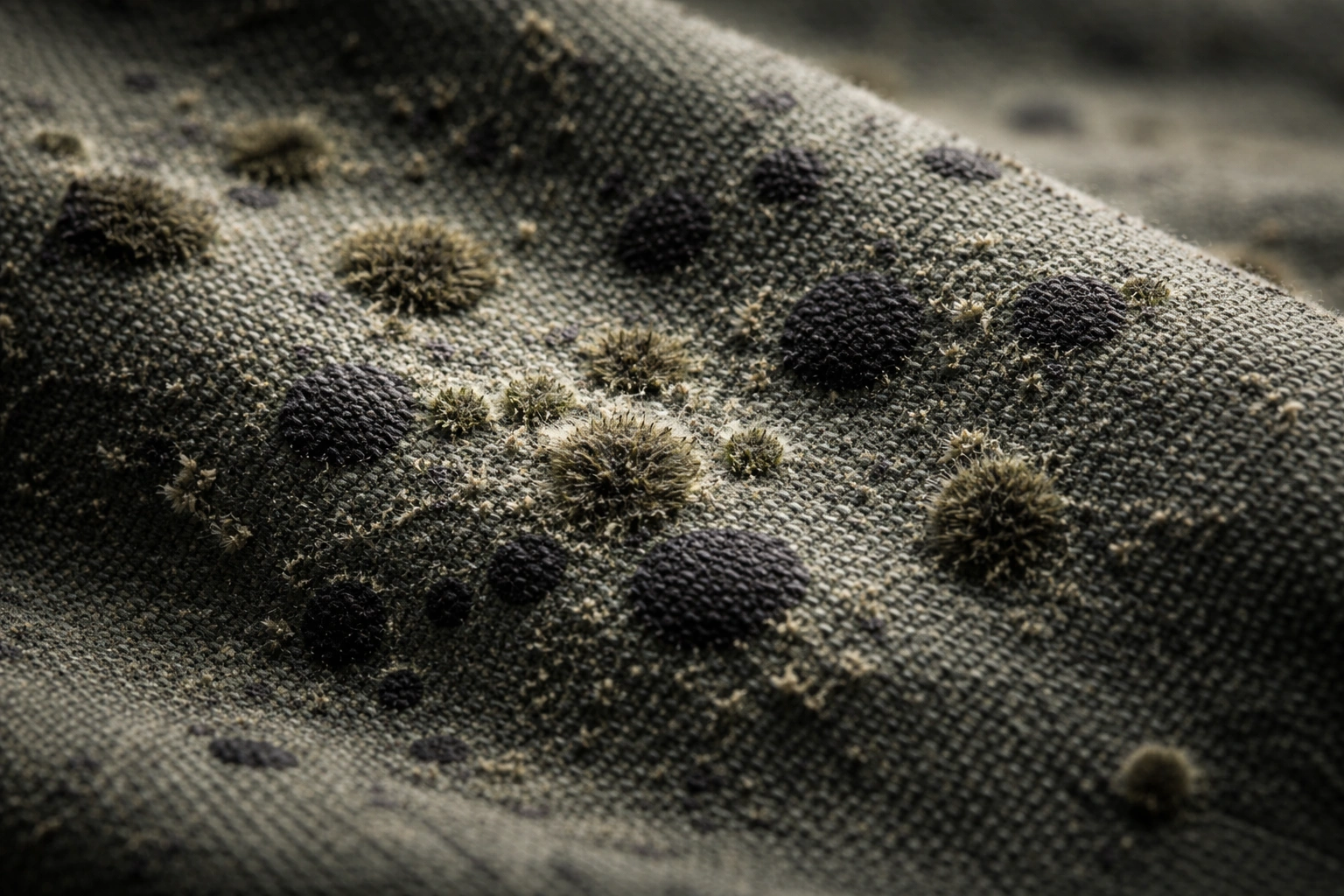
3. How to Remove Mold & Mildew from Camping Chairs
If your chair was accidentally packed away while damp — a common mistake after rainy trips — mold or mildew may appear as dark spots with a musty smell. This requires a different approach than routine cleaning because mold spores penetrate fabric fibers and can regrow if not fully eliminated.
- Brush off surface mold outdoors: Wear a dust mask to avoid inhaling spores. Use a dry stiff-bristle brush to remove loose mold from the surface. Do this outside to prevent spreading spores indoors.
- Create a vinegar solution: Mix equal parts white distilled vinegar and water in a spray bottle. Vinegar kills over 80% of mold species naturally without damaging fabric. Spray generously onto affected areas and let sit for at least 15 minutes.
- Scrub with baking soda paste: For stubborn or deeply embedded stains, make a thick paste of baking soda and water. Apply to the stain, let it sit for 10 minutes, then scrub gently with a soft brush. Baking soda also neutralizes the musty odor.
- Rinse and sun-dry: After cleaning, rinse thoroughly with clean water. Brief sun exposure (30–60 minutes) helps kill remaining mold spores through UV radiation. However, avoid prolonged direct sunlight on the fabric afterward to prevent UV damage.
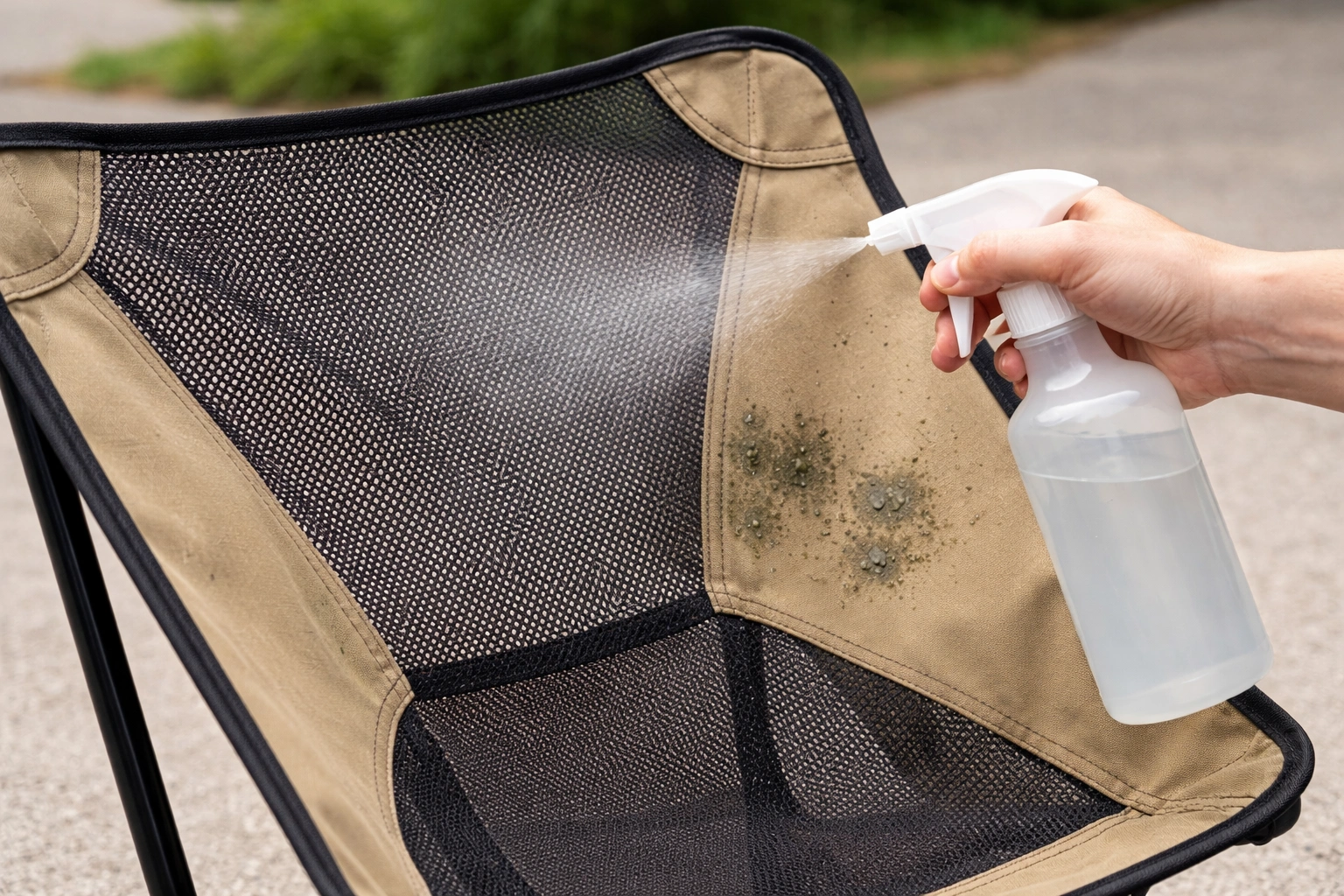
When to Use Commercial Cleaners
For persistent mold on heavy-duty canvas or vinyl-backed fabrics, a commercial outdoor gear cleaner may be necessary. Products specifically formulated for marine canvas or awning fabric tend to work best on camping chair materials. Always test any chemical cleaner on a small hidden area first — typically the underside of the seat — and wait 24 hours to check for discoloration or fabric weakening.
If the mold has penetrated into foam padding inside zero gravity chairs or padded recliners, the foam may need replacement rather than cleaning — once mold colonizes foam internally, it's nearly impossible to fully eradicate.
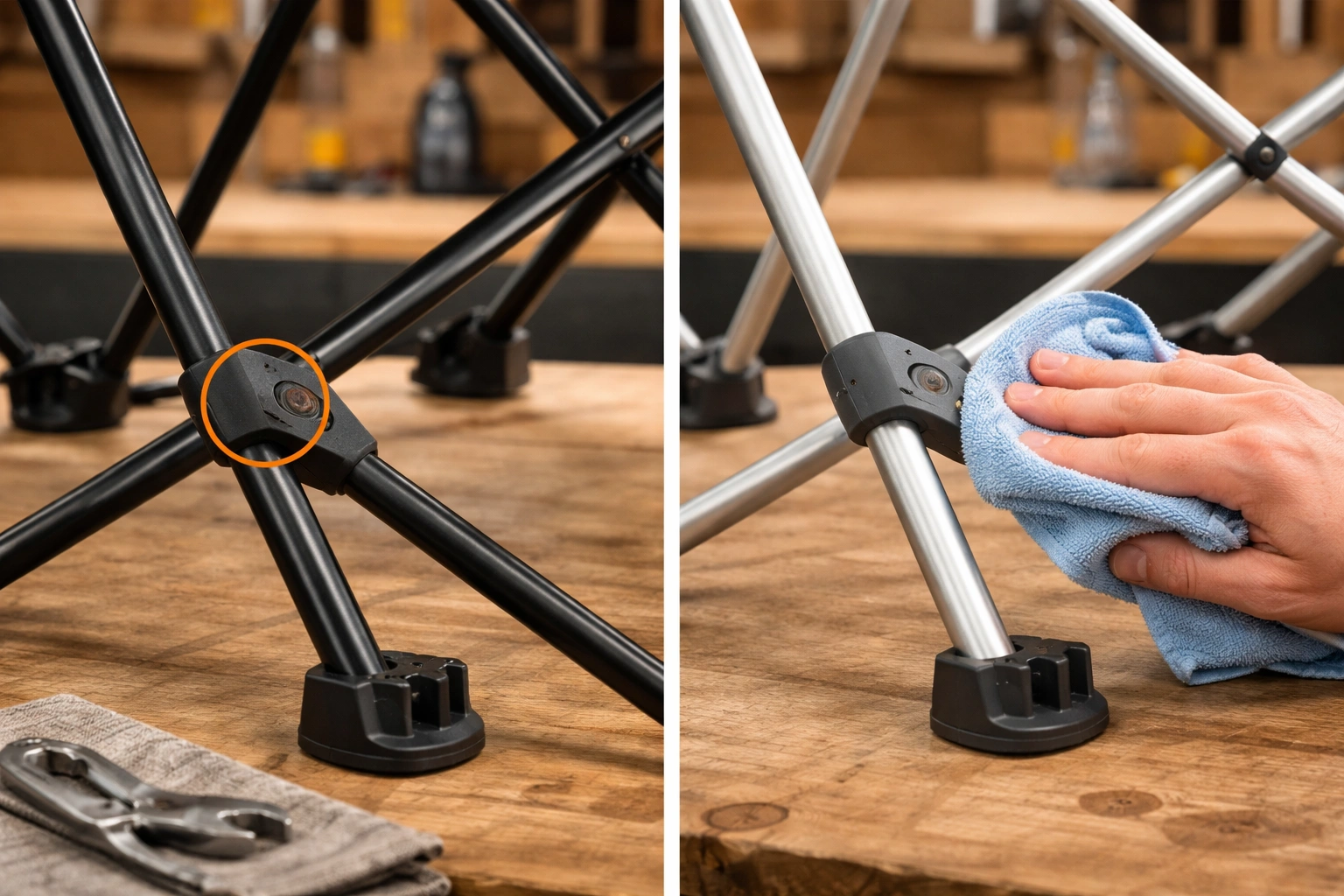
4. Frame Maintenance: Steel vs. Aluminum Care
Your chair's frame is the backbone of durability and safety. A weakened frame can fail unexpectedly — especially concerning for heavy-duty chairs supporting 300+ lbs. Different materials require specific care approaches, and understanding the differences helps you protect your investment.
- Steel frames: Prone to rust if the powder coating is scratched or chipped. Inspect the entire frame after each season — focus on weld points, folding joints, and leg feet where contact with ground causes the most wear. Touch up any chips with rust-resistant spray paint designed for metal. Clean with mild soapy water and dry immediately. Never store steel chairs outdoors or in damp environments.
- Aluminum frames: Naturally rust-resistant but can develop surface oxidation — a dull white powdery residue — especially in salty coastal air. Wipe with a damp cloth after each use near saltwater. For luster, a dab of aluminum polish on a cloth restores the finish. Check folding hinges for grit or sand that can cause uneven wear over time.
- Joint lubrication: Apply silicone spray or dry PTFE lubricant to hinges and locking mechanisms once or twice per year. This prevents squeaking, ensures smooth folding, and protects the metal-to-metal contact points from wear — especially helpful for folding camping chairs that are assembled and disassembled frequently.
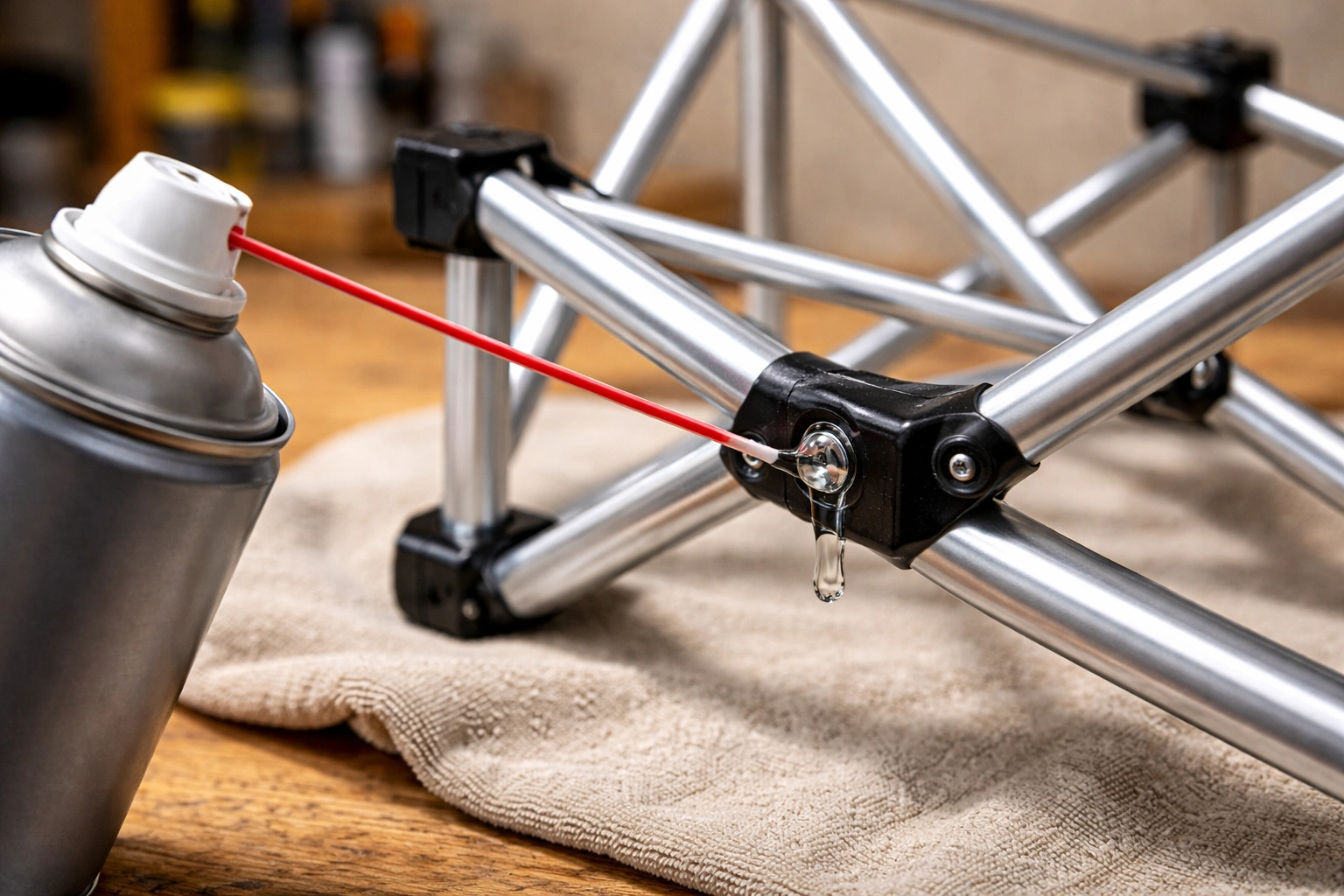
Lubricant Selection Matters
Always use a silicone-based or dry PTFE lubricant — never WD-40 or oil-based products. Oil attracts dust and dirt, which creates an abrasive paste inside the hinge joints that actually accelerates wear. Silicone spray leaves a thin protective film that repels water and grit while keeping the mechanism smooth. For detailed technique, read our hinge lubrication guide.
Treating Existing Rust
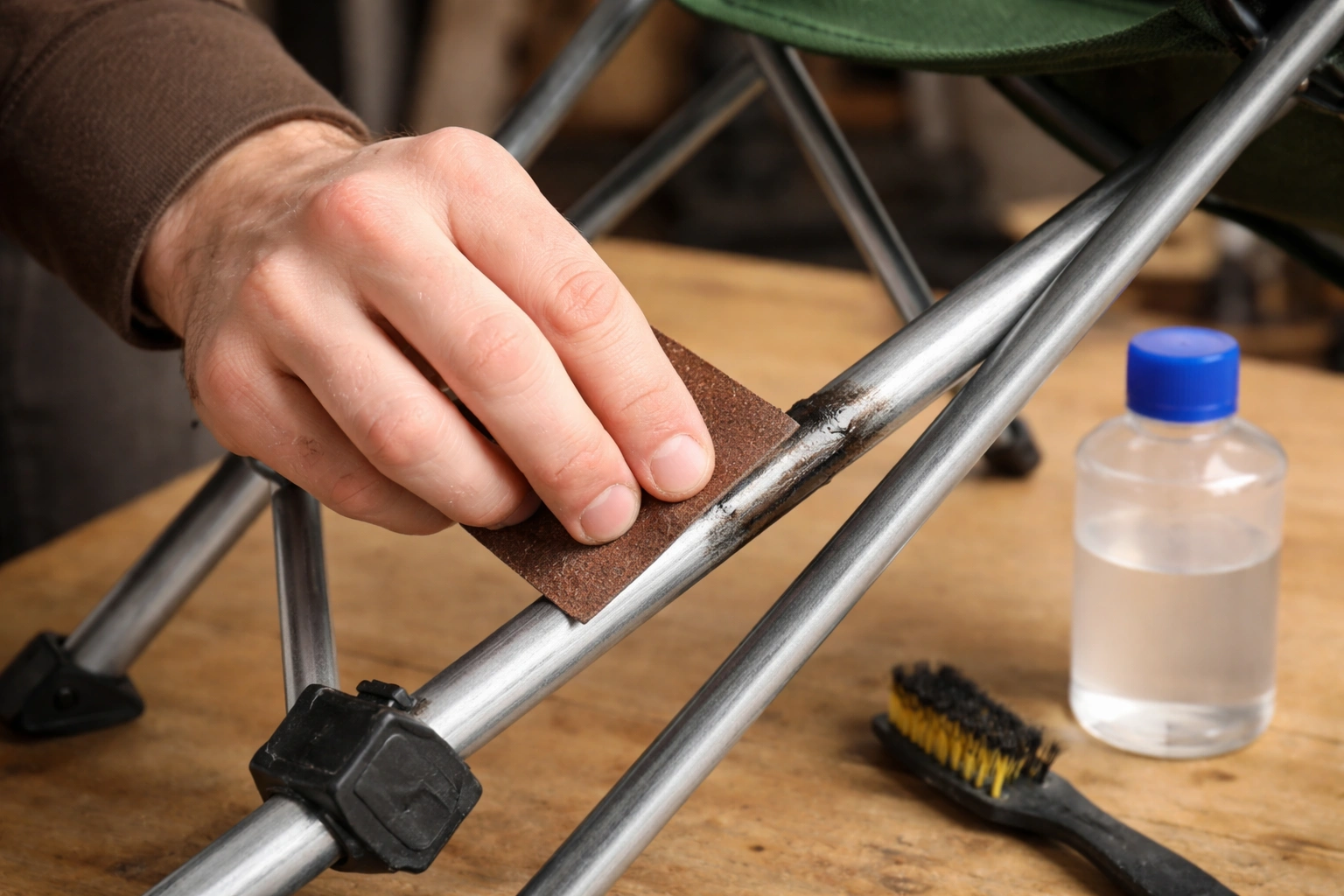
If you discover rust spots on a steel frame, act before it spreads. Sand the area gently with fine-grit (220+) sandpaper until you reach bare metal. Clean the area with rubbing alcohol to remove dust and oils, let it dry, then apply a thin coat of rust-inhibiting primer followed by a matching touch-up paint. For extensive rust that has compromised the tube wall thickness, the frame should be replaced — see our complete rust care guide and replacement parts resource.
5. Smart Storage: Extending Lifespan Through the Off-Season
Proper storage prevents approximately 80% of common camping chair problems — including mold, broken parts, faded fabric, and frame corrosion. The off-season is when most damage occurs, not during active use. Follow these guidelines to protect your gear between adventures:
- Always store clean and bone-dry: This is the single most important rule. Even minimal moisture trapped in a folded chair will create a microclimate perfect for mold growth within 48 hours. After cleaning, let the chair air dry for at least 24 hours in a well-ventilated space before storing.
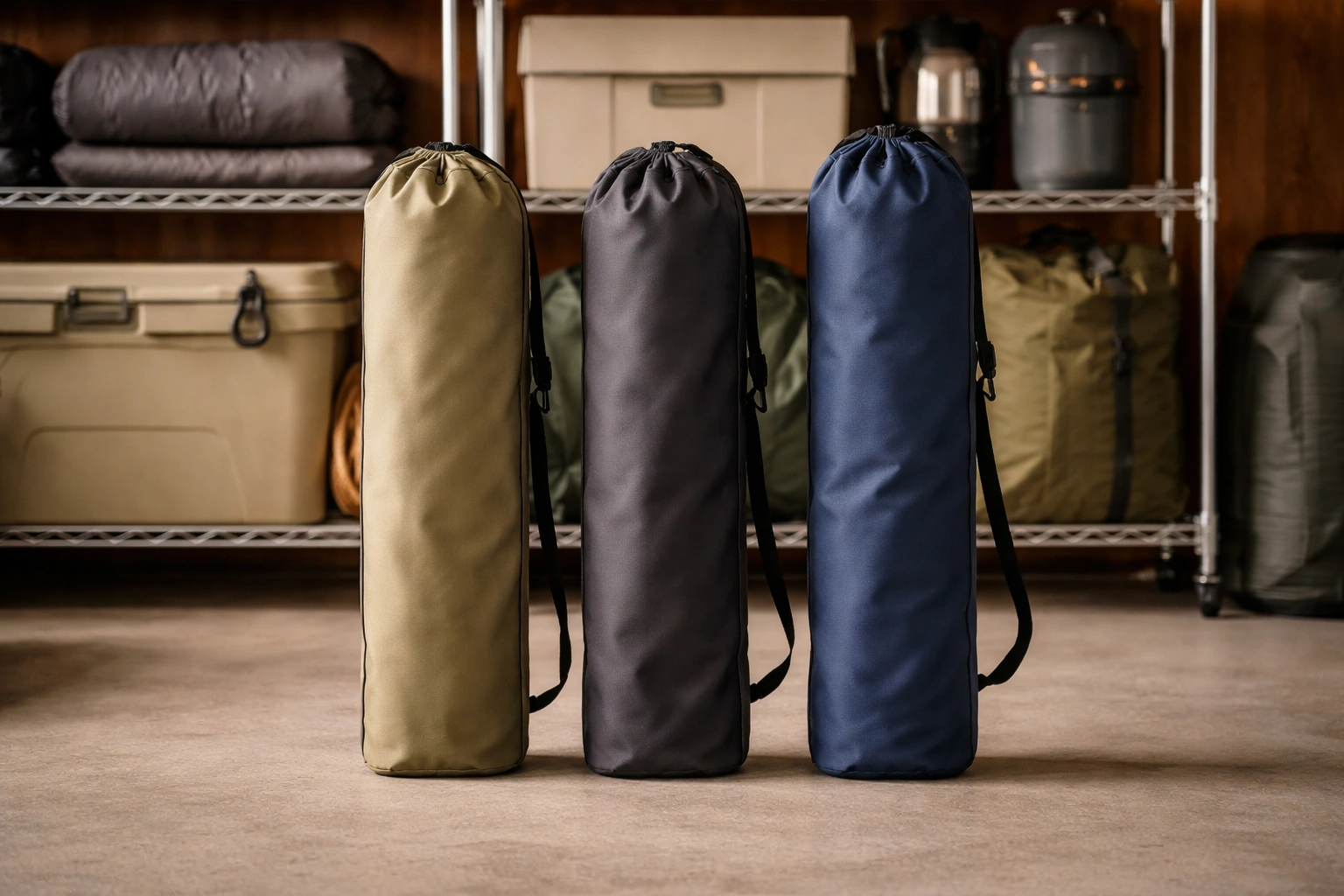
- Use breathable carry bags: Store chairs in their original carry bag or a mesh storage sack. Never use sealed plastic bags — they trap humidity and prevent air circulation, creating an ideal environment for mold and mildew. If your bag is nylon with no ventilation, leave the top partially open.
- Choose a climate-controlled space: A garage, basement, or indoor closet is ideal. Avoid unheated sheds, outdoor sheds, or car trunks where temperature swings cause condensation. Extreme heat degrades fabric UV treatments and plastic components; freezing temperatures can make certain plastics brittle.
- Store upright or flat — never under weight: Stacking heavy items on top of folded chairs can permanently deform the frame or crush the fabric. Stand bags upright or lay them flat on a shelf. For chairs with ottoman or reclining mechanisms, ensure all moving parts are in their stored position to avoid stress on springs and joints.
- Pre-season inspection: Before your first trip of the season, unpack and inspect every chair. Check fabric tension, frame joints, hinge smoothness, and overall cleanliness. Address any issues then — not when you're already at the campsite. See our winter storage tips for a complete off-season checklist.
Troubleshooting: Problems Revealed During Cleaning
Sometimes the cleaning process uncovers underlying issues — loose joints, torn fabric, or corroded parts that need more than soap and water. Our detailed repair guides walk you through fixing the most common problems:
Frequently Asked Questions: Cleaning & Care
Can I machine wash my camping chair fabric?
Only if the fabric is removable and the care label explicitly says machine-washable. If so, use a gentle cycle with cold water and a mild detergent — never bleach or fabric softener. Always air dry; never use a dryer, as heat shrinks synthetic fibers and melts waterproof coatings. Most polyester and canvas chair covers are best hand-washed to preserve their protective treatments.
How do I clean a camping chair with a built-in cooler?
For chairs with cooler pouches, the cooler compartment requires separate treatment. After each use, wipe the interior with disinfectant wipes or a damp cloth with mild soap. Never submerge the cooler pocket in water — the insulation layer between the inner and outer liner can trap moisture and grow mold. For odors, place an open box of baking soda inside the closed pouch overnight.
What's the best way to remove sunscreen stains?
Sunscreen contains oils and chemical filters that bond with synthetic fabrics. Apply a small amount of grease-cutting dish soap directly to the stain, let it sit for 5 minutes, then scrub gently with a soft brush and rinse with warm water. For set-in stains, a paste of baking soda and dish soap left on for 15 minutes before scrubbing works well. Avoid acetone or nail polish remover — these dissolve polyester fibers.
Can I use a pressure washer on my camping chair?
No — never use a pressure washer on a camping chair. The high-pressure stream can tear fabric at stitch lines, force water into sealed frame joints causing internal rust, and delaminate protective coatings on metal frames. Stick to a gentle garden hose spray, bucket cleaning, or hand-wiping. If your chair is heavily soiled, multiple gentle cleanings are far safer than one aggressive blast.
How often should I deep-clean my camping chair?
For casual users (3–5 trips per year), one deep clean at the end of the season is sufficient, with routine wipe-downs after each trip. For heavy users — full-time RVers, guides, or families who camp weekly — deep clean monthly during the active season. Always deep clean before off-season storage regardless of usage frequency.
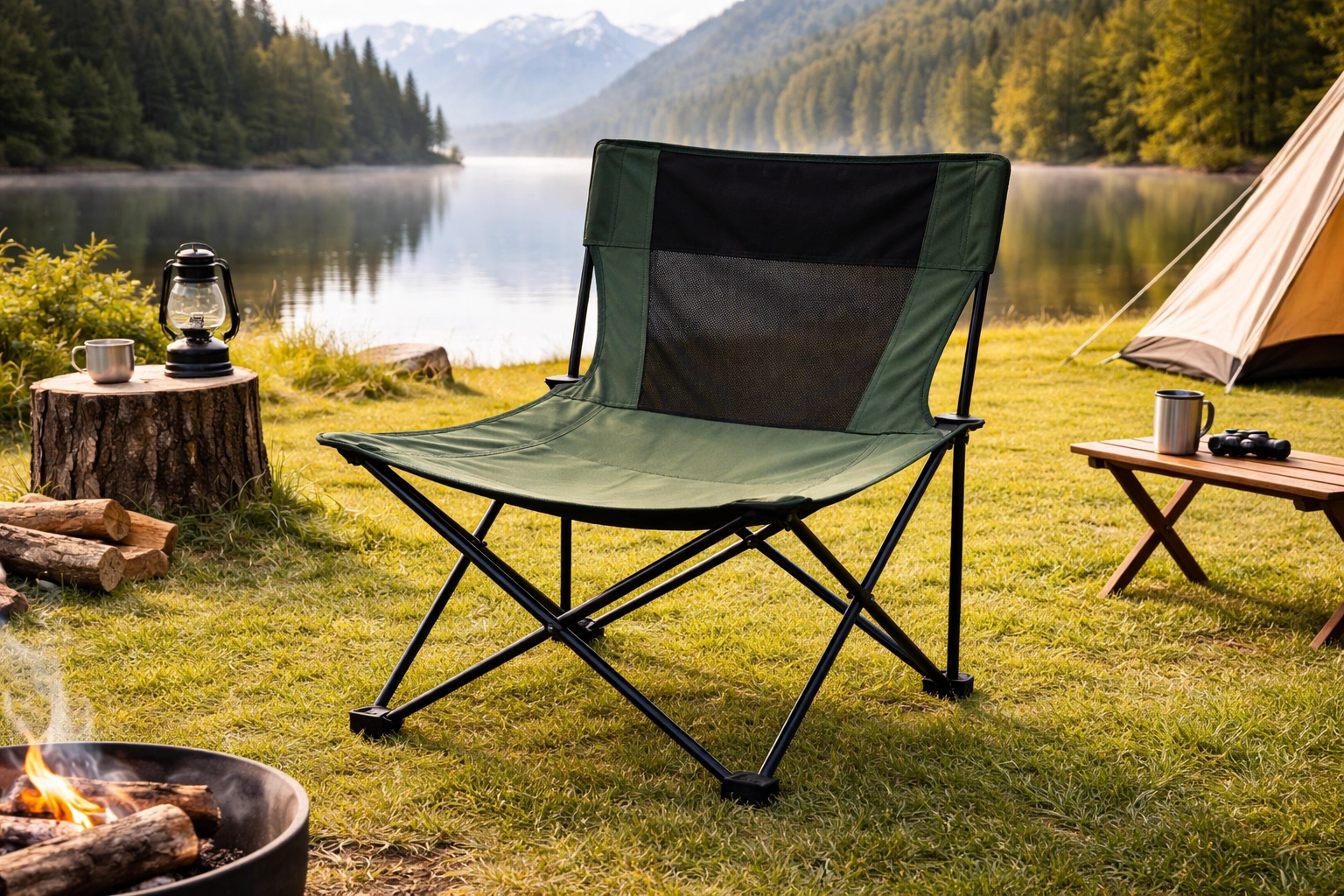
A well-maintained chair is always ready for the next adventure — no surprises at the campsite
🎯 ChairsForCamping insight: A well-maintained camping chair lasts 3–5 years longer than neglected gear. Regular cleaning preserves weight capacity ratings and prevents accidents caused by weakened fabric or corroded frames. If your current chair is beyond repair, explore our curated recommendations below for durable, easy-care models designed for low-maintenance performance.